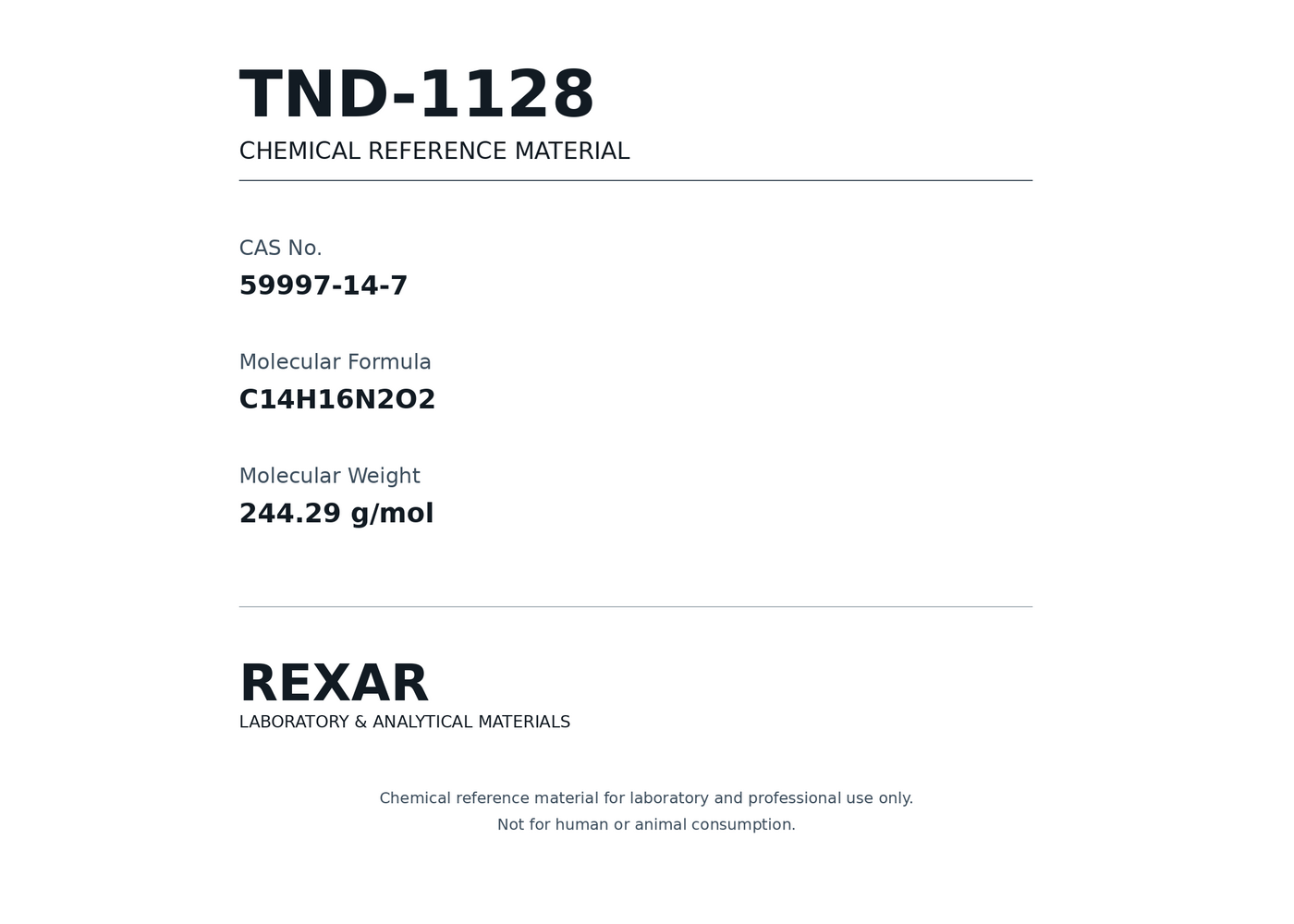
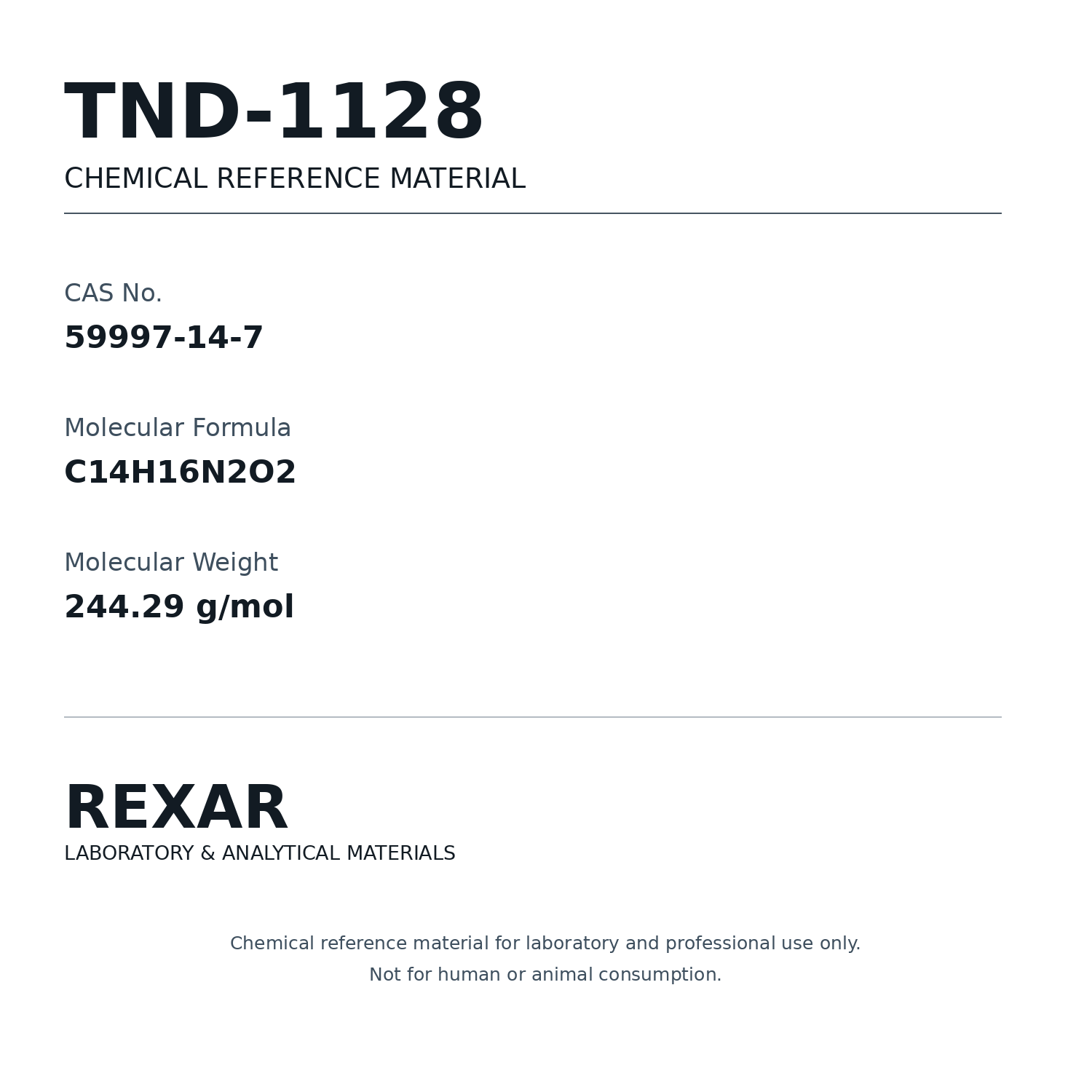

TND-1128 is supplied by Rexar as a research-grade chemical reference material for analytical chemistry, compound identification and laboratory comparison workflows. This synthetic 5-deazaflavin derivative contains a fused pyrimidoquinoline heterocyclic framework with two carbonyl functionalities and alkyl substituents and is provided exclusively for controlled research environments requiring verified chemical identity, consistent structural documentation and reproducible analytical comparison.
Research-grade material distributed by Rexar within the European Union.
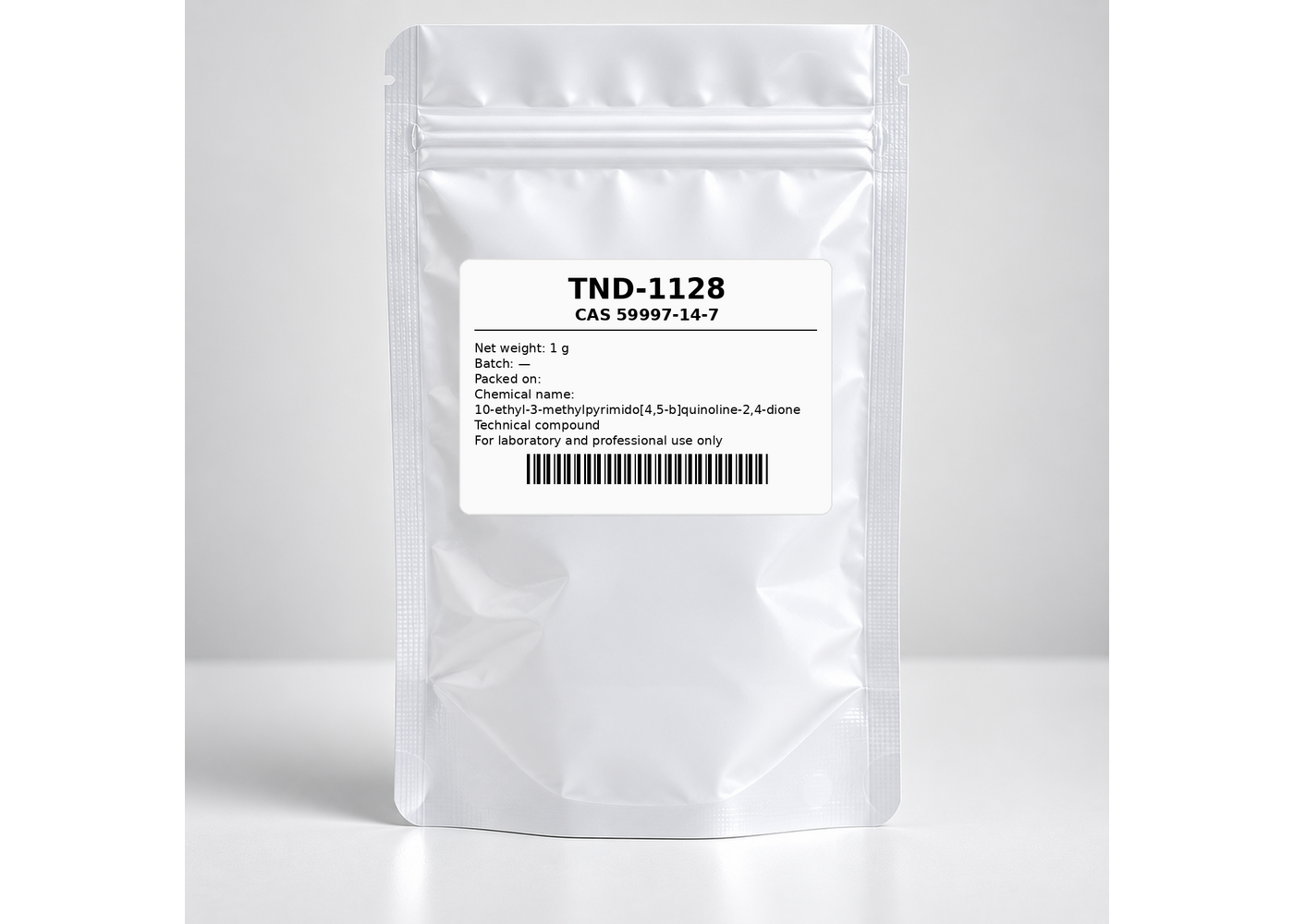
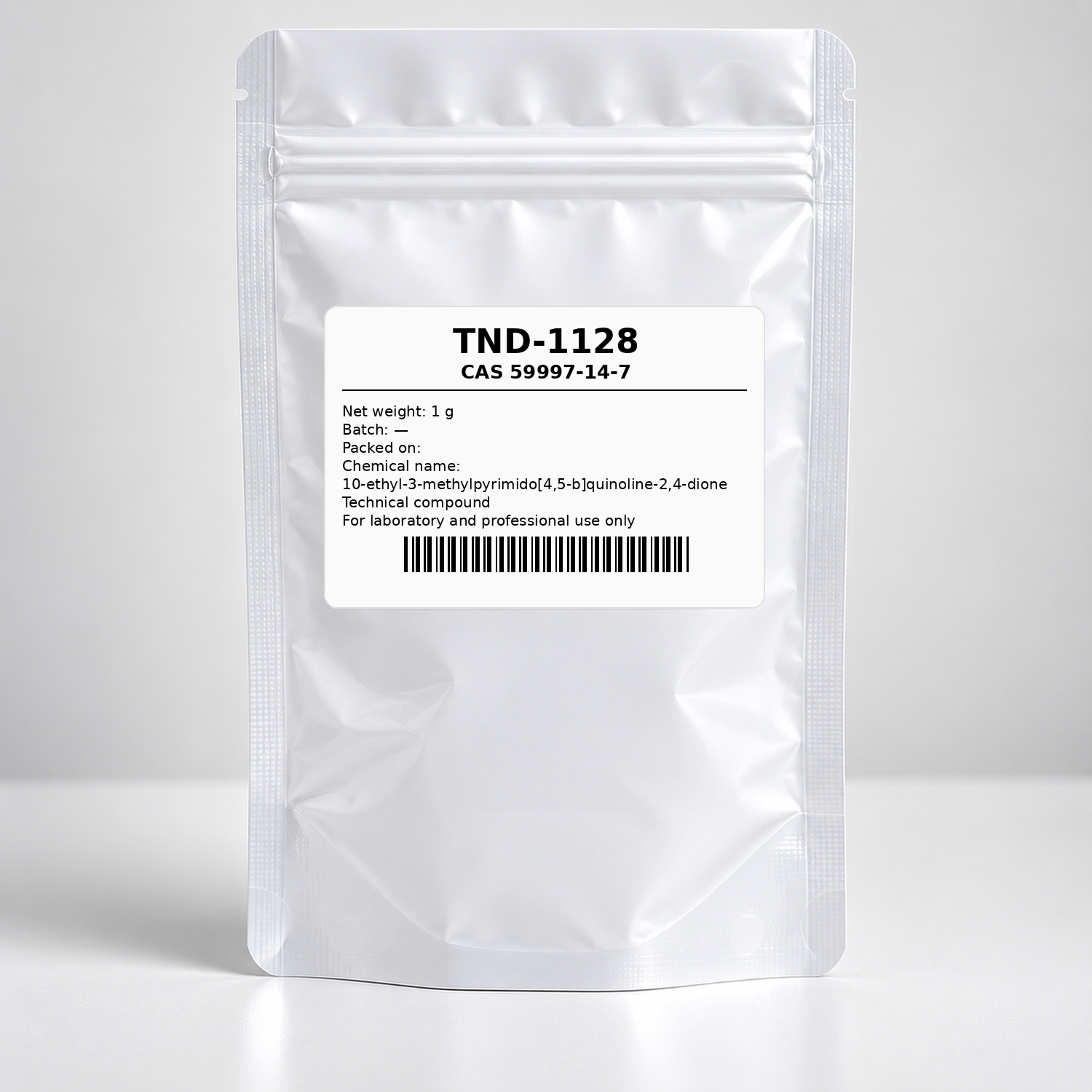
TND-1128 (CAS 59997-14-7) is supplied in sealed laboratory packaging to support traceability, storage integrity and laboratory handling procedures.
Rexar Technical Compound Datasheet (PDF)
Molecular structure data and selected physicochemical properties can be consulted via: TND-1128 on PubChem
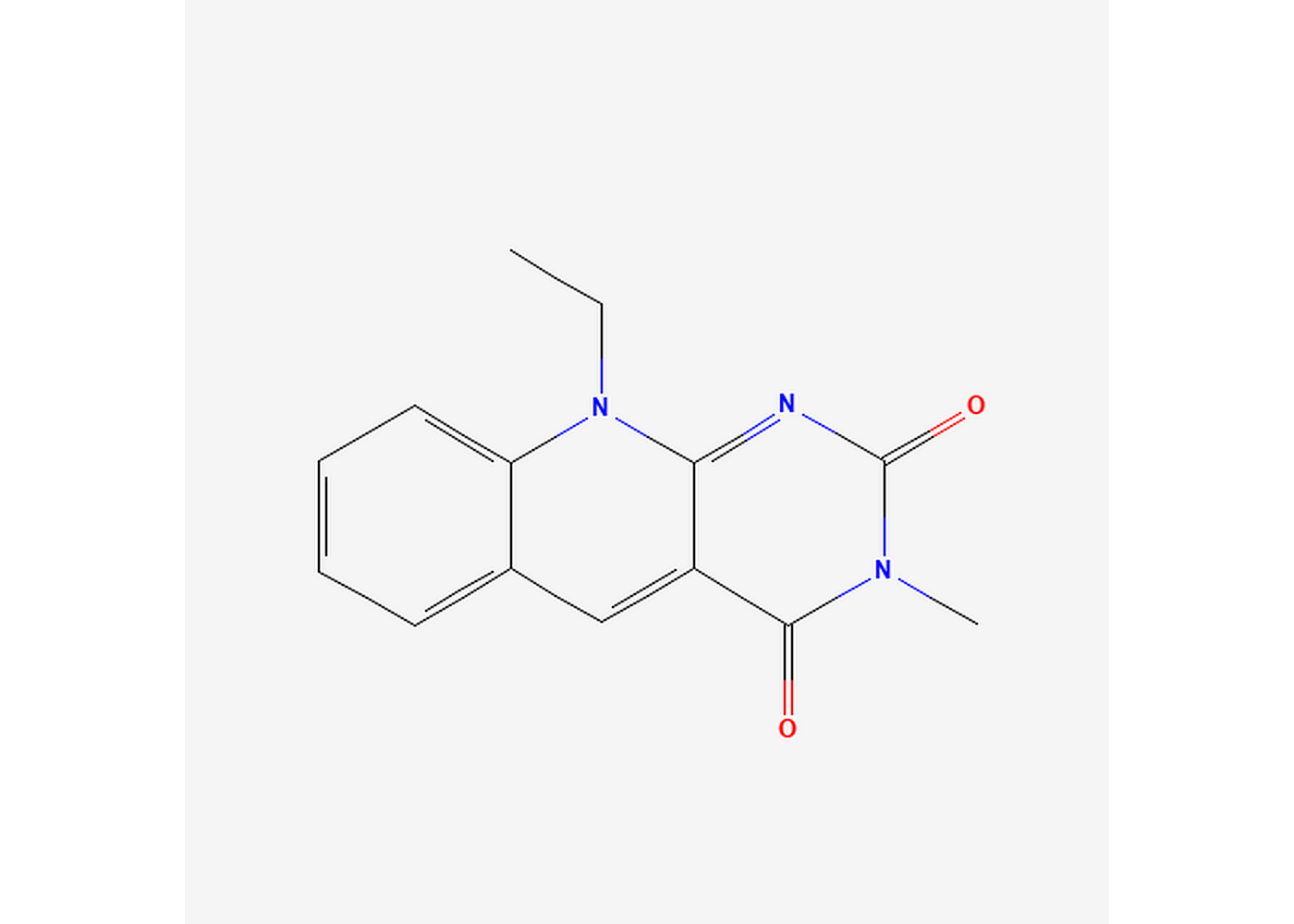
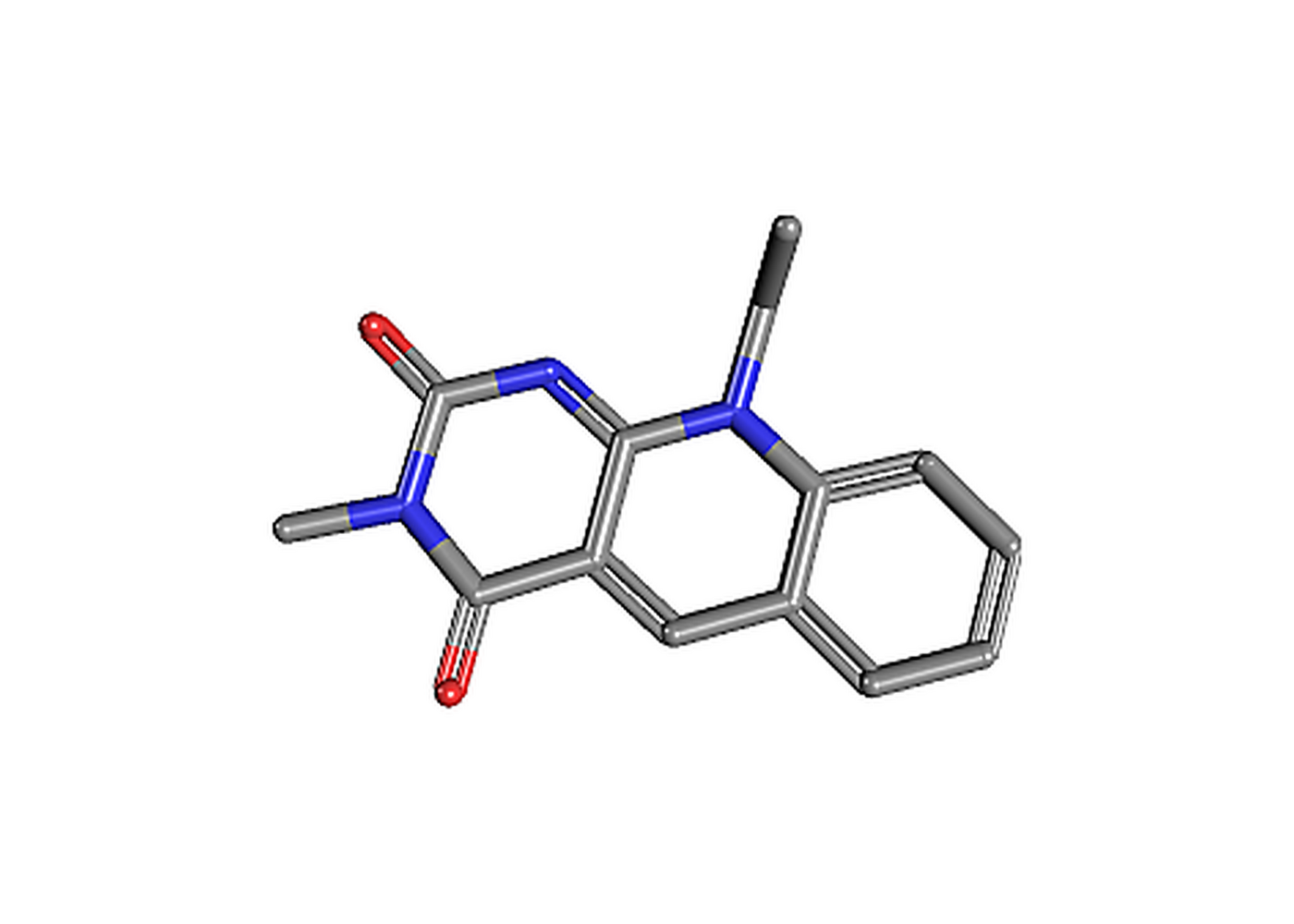
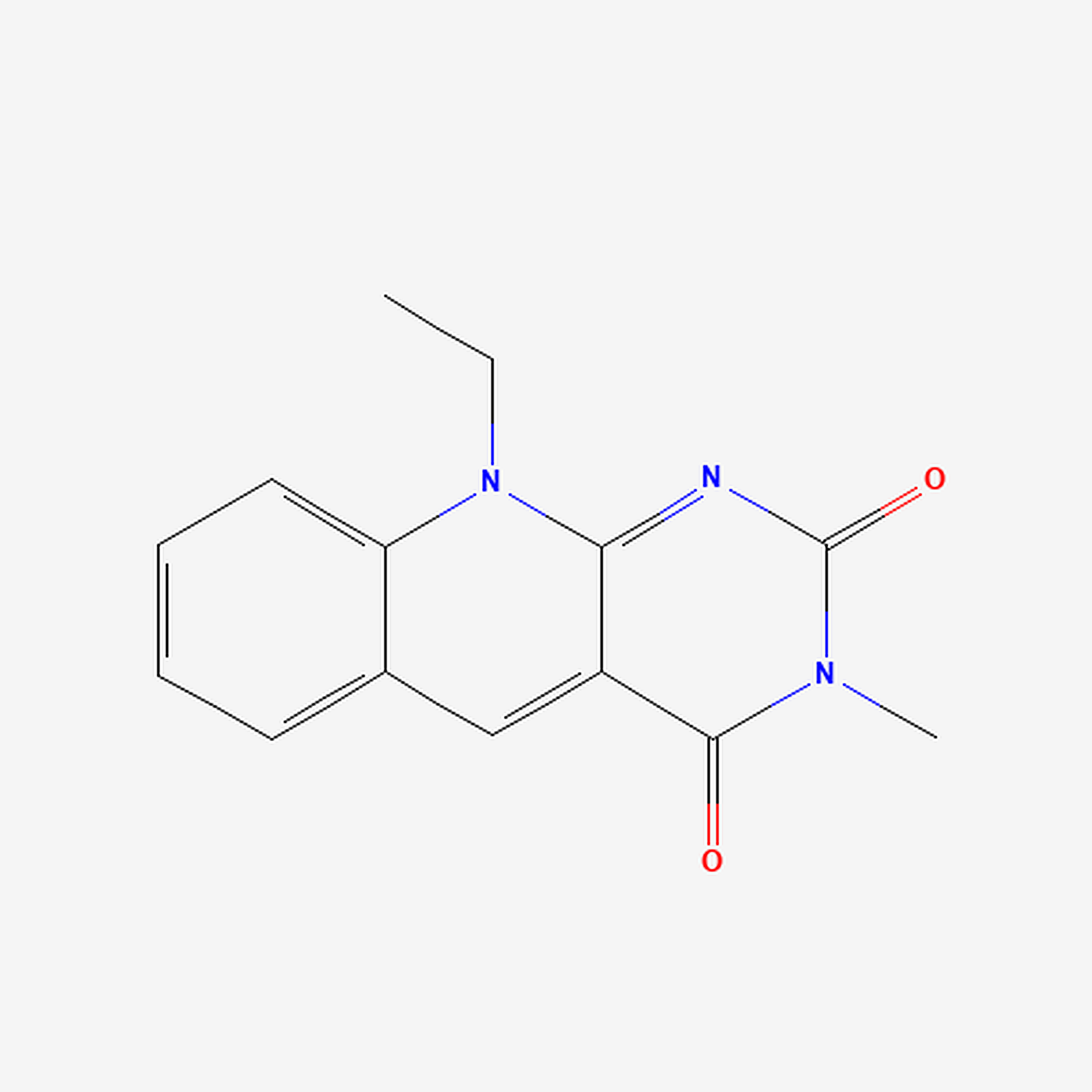
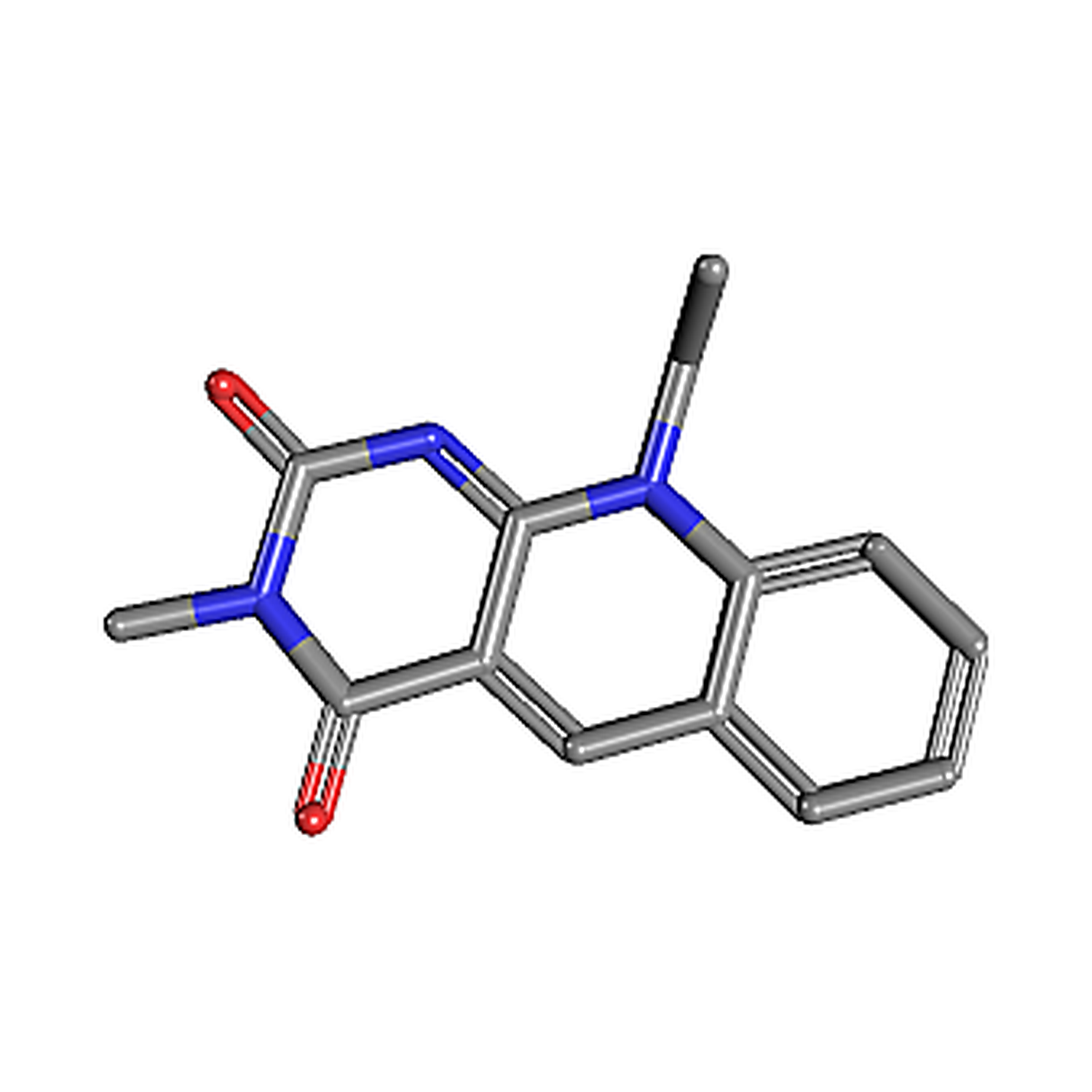
TND-1128 is a synthetic heterocyclic compound with the molecular formula C14H13N3O2. Its molecular architecture is based on a fused pyrimidoquinoline system containing multiple nitrogen atoms, two carbonyl functionalities and methyl and ethyl substituents.
The structure contains three nitrogen atoms and two oxygen atoms within a compact conjugated heterocyclic molecular framework. The fused ring system, carbonyl functionalities and alkyl substitution pattern provide distinctive structural features suitable for chromatographic, mass-spectrometric and spectroscopic characterisation.
A defining structural element of TND-1128 is its 5-deazaflavin-type fused heterocyclic framework. This conjugated ring system contains nitrogen-bearing heterocycles integrated with an aromatic region and two carbonyl functionalities.
The fused architecture creates a relatively rigid molecular system and provides several structural markers that may support comparative analytical identification.
The central molecular framework of TND-1128 consists of a fused pyrimidoquinoline ring system. This arrangement combines aromatic and nitrogen-containing heterocyclic regions within a single conjugated molecular structure.
The extended fused system may influence ultraviolet absorbance, chromatographic retention and spectroscopic characteristics and provides a useful structural signature during compound identification.
The molecular formula C14H13N3O2 reflects a structure containing carbon, hydrogen, nitrogen and oxygen distributed across several chemically distinct structural regions.
The combination of fused aromatic, heterocyclic, carbonyl and alkyl structural elements provides multiple analytical markers for comparative compound identification.
TND-1128 contains two carbonyl groups associated with the pyrimidinedione portion of the fused heterocyclic framework. These oxygen-containing functionalities contribute to molecular polarity and create chemically distinctive regions within the molecule.
The carbonyl groups may produce characteristic infrared absorption features and distinguishable carbon environments during carbon NMR analysis.
Three nitrogen atoms are incorporated within the fused heterocyclic architecture of TND-1128. These nitrogen environments occupy distinct positions within the conjugated ring system and contribute to the electronic distribution of the molecule.
The nitrogen-containing framework may influence chromatographic behaviour, ionisation characteristics and spectroscopic response under different analytical conditions.
TND-1128 contains an ethyl substituent attached to the fused heterocyclic framework. This alkyl region introduces a flexible structural component alongside the comparatively rigid conjugated ring system.
The ethyl group may provide characteristic proton and carbon resonances during NMR analysis and contributes to the overall hydrophobic character of the molecule.
A methyl substituent is also present within the molecular structure of TND-1128. This compact alkyl group provides an additional structural marker that may be distinguished during proton and carbon NMR analysis.
The combined methyl and ethyl substitution pattern differentiates TND-1128 from related unsubstituted or differently substituted deazaflavin structures.
TND-1128 contains two carbonyl oxygen atoms and several ring nitrogen atoms that may contribute to intermolecular interactions under analytical and solid-state conditions.
The distribution of heteroatoms, together with the conjugated surface of the molecule, may influence solvation, crystal packing, chromatographic retention and interactions with stationary phases.
The molecule combines an extended fused conjugated framework with two carbonyl functionalities, three nitrogen atoms and two alkyl substituents. The fused ring and alkyl regions contribute hydrophobic character, while the heteroatoms and carbonyl groups provide localised polarity.
This mixed structural character is relevant when evaluating solvent selection, sample preparation and reversed-phase chromatographic conditions.
The fused pyrimidoquinoline core provides a relatively rigid structural framework, while the ethyl substituent introduces limited conformational flexibility outside the fused ring system.
No defined stereogenic centre is present in the standard molecular representation, and the compound is represented without specified stereochemistry.
Under reversed-phase liquid chromatographic conditions, retention may be influenced by the fused conjugated ring system, carbonyl functionalities, nitrogen-containing heterocycles, alkyl substituents and overall molecular polarity.
Retention time and peak shape may vary according to mobile-phase composition, gradient conditions, stationary-phase chemistry, temperature and sample concentration.
LC-based methods may be used for qualitative identity comparison, purity profiling and retention-time verification of TND-1128 reference material.
The combination of a conjugated heterocyclic framework and polar carbonyl regions may require optimisation of mobile-phase composition and stationary-phase chemistry to obtain suitable retention and peak symmetry.
With a molecular weight of approximately 255.27 g/mol, TND-1128 falls within a mass range suitable for routine LC-MS analysis. Appropriate ionisation techniques may support detection of protonated, deprotonated or adducted molecular species depending on solvent composition, mobile-phase conditions and instrument parameters.
Fragmentation may involve the fused heterocyclic framework, carbonyl-containing region or alkyl substituents and can support structural confirmation when compared with authenticated reference data.
Proton NMR analysis may show characteristic resonances associated with aromatic proton environments together with signals originating from the methyl and ethyl substituents.
Carbon NMR analysis may provide distinguishable signals corresponding to aromatic and heterocyclic carbons, carbonyl carbons and the carbon environments of the alkyl substituents.
Infrared analysis may reveal characteristic absorption features associated with the two carbonyl functionalities, aromatic and heterocyclic environments and aliphatic C-H bonds.
The carbonyl functionalities may provide prominent absorption features that can assist structural comparison when evaluated against an authenticated reference spectrum.
The extended conjugated fused-ring system of TND-1128 may support ultraviolet-based chromatographic detection. Suitable detection wavelengths should be selected according to measured absorbance characteristics and validated laboratory methods.
The conjugated aromatic and heterocyclic framework may influence the precise electronic absorption profile of the compound.
The fused pyrimidoquinoline framework contains an extended conjugated electronic system. This structural characteristic differentiates TND-1128 from compounds containing isolated non-conjugated heterocycles or flexible aliphatic frameworks.
The conjugated system may contribute to characteristic ultraviolet absorbance and spectroscopic behaviour and can provide an additional analytical marker during identity verification.
TND-1128 is supplied as a laboratory powder. Solid-state characteristics such as crystallinity, particle morphology, residual moisture and residual solvent content may depend on manufacturing and purification procedures.
Analytical laboratories may use melting behaviour, powder analysis or spectroscopic comparison as supplementary identity indicators where appropriate.
TND-1128 may serve as a qualitative reference compound in structural verification and comparative analytical workflows involving LC-MS, HPLC, NMR and infrared spectroscopy. Laboratory procedures may include retention-time comparison, molecular-weight confirmation and comparative spectral profiling.
TND-1128 can be structurally classified as a synthetic 5-deazaflavin-type heterocyclic compound containing a fused pyrimidoquinoline framework, carbonyl functionalities and alkyl substituents.
Its molecular framework provides a distinctive conjugated nitrogen-containing structure for comparative analytical workflows involving related heterocyclic reference materials.
The pyrimidoquinoline framework of TND-1128 consists of multiple fused ring regions forming a compact and relatively rigid conjugated molecular system.
This fused architecture may produce characteristic chromatographic retention, ultraviolet absorbance and NMR signals useful for analytical comparison.
The molecular structure contains both methyl and ethyl substituents attached to the heterocyclic framework. These alkyl groups create identifiable structural differences compared with related deazaflavin compounds carrying alternative substitution patterns.
Their proton and carbon environments may provide useful spectroscopic markers during structural verification.
The three nitrogen atoms within TND-1128 occupy distinct positions in the fused heterocyclic system. Their bonding environments contribute to the electronic characteristics and overall heteroatom distribution of the molecule.
These nitrogen-containing regions may influence chromatographic response, ionisation behaviour and interactions with analytical solvents and stationary phases.
TND-1128 contains two carbonyl functionalities within the fused heterocyclic framework. These carbonyl environments contribute to molecular polarity and provide distinct spectroscopic markers.
The carbonyl carbons may provide characteristic carbon NMR resonances, while their vibrational behaviour may produce prominent infrared absorption features.
The nitrogen-containing heterocyclic system and carbonyl functionalities may influence ionisation behaviour under different analytical conditions.
Mobile-phase composition, solvent system and ionisation parameters can therefore affect mass-spectrometric response and chromatographic behaviour.
The molecular formula C14H13N3O2 contains three nitrogen atoms distributed within the heterocyclic framework and two oxygen atoms associated with carbonyl functionalities.
Theoretical elemental composition may support identity verification when combined with mass spectrometry and spectroscopic analysis.
As a chemical reference material, TND-1128 may be used for qualitative structural comparison, method development and analytical identity verification in laboratories examining deazaflavin-type compounds, fused nitrogen-containing heterocycles or related reference materials.
Analytical reproducibility depends on consistent sample preparation, validated instrument parameters, suitable reference documentation and controlled storage conditions.
Each unit is supplied in sealed laboratory packaging designed to support material integrity during storage and transport. Batch identification labelling supports traceability and internal documentation within controlled research environments.
Packaging should remain closed when the material is not in use and should be protected from moisture, excessive heat and direct light.
What is the CAS number of TND-1128?
The CAS number is 59997-14-7.
What is the PubChem CID of TND-1128?
The PubChem compound identifier is 322148.
What is the molecular formula of TND-1128?
The molecular formula is C14H13N3O2.
What is the molecular weight of TND-1128?
The molecular weight is approximately 255.27 g/mol.
What structural class does TND-1128 belong to?
TND-1128 is a synthetic 5-deazaflavin-type compound containing a fused pyrimidoquinoline heterocyclic framework.
How many nitrogen atoms does TND-1128 contain?
The molecular structure contains three nitrogen atoms.
How many oxygen atoms does TND-1128 contain?
The molecular structure contains two oxygen atoms associated with carbonyl functionalities.
In which form is TND-1128 supplied?
It is supplied as a laboratory powder in sealed packaging.
Is this product intended for human or animal use?
No. This material is supplied exclusively as a laboratory reference compound.
Disclaimer:
This product is supplied exclusively as a chemical reference material for laboratory and analytical purposes. Not for human or animal consumption. Not intended for food, supplement, cosmetic, medical, diagnostic or therapeutic use.
| Intended use: | Laboratory research and analytical reference purposes only |
| Application area: | Analytical chemistry, reference comparison and method development |
| End user: | Professional users in controlled research environments |
| Regulatory classification: | Chemical reference material |