nl
Winkelwagen
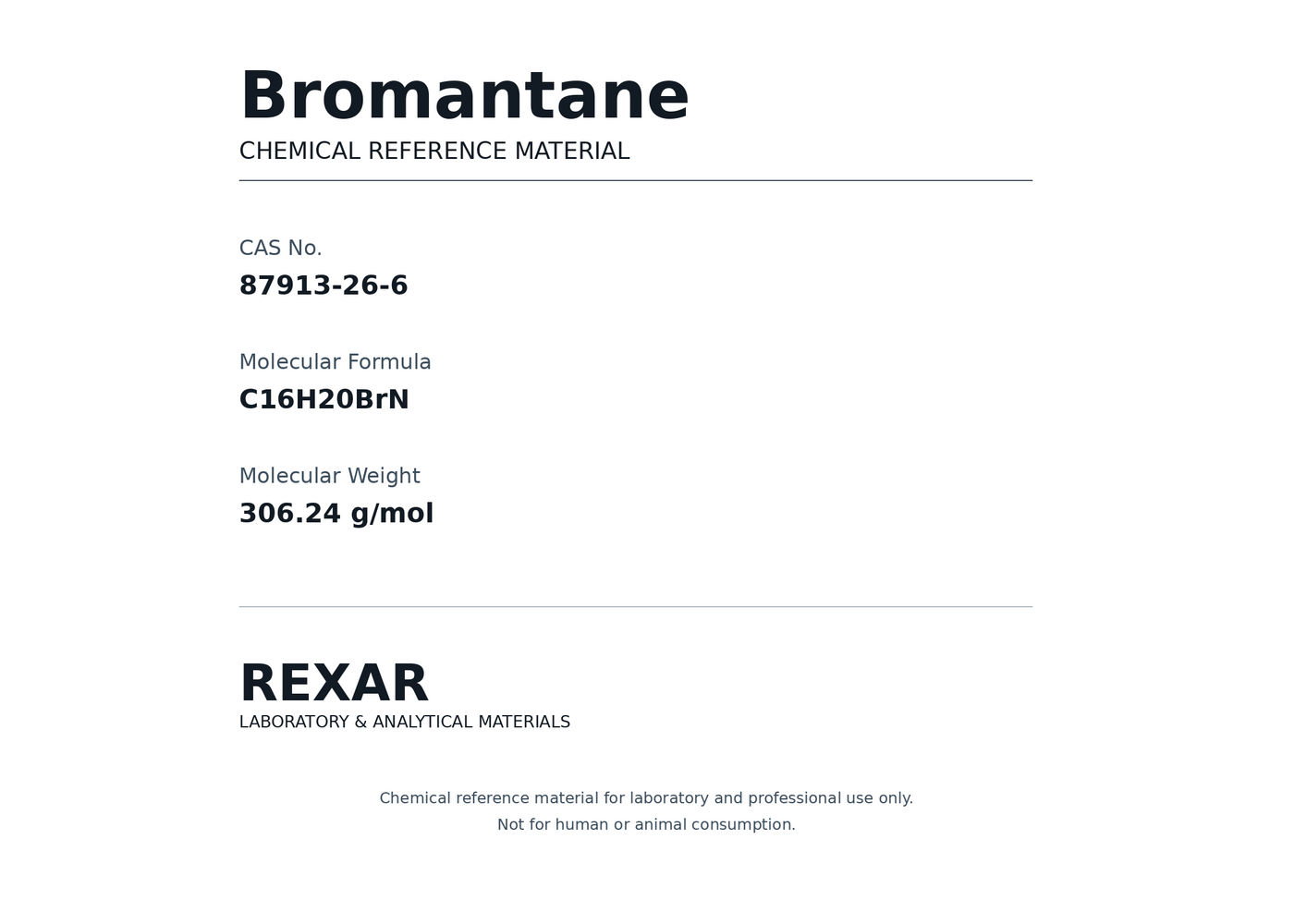
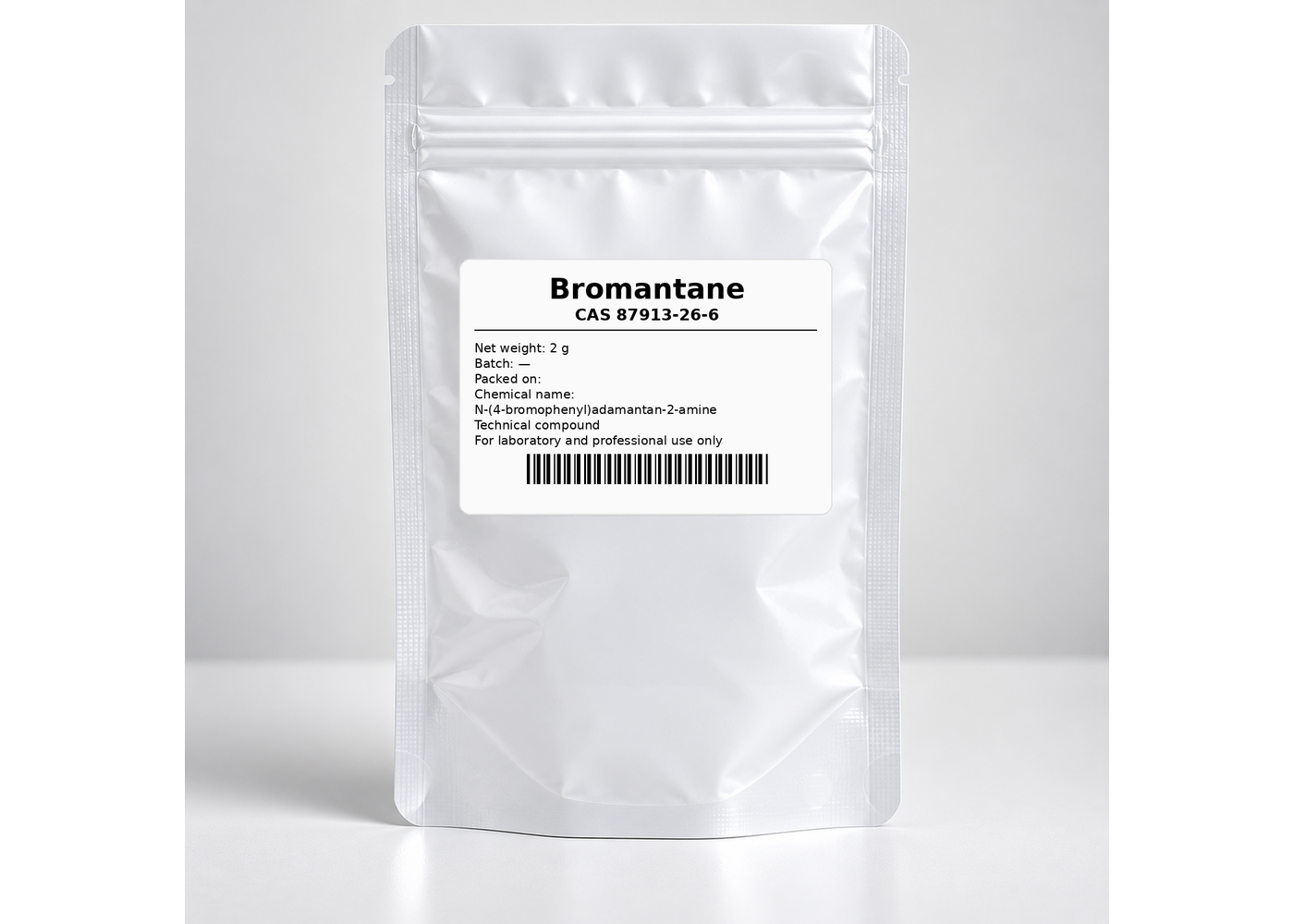
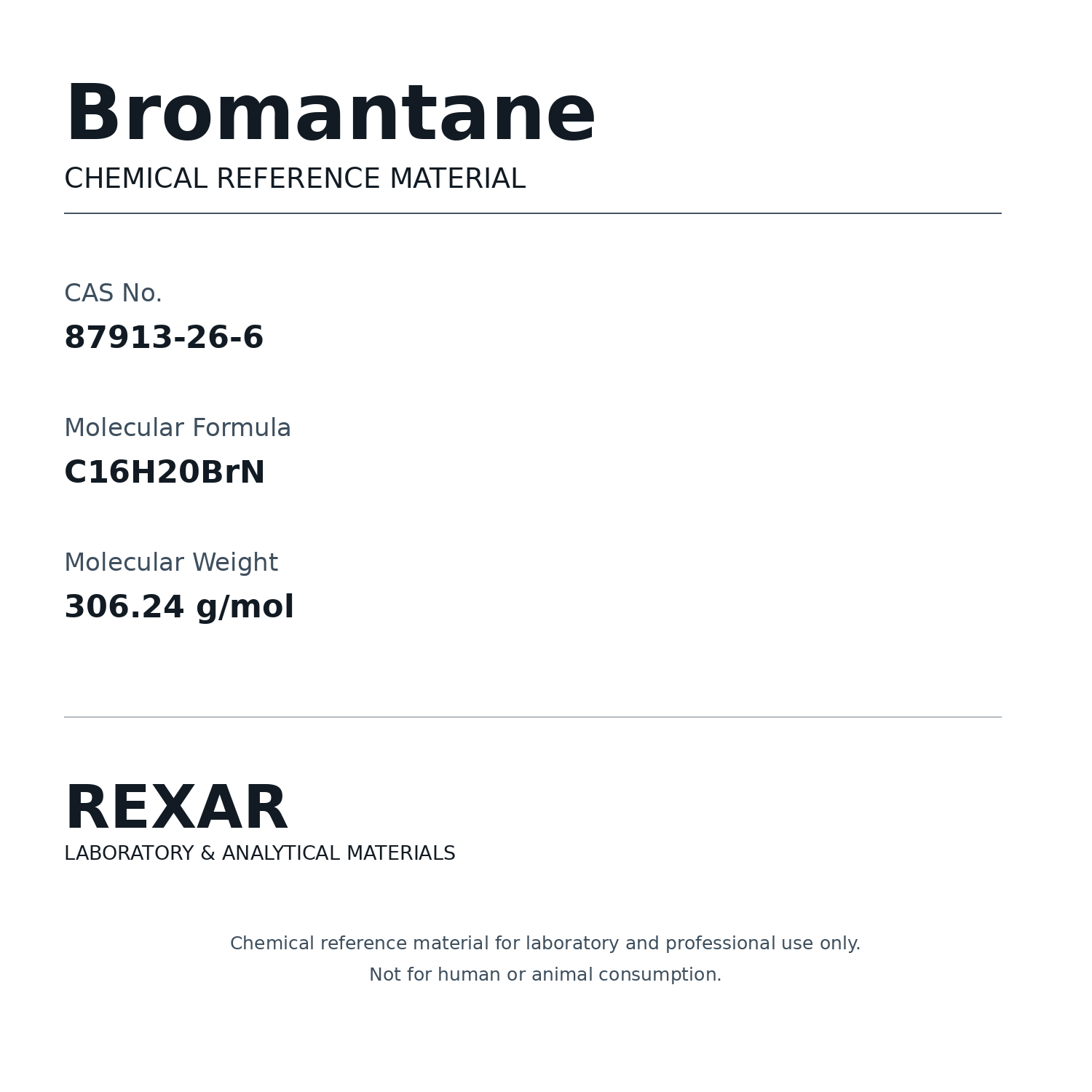
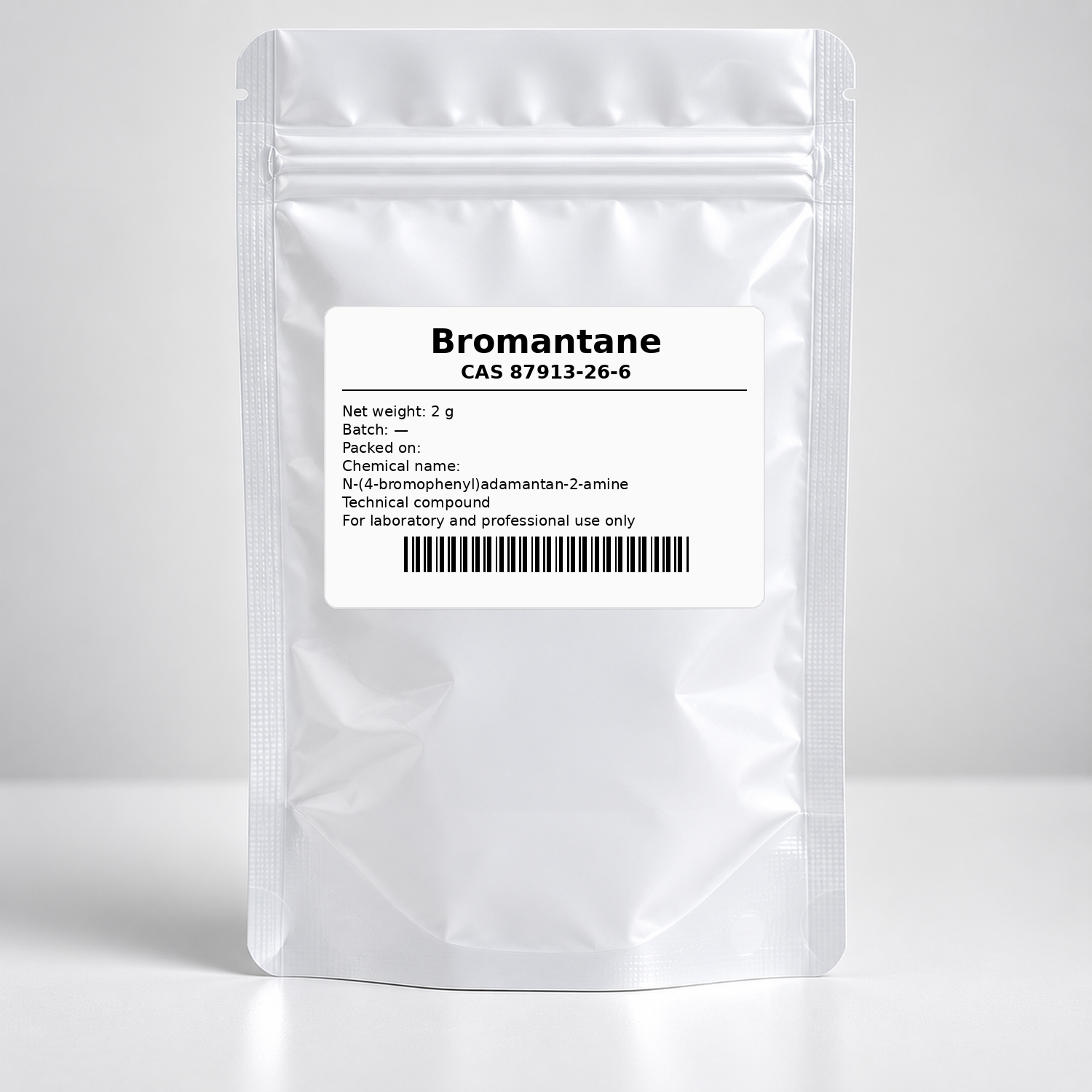

Bromantane (CAS 87913-26-6) is supplied by Rexar as a research-grade chemical reference material intended for analytical chemistry, structural verification and laboratory comparison workflows. This synthetic small molecule compound is provided exclusively for controlled research environments requiring confirmed chemical identity, reproducible analytical characteristics and consistent documentation standards.
 Research-grade material sourced and supplied from within the European Union.
Bromantane (CAS 87913-26-6) is supplied in sealed laboratory packaging to support traceability, storage integrity and laboratory handling procedures.
Rexar Technical Compound Datasheet (PDF)
Documentation: View the SDS and Technical Datasheet for this product, or browse our Technical Documentation library.
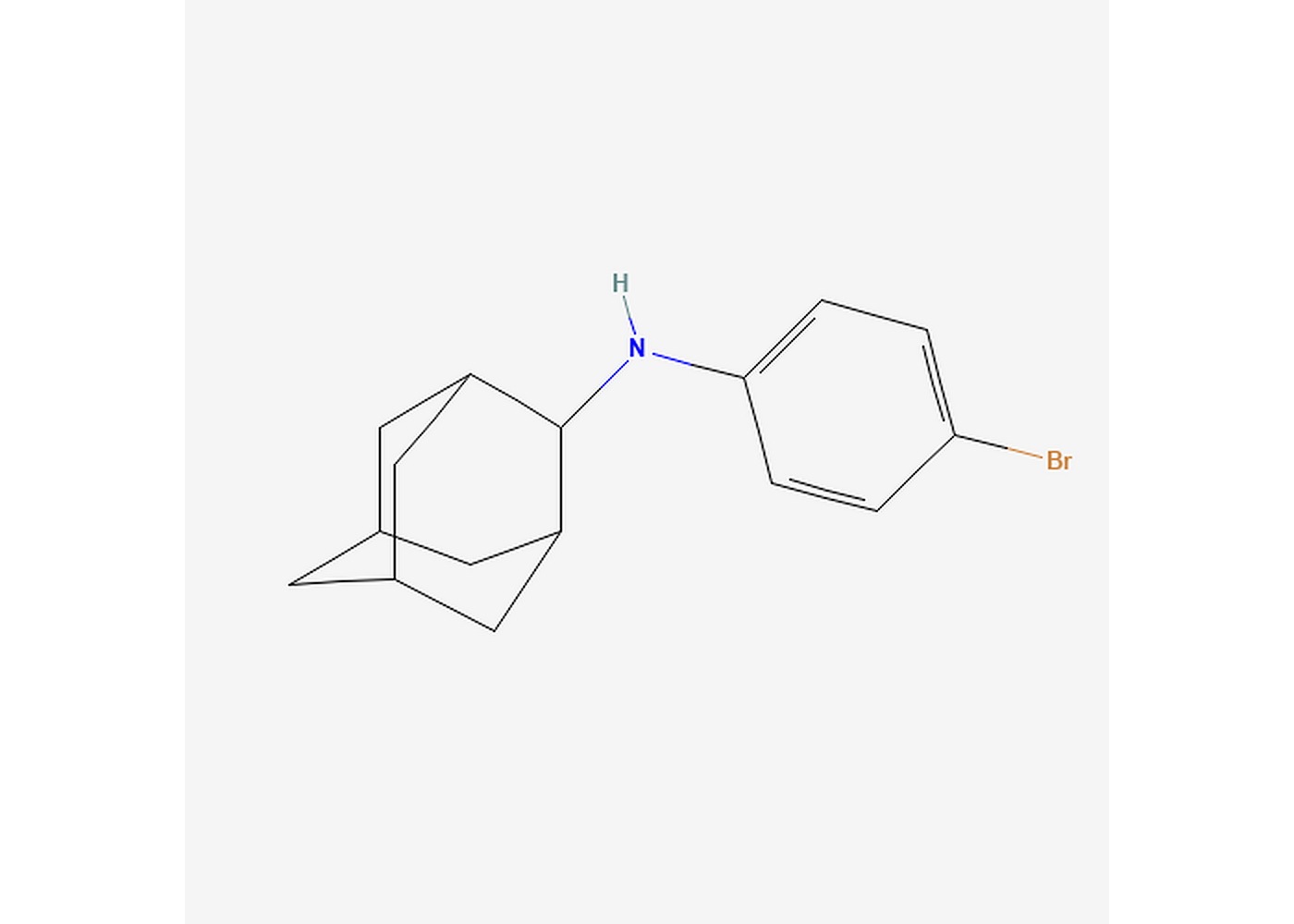
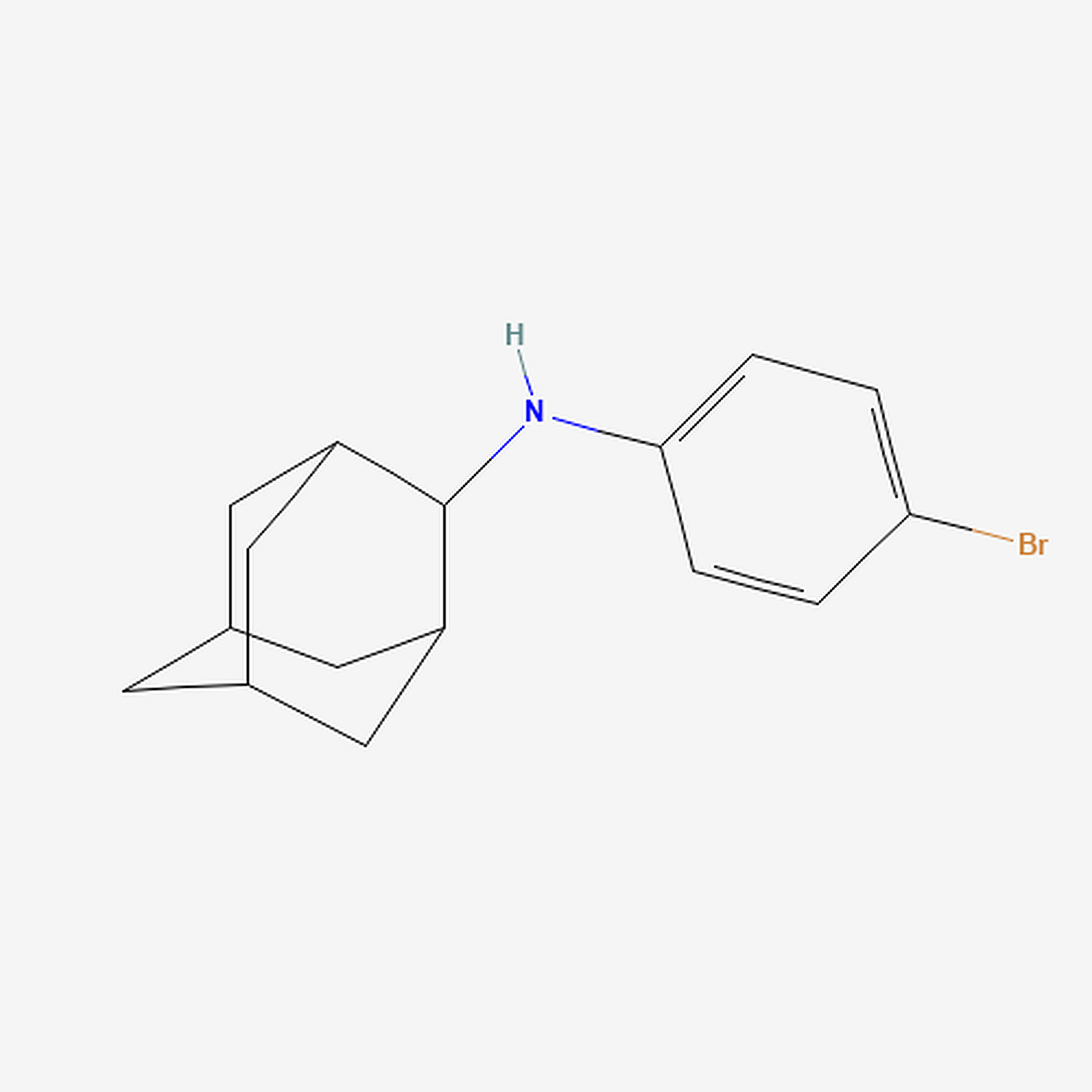
Bromantane is a substituted adamantane amine derivative combining a rigid tricyclic hydrocarbon scaffold with a brominated aromatic phenyl group. The molecule consists of an adamantane core linked through a secondary amine functionality to a para-brominated aromatic ring, forming a hybrid structure that contains both saturated aliphatic and aromatic domains.
The adamantane framework is a polycyclic hydrocarbon composed of fused cyclohexane rings arranged in a symmetrical cage-like geometry. All carbon atoms within the adamantane structure are sp3-hybridised, producing a saturated and conformationally stable core. This three-dimensional rigidity contributes to predictable steric behaviour and consistent analytical properties under laboratory conditions.
Because of its defined carbon framework, adamantane-based structures are frequently referenced in structural chemistry and materials science. The cage-like configuration provides mechanical stability at the molecular level and reduces conformational variability. These characteristics are relevant in analytical workflows where reproducibility and defined molecular geometry are important for identification procedures.
The para-brominated phenyl substitution introduces a planar aromatic ring system that contributes electron delocalisation and defined spectroscopic characteristics. The presence of a halogen substituent, specifically bromine, adds elemental specificity that can be detected through analytical techniques such as mass spectrometry and elemental analysis.
The adamantane scaffold is often described as a diamondoid hydrocarbon structure due to its resemblance to fragments of the diamond lattice. Its tetrahedral carbon arrangement results in strong sigma bonding and structural rigidity. In substituted derivatives, functional groups attached to the adamantane cage influence overall molecular behaviour while maintaining the core’s geometric stability.
Substitution at specific carbon positions on the adamantane core generates structurally related derivatives with distinct molecular weights and elemental compositions. Bromantane represents a substituted adamantane in which the cage structure is connected to an aromatic amine moiety. This substitution pattern defines the compound’s registry classification and analytical profile.
Bromantane contains a bromine atom located at the para position of the phenyl ring. Bromine has two naturally occurring isotopes, 79Br and 81Br, which produce a characteristic isotopic distribution pattern observable in mass spectrometric analysis. This isotopic signature can assist in confirming molecular identity during structural verification workflows.
Halogenated aromatic compounds may display modified chromatographic behaviour compared to non-halogenated analogues. The presence of bromine can influence molecular polarity, intermolecular interactions and retention time characteristics under controlled chromatographic conditions. In reversed-phase liquid chromatography, substitution patterns can alter hydrophobic interaction strength with stationary phases.
The molecular formula C16H20BrN describes a covalently bonded structure consisting of carbon, hydrogen, bromine and nitrogen atoms. The secondary amine functionality provides a linkage between the saturated adamantane core and the aromatic phenyl group.
From a bonding perspective, the molecule contains sigma bonds within the adamantane cage and delocalised pi bonding within the aromatic ring. These different bonding domains contribute to distinct spectroscopic signatures.
In proton NMR analysis, aromatic hydrogen atoms typically appear in a separate chemical shift region compared to aliphatic hydrogens associated with the saturated cage structure. Carbon-13 NMR may reveal signals corresponding to quaternary carbons within the adamantane core and substituted aromatic carbons within the phenyl ring.
Infrared spectroscopy may show absorption bands consistent with amine functional groups, aromatic C-H stretching and aliphatic C-H vibrations. Such spectroscopic features allow laboratories to confirm structural identity through established analytical protocols.
As a crystalline small molecule, Bromantane typically exhibits defined solid-state behaviour under standard laboratory conditions. Crystalline materials are characterised by repeating lattice structures that contribute to measurable melting transitions and reproducible physical appearance.
Defined crystalline morphology can support quality assessment procedures, including visual inspection and analytical verification. Proper storage in dry and light-protected environments helps maintain structural stability over time.
Bromantane is registered under CAS number 87913-26-6 and indexed in public chemical databases including PubChem. Registry entries typically contain structural diagrams, SMILES notation, InChI identifiers and classification metadata relevant to small molecule research compounds.
Under standard laboratory conditions, Bromantane is typically encountered as a crystalline solid. Crystalline small molecules with defined substitution patterns often display consistent solid-state behaviour and reproducible analytical responses.
Analytical parameters that may be evaluated include molecular mass verification, isotopic distribution patterns, chromatographic retention time, and spectroscopic confirmation through NMR and infrared analysis.
Bromantane may serve as a qualitative reference material in laboratories performing structural verification and compound comparison. In chromatographic workflows, retention time behaviour may be compared against established reference materials. In spectroscopic workflows, structural confirmation can be performed through analysis of NMR and IR spectra.
The defined scaffold and substitution pattern contribute to reproducible analytical characteristics that support its use as a structural reference compound in small molecule investigations.
As a research-grade chemical reference material, Bromantane is supplied in sealed packaging to preserve integrity during storage and transport. Batch identification labeling supports traceability and internal documentation within laboratory systems.
Bromantane can also be positioned within the broader category of substituted adamantane derivatives that combine saturated cage hydrocarbons with functionalised aromatic systems. Within structural chemistry, such hybrid molecules are often discussed in relation to how rigid hydrocarbon frameworks influence overall molecular geometry, intermolecular packing behaviour and analytical detectability.
The adamantane core provides a compact and sterically defined scaffold. Compared to flexible aliphatic chains, cage-like hydrocarbons exhibit reduced conformational freedom. This reduced flexibility can contribute to reproducible crystallisation behaviour and consistent solid-state morphology. In analytical laboratories, defined solid-state characteristics are relevant for quality assessment and reference comparisons.
When comparing substituted adamantane derivatives, differences typically arise from the nature and position of substituents attached to the cage structure. In the case of Bromantane, the para-brominated phenyl group introduces both aromatic character and halogen substitution. This combination results in a molecule containing distinct structural domains: a saturated hydrocarbon cage, an aromatic ring system and a secondary amine linkage connecting the two regions.
From an analytical chemistry perspective, compounds containing both aromatic and aliphatic domains often display clearly differentiated spectral regions. Aromatic proton environments generally appear in predictable ranges during proton NMR analysis, while aliphatic cage protons generate signals in separate regions. Carbon-13 NMR can further differentiate between quaternary carbons of the adamantane framework and substituted aromatic carbons of the phenyl ring.
Mass spectrometric analysis of halogenated aromatic amines may reveal characteristic fragmentation pathways influenced by the presence of bromine. The natural isotopic distribution of bromine produces a distinguishable peak pattern that can assist in confirming elemental composition. Such isotopic signatures are routinely used in laboratory environments to support compound identification workflows.
Chromatographic behaviour may also be influenced by structural features. In reversed-phase high-performance liquid chromatography (HPLC), hydrophobic interactions between the compound and the stationary phase can affect retention time. The rigid hydrocarbon cage and aromatic substitution pattern contribute to defined retention characteristics under standardised analytical conditions.
In addition to spectroscopic and chromatographic evaluation, elemental composition analysis can be used to verify the presence of bromine, nitrogen and the corresponding carbon-hydrogen framework. Combined analytical techniques allow laboratories to confirm structural integrity and compare reference materials with test samples.
Because Bromantane is indexed in international chemical registries, laboratories can cross-reference structural identifiers such as CAS number, molecular formula and IUPAC name to ensure consistency in documentation. Registry metadata, including InChI strings and structural descriptors, further support accurate identification in research settings.
The combination of a rigid adamantane scaffold, aromatic substitution and halogen incorporation defines Bromantane as a structurally distinctive small molecule compound. These structural characteristics form the basis for its application as a reference material in controlled laboratory environments.
This product is supplied exclusively as a chemical reference material for laboratory and analytical purposes. Not for human or animal consumption. Not intended for food, supplement, cosmetic, medical, diagnostic or therapeutic use.
| Intended use: | Laboratory research and analytical reference purposes only |
| Application area: | Analytical chemistry, reference comparison and method development |
| End user: | Professional users in controlled research environments |
| Regulatory classification: | Chemical reference material |