da
Indkøbskurv
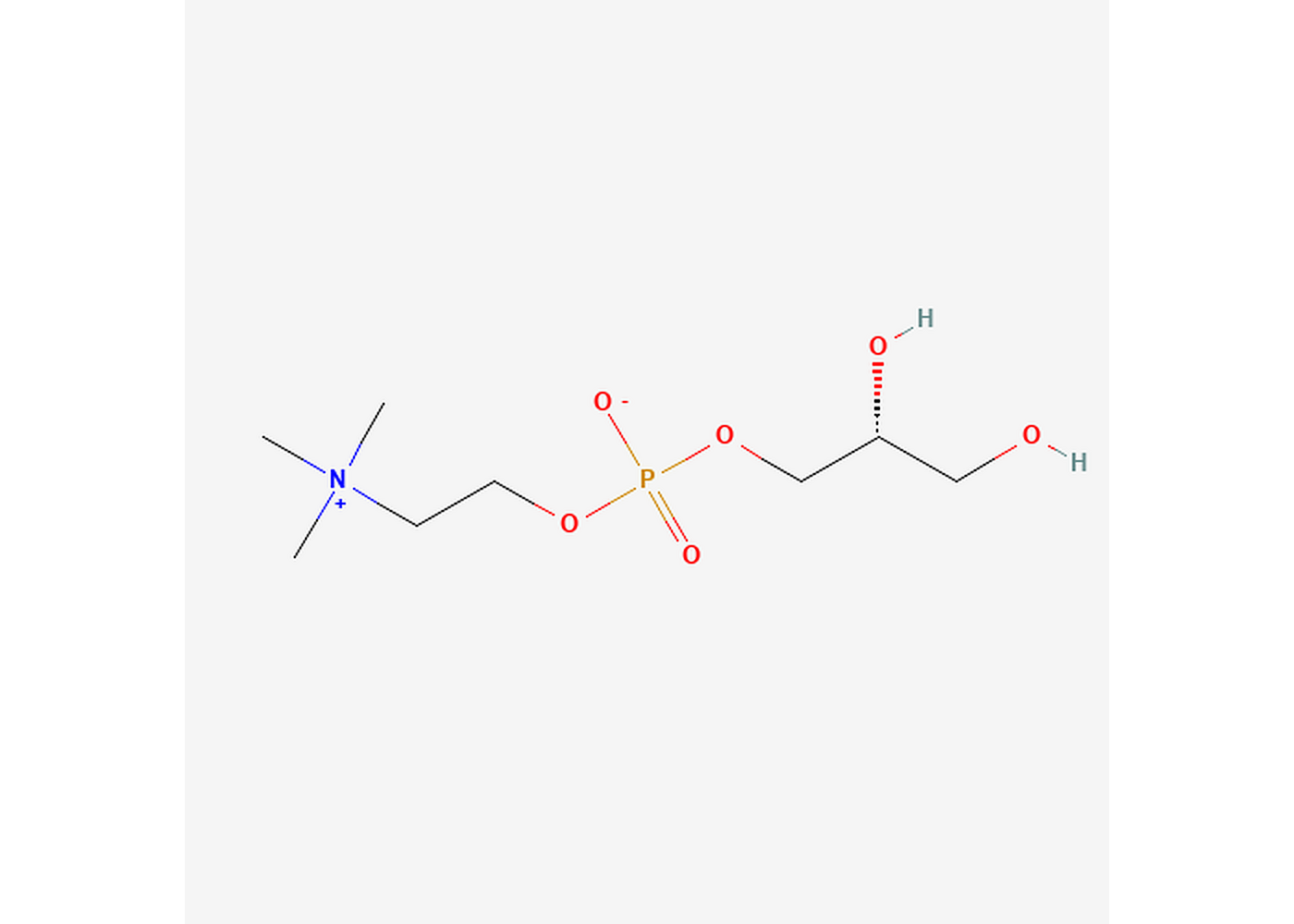
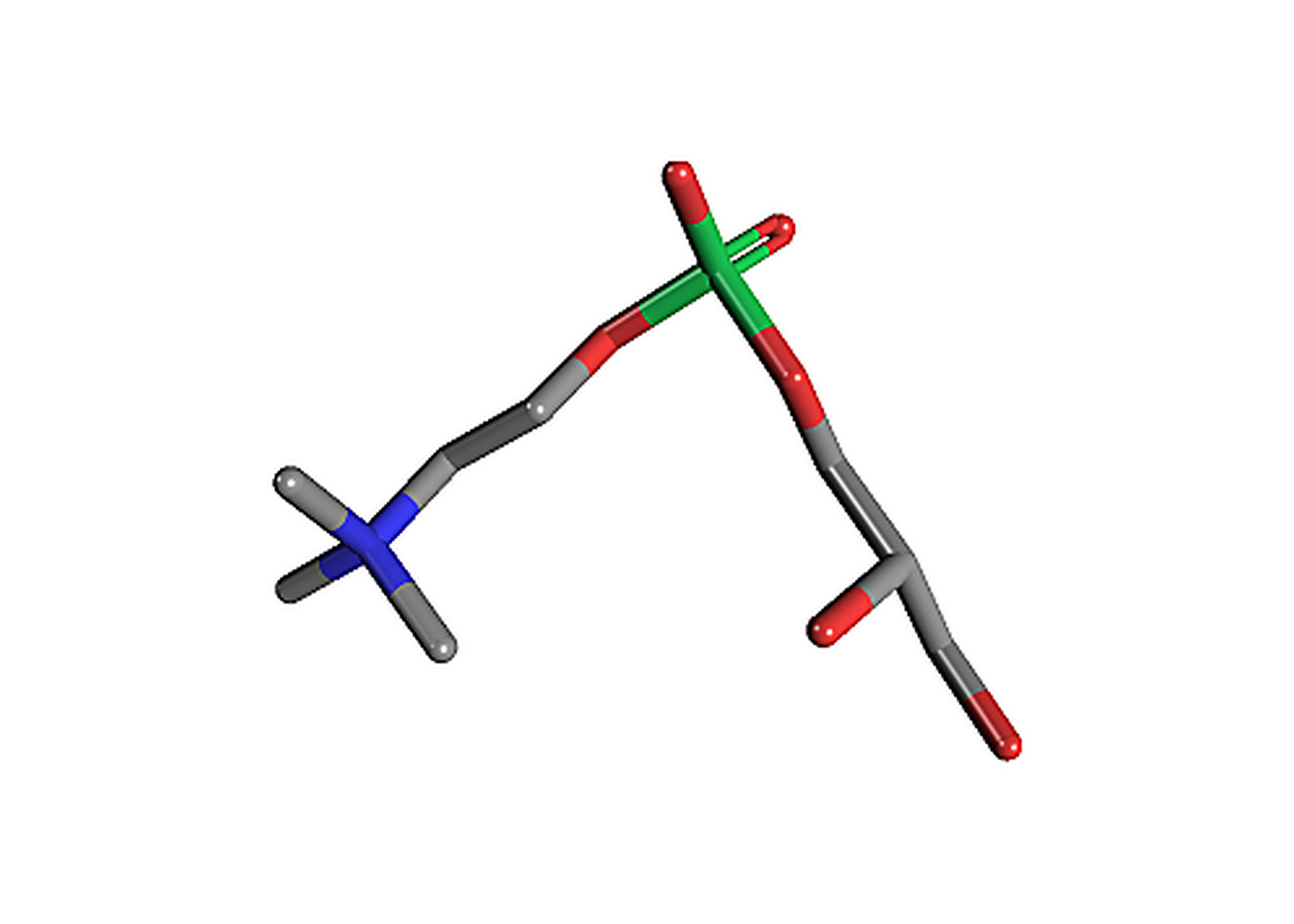
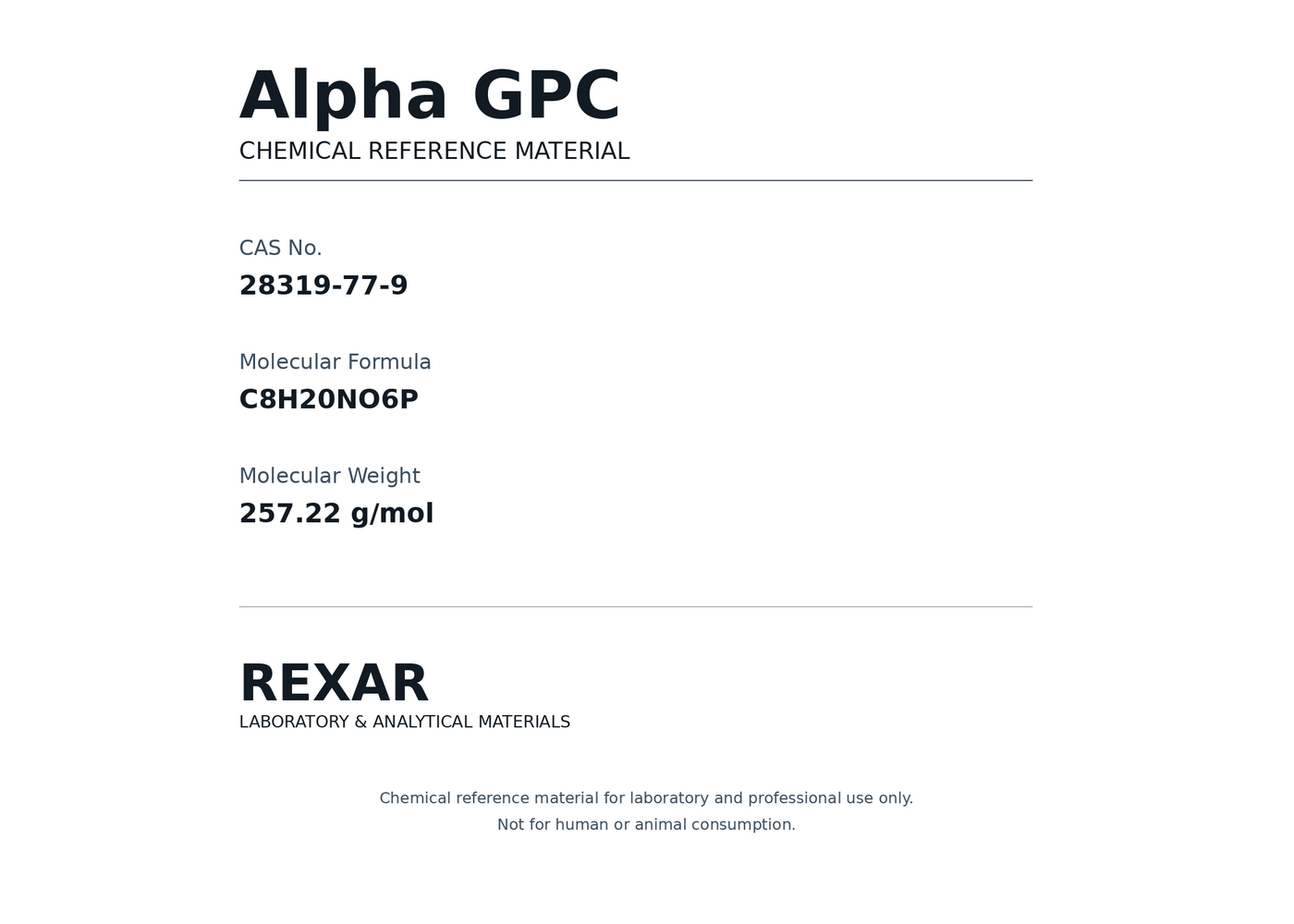
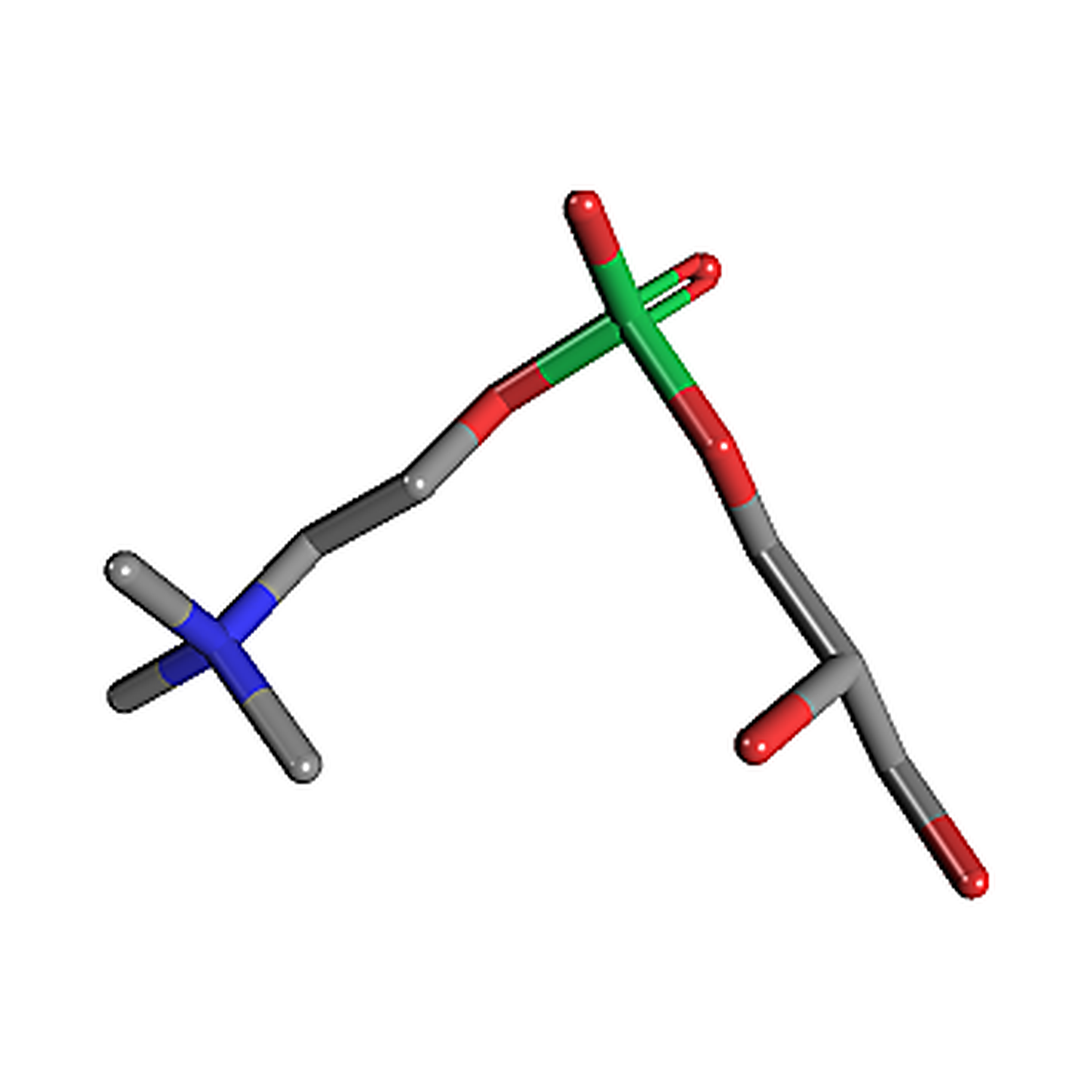
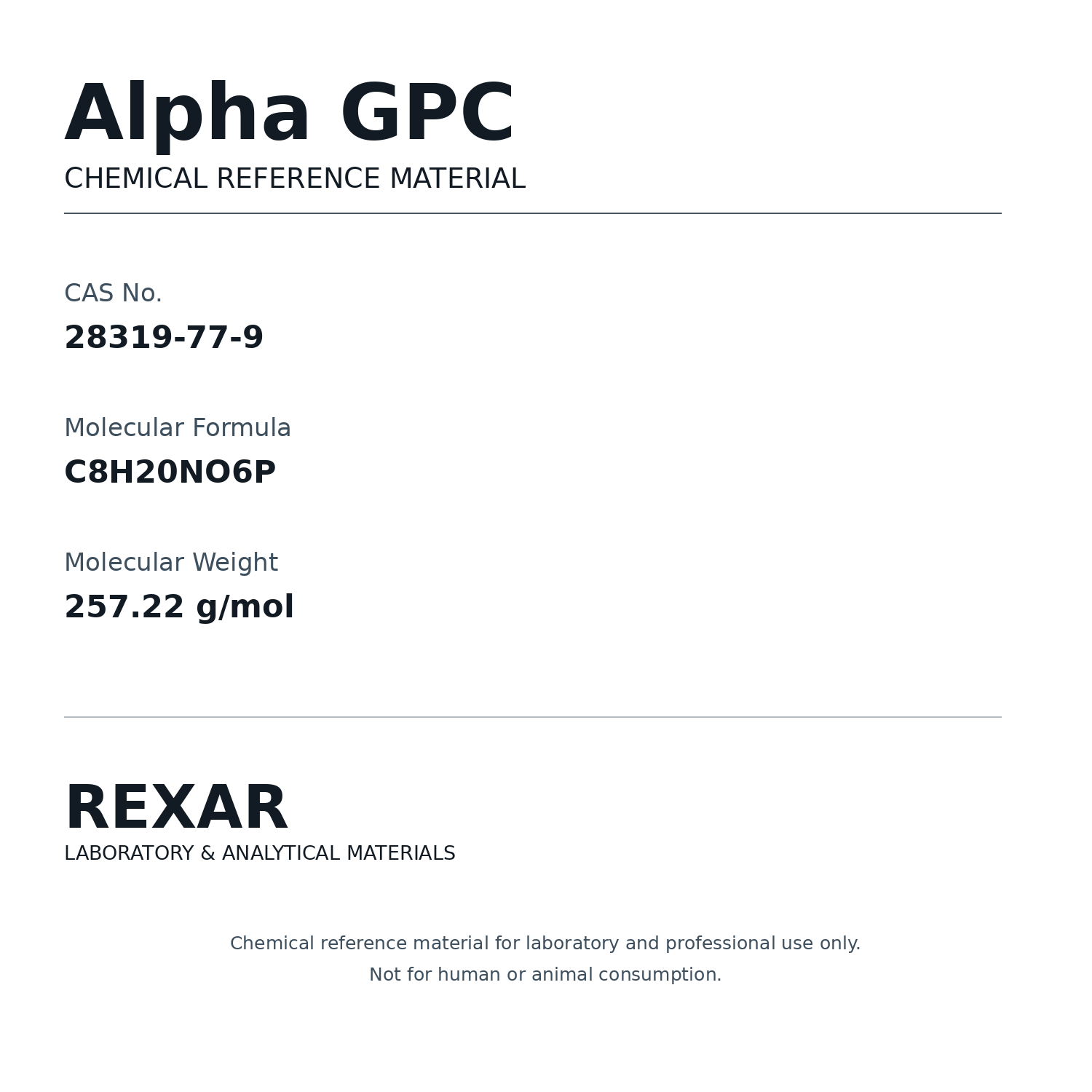

Alpha GPC (L-Alpha glycerylfosforylcholin, CAS 28319-77-9) leveres af Rexar som et kemisk referencemateriale i forskningskvalitet til analytisk kemi, strukturel verifikation og laboratoriebaserede sammenligningsarbejdsgange. Dette fosforylerede cholinderivat leveres udelukkende til kontrollerede forskningsmiljøer, der kræver verificeret kemisk identitet, reproducerbare analytiske egenskaber og dokumenteret referencekonsistens.
Forskningsmateriale distribueret af Rexar inden for Den Europæiske Union.
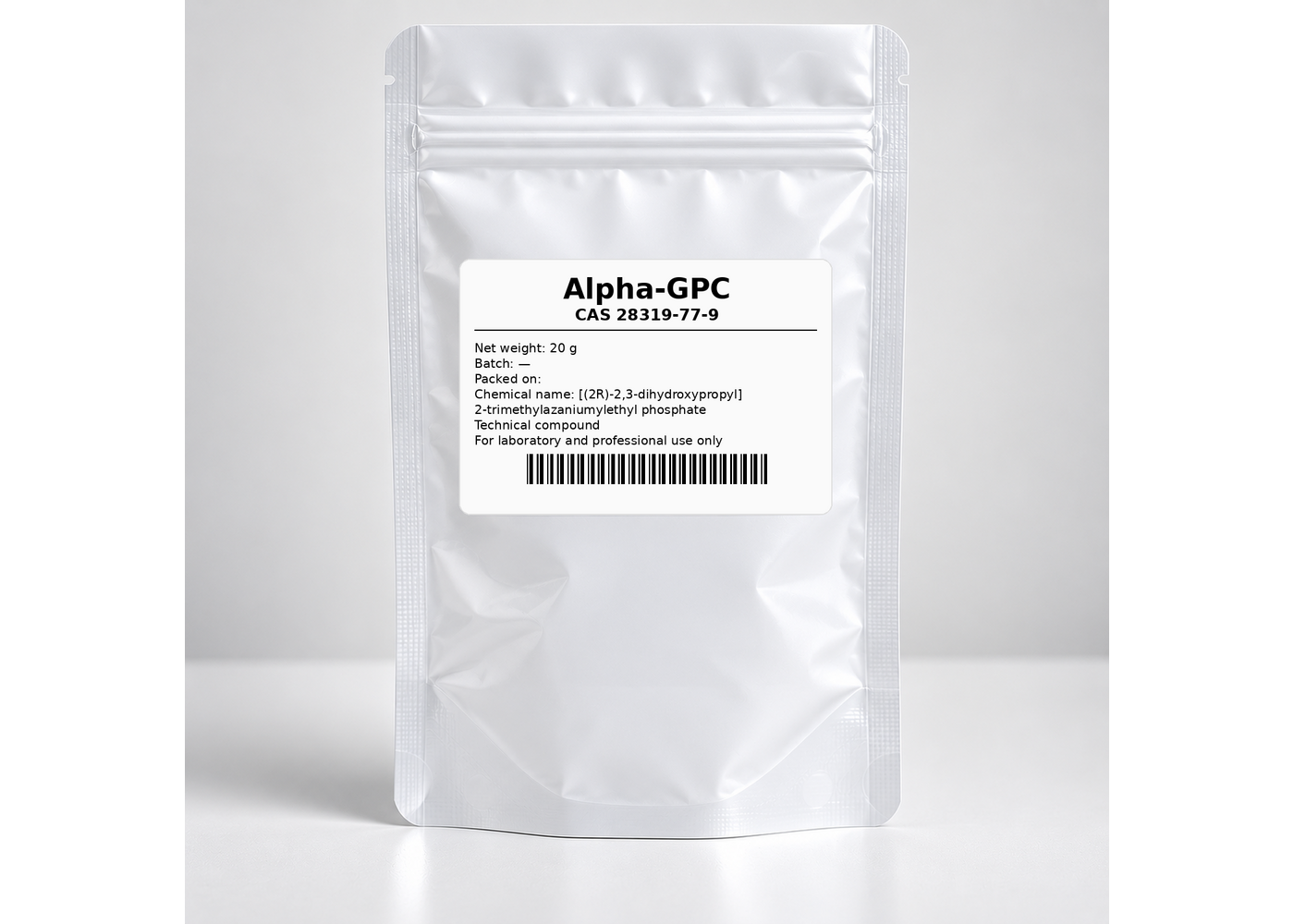
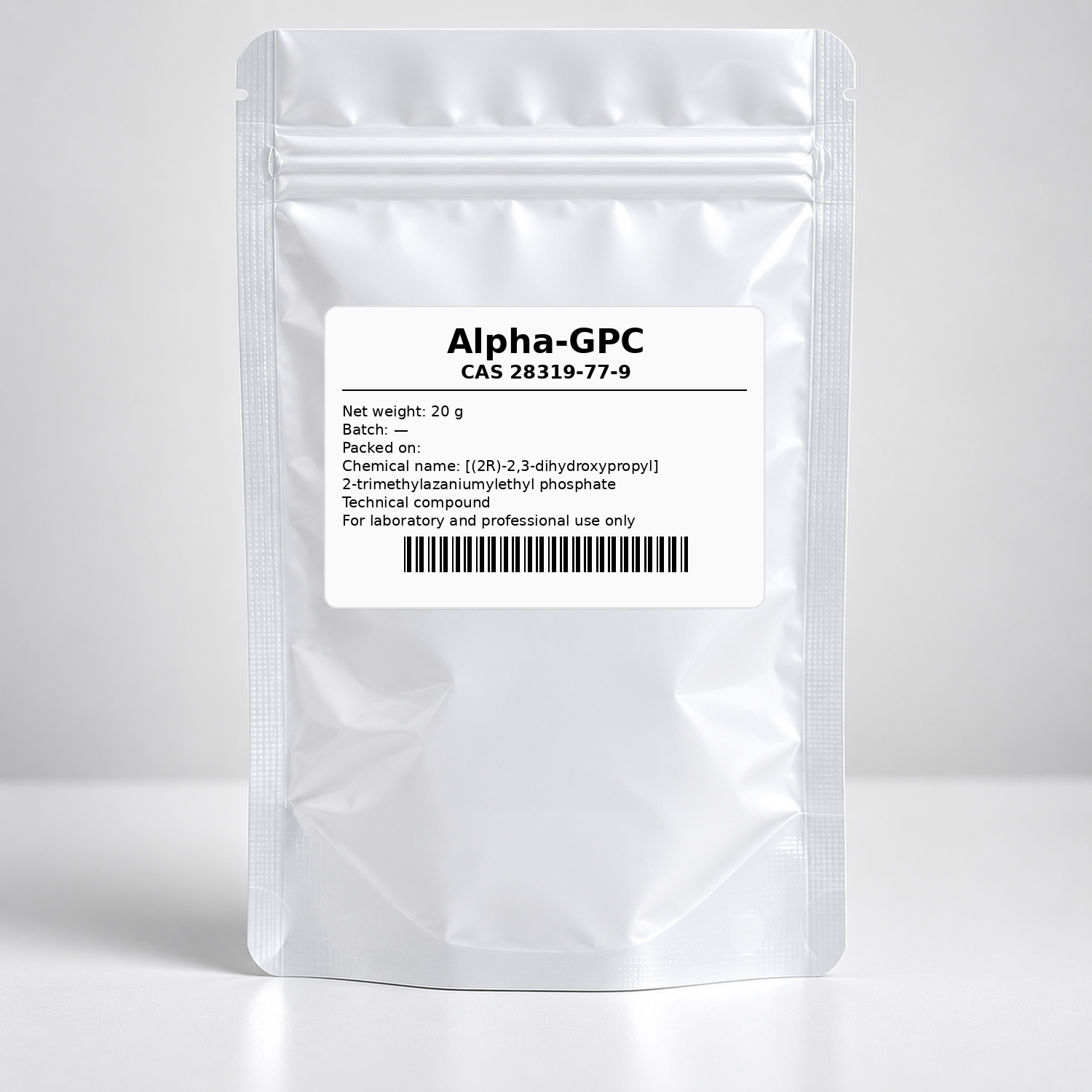
Alpha GPC er tilgængeligt direkte via Rexars webshop og leveres i forseglet laboratorieemballage til distribution inden for Den Europæiske Union.
Rexar Technical Compound Datasheet (PDF)
Dokumentation: Se SDS og det tekniske datablad for dette produkt, eller gennemse vores Tekniske dokumentation.
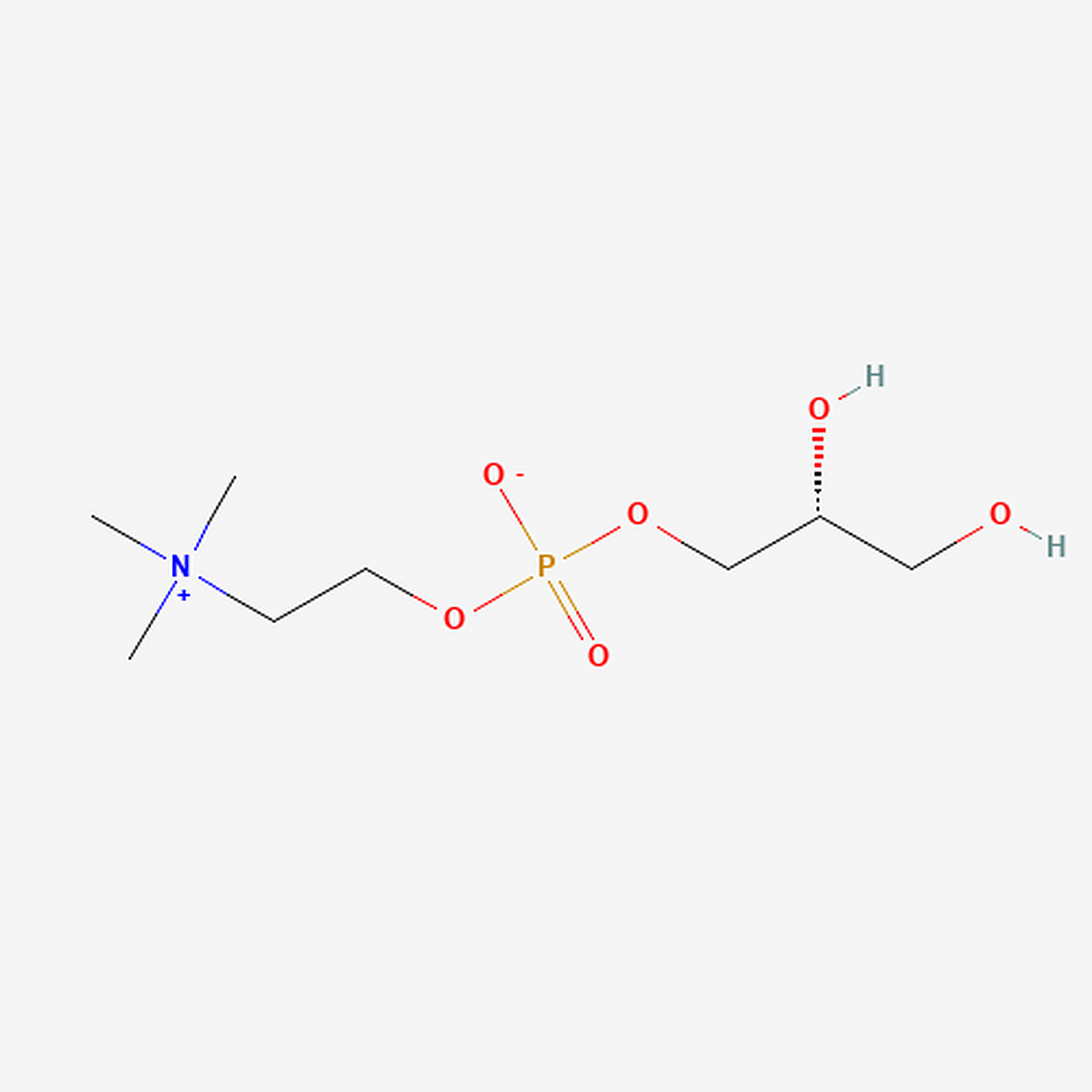
Alpha GPC er en glycerofosforylcholinforbindelse bestående af en glycerolrygrad esterificeret til en fosfatgruppe, som igen er bundet til en cholinenhed. Molekylet kombinerer et polyolfragment (glycerol), en fosfatesterbinding og en kvaternær ammoniumgruppe i en kompakt og stærkt polær struktur.
Molekylformlen C8H20NO6P og molekylvægten på 257,22 g/mol afspejler tilstedeværelsen af flere oxygenatomer og et fosforatom, der danner den centrale fosfatgruppe. Denne sammensætning bidrager til stærkt hydrofile egenskaber og veldefineret ionisk adfærd i vandige systemer.
Alpha GPC indeholder en permanent positivt ladet kvaternær ammoniumgruppe (trimethylazaniumyl) og en negativt ladet fosfatgruppe. Som følge heraf udviser molekylet zwitterionisk adfærd under fysiologiske pH-forhold.
Denne dobbeltladningsfordeling påvirker opløselighed, kromatografisk retention og elektroforetisk mobilitet. Zwitterioniske forbindelser udviser ofte karakteristiske interaktioner med polære stationære faser og ionbytningssystemer.
Fosfatgruppen danner en fosfodiesterbinding mellem glycerol og cholin. Fosforylerede forbindelser udviser typisk karakteristiske infrarøde absorptionsbånd relateret til P=O-strækning og P–O–C-bindinger.
I NMR-spektroskopi kan fosforholdige forbindelser yderligere karakteriseres ved hjælp af 31P-NMR, hvilket giver en ekstra analytisk dimension ud over standard proton- og kulstofspektre.
Glyceroldelen indeholder to hydroxylgrupper, som bidrager til hydrogenbindingspotentiale og vandopløselighed. Disse hydroxylgrupper kan deltage i intermolekylære interaktioner under krystallisering eller i opløsning.
Den stereokemiske betegnelse "L-Alpha" refererer til konfigurationen af den glycerolafledte struktur. Strukturel integritet kan vurderes gennem stereokemisk analyse i avancerede laboratoriemiljøer.
Trimethylammoniumgruppen i Alpha GPC bærer en permanent positiv ladning uafhængigt af pH. Denne egenskab adskiller den fra tertiære aminer, som kan gennemgå protonerings- og deprotoneringsligevægte.
Det faste kationiske center påvirker kromatografisk separation, især i HILIC-systemer (Hydrophilic Interaction Liquid Chromatography) eller ionbytningsmetoder.
Molekylionen svarer til 257,22 g/mol. Fragmenteringsveje kan omfatte spaltning af fosfatesterbindingen eller tab af trimethylaminfragmenter under specifikke ioniseringsbetingelser.
Højopløselig massespektrometri (HRMS) bekræfter grundstofsammensætningen og understøtter strukturel verifikation gennem præcis massebestemmelse.
Infrarød spektroskopi kan afsløre karakteristiske absorptionsbånd for fosfatgrupper (P=O-strækning), hydroxylgrupper (O–H-strækning) og C–N-bindinger forbundet med den kvaternære ammoniumstruktur.
Proton-NMR adskiller methylgrupper bundet til nitrogen fra glycerolens methylenprotoner. Kulstof-NMR bekræfter oxygenrige kulstofmiljøer uden carbonylgrupper, hvilket er konsistent med fosfatesterstrukturer.
31P-NMR giver direkte bekræftelse af fosfatcentret og anvendes ofte ved karakterisering af fosforylerede forbindelser.
På grund af sin polære og zwitterioniske natur udviser Alpha GPC typisk begrænset retention i reversed-phase systemer, medmindre ionparreagenser anvendes. Hydrophilic Interaction Chromatography (HILIC) kan give forbedret retention og topform.
Mobilfasens pH og ionstyrke påvirker retentionstid og topsymmetri betydeligt. Buffersystemer anvendes ofte for at sikre reproducerbarhed under metodevalidering.
Alpha GPC udviser høj opløselighed i vand på grund af sin ioniske karakter. Kompatibiliteten med organiske opløsningsmidler kan variere afhængigt af polaritet og hydrogenbindingskapacitet.
Ved analytisk prøveforberedelse understøtter undgåelse af ekstreme pH-forhold langsigtet strukturel stabilitet.
I komparative studier kan Alpha GPC adskilles fra andre cholinderivater gennem sin glycerofosfatbinding og molekylvægt. Fraværet af aromatiske systemer adskiller den fra mange små organiske referenceforbindelser.
Tilstedeværelsen af et fosforatom giver yderligere muligheder for strukturel verifikation og elementær bekræftelse.
Alpha GPC leveres typisk som et hvidt til råhvidt pulver. På grund af dets hygroskopiske potentiale anbefales opbevaring under kontrolleret luftfugtighed for at bevare ensartede fysiske egenskaber.
Krystallinitet og fugtindhold kan påvirke håndteringsegenskaberne og bør kontrolleres i overensstemmelse med laboratoriets opbevaringsprocedurer.
Som kemisk referencemateriale i forskningskvalitet mærkes Alpha GPC med sit unikke CAS-nummer 28319-77-9 samt tilhørende molekylære identifikatorer. Forseglet emballage og batchidentifikation understøtter laboratoriemæssig sporbarhed og dokumentationskonsistens.
Hvad er CAS-nummeret for Alpha GPC?
CAS-nummeret for Alpha GPC er 28319-77-9.
Hvilket strukturelt kendetegn definerer Alpha GPC?
Alpha GPC indeholder en glycerolrygrad bundet til en fosfatgruppe og en kvaternær ammonium-cholinenhed.
I hvilken form leveres Alpha GPC?
Dette produkt leveres som et hvidt til råhvidt pulver i forseglet laboratorieemballage.
Er dette produkt beregnet til menneskelig eller animalsk brug?
Nej. Dette materiale leveres udelukkende som en laboratoriereferenceforbindelse.
Kan Alpha GPC sendes inden for EU?
Ja. Ordrer leveres via Rexars webshop i forseglet laboratorieemballage.
På grund af sin zwitterioniske struktur udviser Alpha GPC karakteristiske ioniske interaktionsegenskaber i vandige systemer. Den kvaternære ammoniumgruppe opretholder en permanent positiv ladning, mens fosfatgruppen bidrager med et negativt ladningscenter. Denne dobbeltladede konfiguration påvirker intermolekylær association, hydrogenbindingsnetværk og dannelse af solvatskaller.
I kromatografiske systemer kan denne ioniske adfærd ændre retentionen afhængigt af den stationære fases polaritet og mobilfasens ionstyrke. Ionparreagenser kan yderligere modificere retentionsegenskaberne, når dette er nødvendigt i separationsprotokoller.
Tilstedeværelsen af et fosforatom muliggør direkte detektion ved hjælp af 31P-NMR-spektroskopi. Denne teknik giver et meget specifikt analytisk værktøj, som ikke er tilgængeligt i ikke-fosforylerede små molekyler.
Fosforresonansers kemiske skift kan overvåges for at bekræfte strukturel integritet og evaluere potentiel hydrolytisk nedbrydning under stresstestforhold.
Glycerolens hydroxylgrupper og fosfatgruppens oxygenatomer skaber flere hydrogenbindingsdonor- og acceptorsteder. I vandig opløsning bidrager disse steder til dannelsen af omfattende hydratiseringsskaller.
Sådanne hydrogenbindingsnetværk kan påvirke viskositet, opløselighedsgrænser og krystallisationsadfærd under faststofbehandling.
Som en zwitterionisk forbindelse kan Alpha GPC udvise karakteristiske elektroforetiske mobilitetsegenskaber afhængigt af pH og det ioniske miljø. Kapillærelektroforese kan anvendes til at evaluere migrationsmønstre i forhold til andre cholinderivater.
Balancen mellem den kationiske ammoniumgruppe og den anioniske fosfatgruppe bestemmer den samlede ladningsneutralitet og migrationsadfærd.
Forbindelser, der indeholder fosfatgrupper, kan udvise hygroskopiske egenskaber under forhold med høj luftfugtighed. Opbevaring under lav luftfugtighed understøtter ensartede fysiske egenskaber.
Fugtindhold kan analyseres ved hjælp af Karl Fischer-titrering for at sikre reproducerbar laboratoriemæssig ydeevne.
Inden for den bredere klasse af cholinrelaterede referencematerialer indtager Alpha GPC en særskilt position på grund af sin glycerofosfatbinding. I modsætning til simple cholinsalte ændrer tilstedeværelsen af en fosfatester både polaritet og strukturel fleksibilitet.
Disse forskelle giver målbare variationer i kromatografisk retention og spektroskopisk respons sammenlignet med ikke-fosforylerede analoger.
Differential scanning calorimetry (DSC) kan anvendes til at evaluere smelteovergange og potentiel polymorf adfærd. Stabile termiske overgange understøtter reproducerbarhed ved langtidsopbevaring.
Undgåelse af overdreven varmepåvirkning minimerer risikoen for esterkløvning eller strukturelle ændringer.
Dette produkt er udelukkende beregnet til laboratorieforskning. Det er ikke beregnet til menneskeligt eller animalsk forbrug eller til medicinske, diagnostiske eller terapeutiske anvendelser.
| Intended use: | Laboratory research and analytical reference purposes only |
| Application area: | Analytical chemistry, reference comparison and method development |
| End user: | Professional users in controlled research environments |
| Regulatory classification: | Chemical reference material |