da
Indkøbskurv
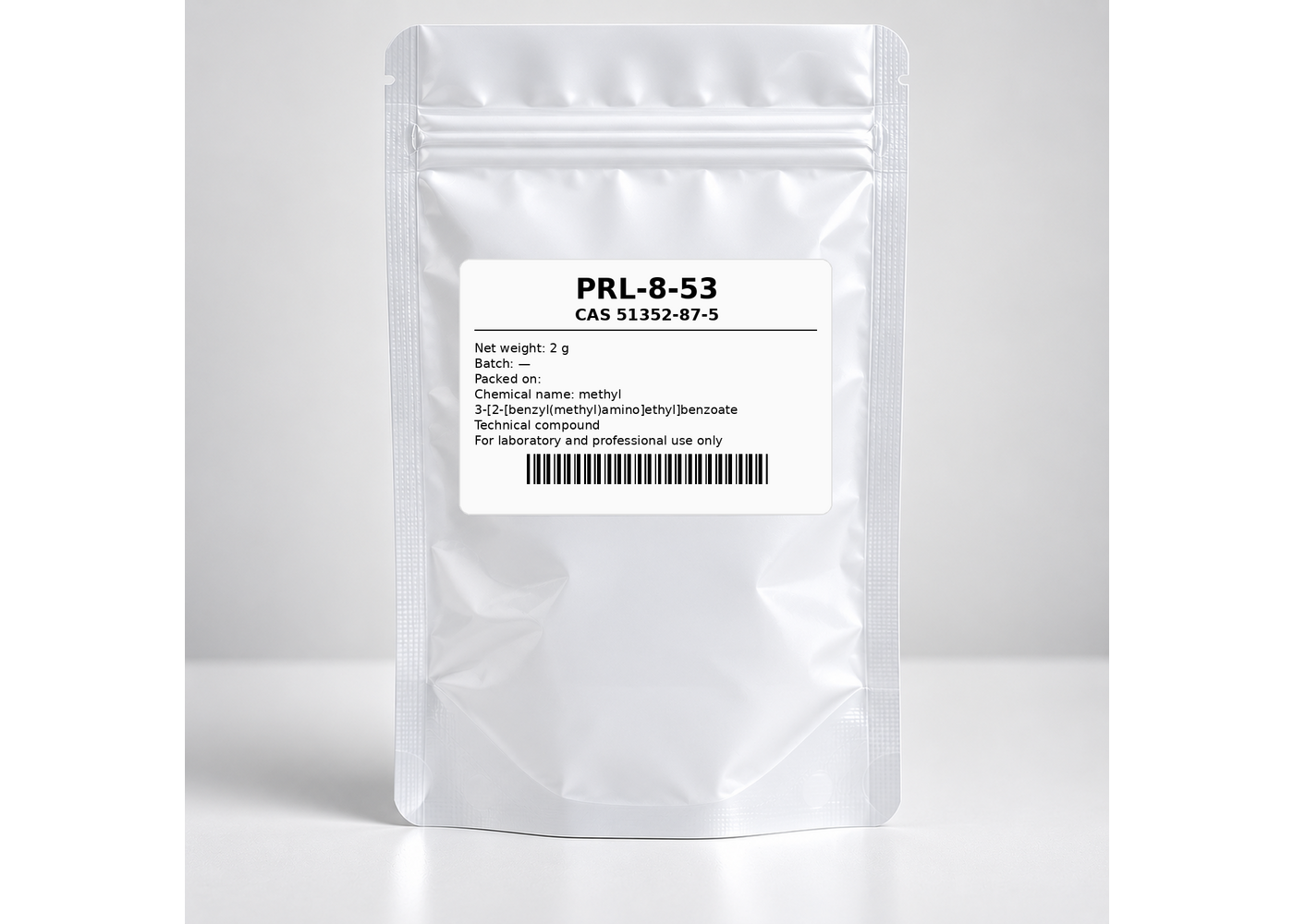
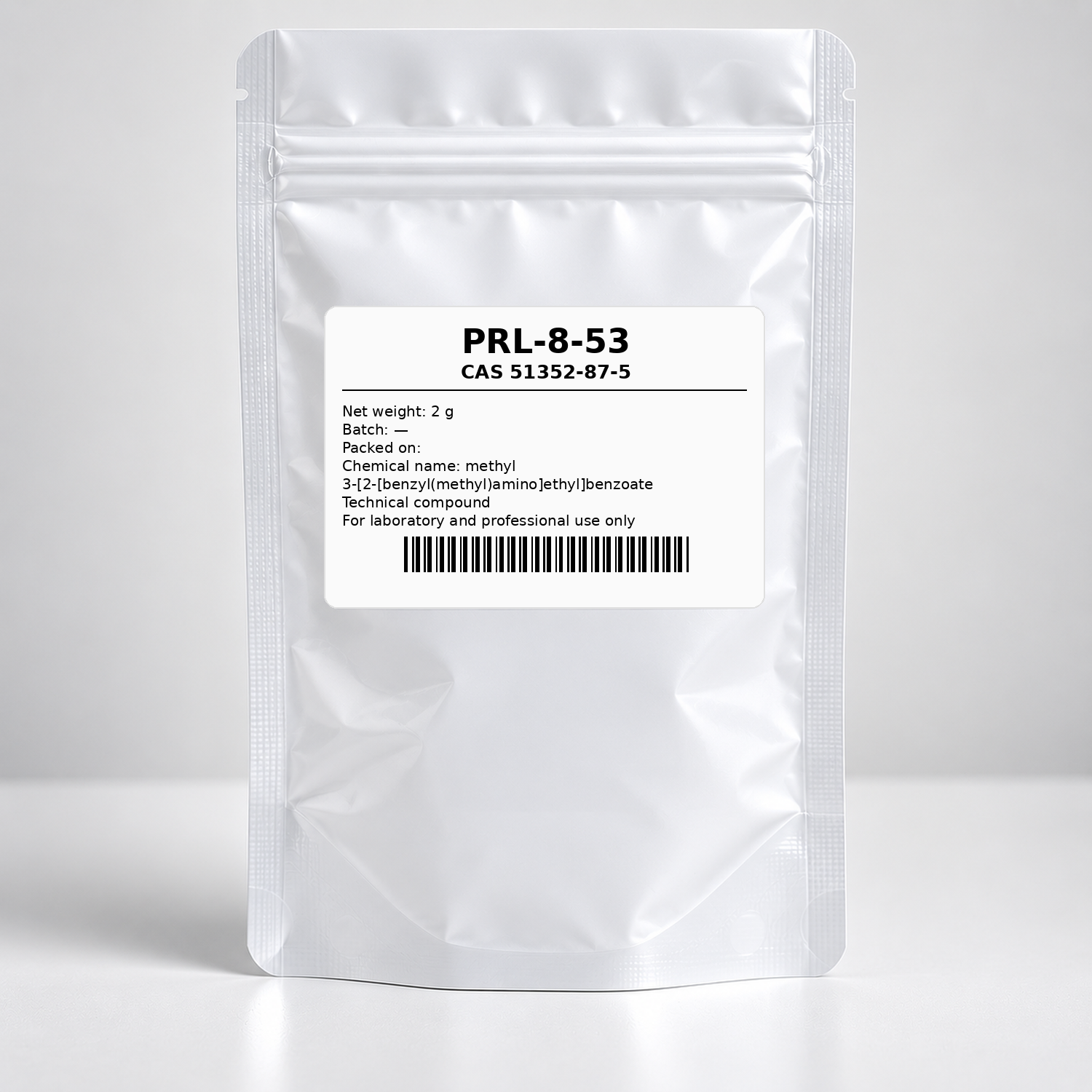

PRL-8-53 leveres af Rexar som et kemisk referencemateriale til analytisk kemi, strukturel verifikation og laboratoriebaserede sammenligningsarbejdsgange. Dette materiale er udelukkende beregnet til kontrollerede forskningsmiljøer, der kræver verificeret kemisk identitet, reproducerbare analytiske egenskaber og veldefineret strukturel konsistens.
Forskningsmateriale distribueret af Rexar inden for Den Europæiske Union.
PRL-8-53 (CAS 51352-87-5) er tilgængeligt direkte via Rexars webshop og leveres i forseglet laboratorieemballage til distribution inden for Den Europæiske Union.
Rexar Technical Compound Datasheet (PDF)
Dokumentation: Se SDS og det tekniske datablad for dette produkt, eller gennemse vores Tekniske dokumentation.
Molekylære strukturdata og udvalgte fysisk-kemiske egenskaber kan konsulteres via den offentlige database: PRL-8-53 på PubChem
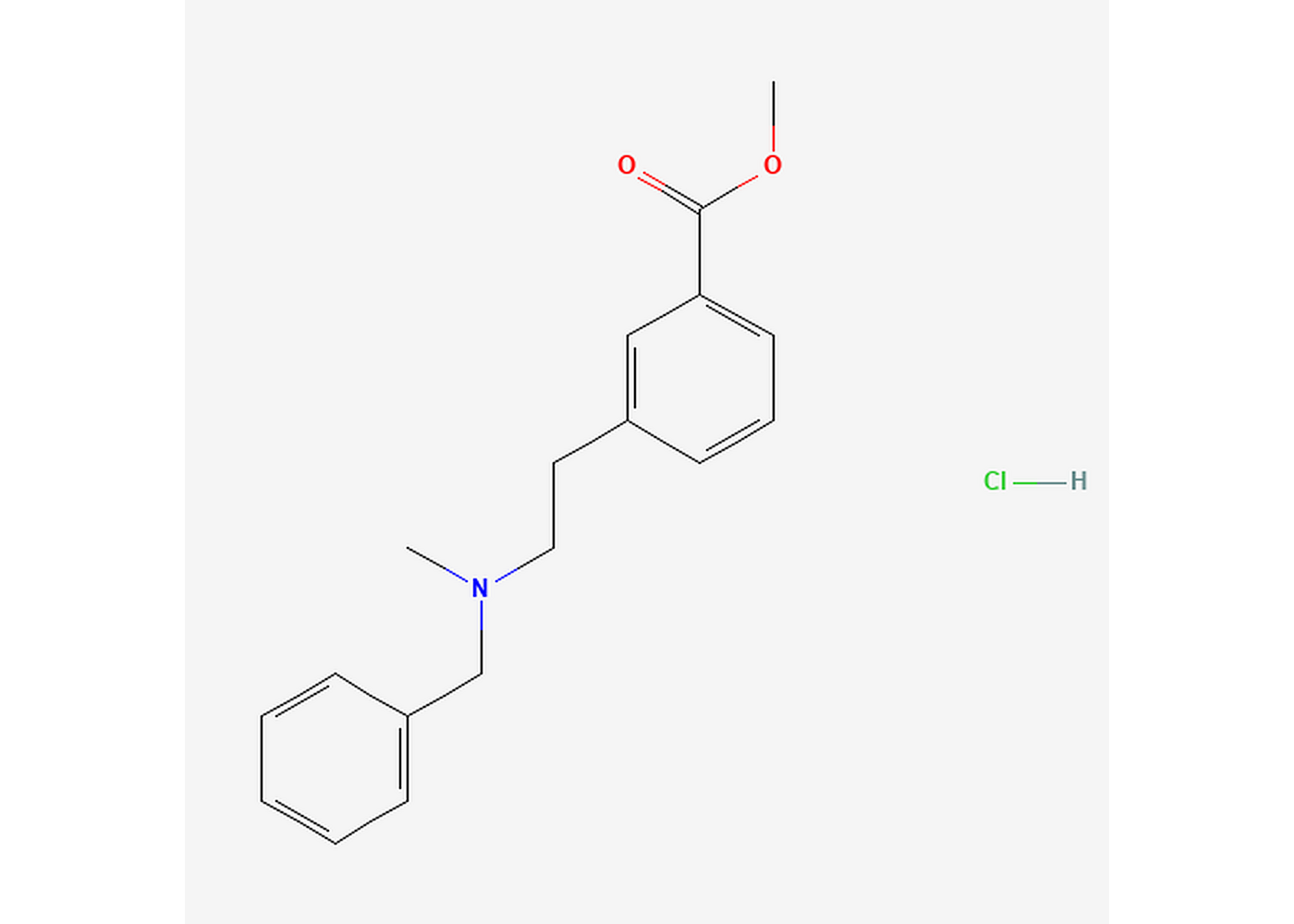
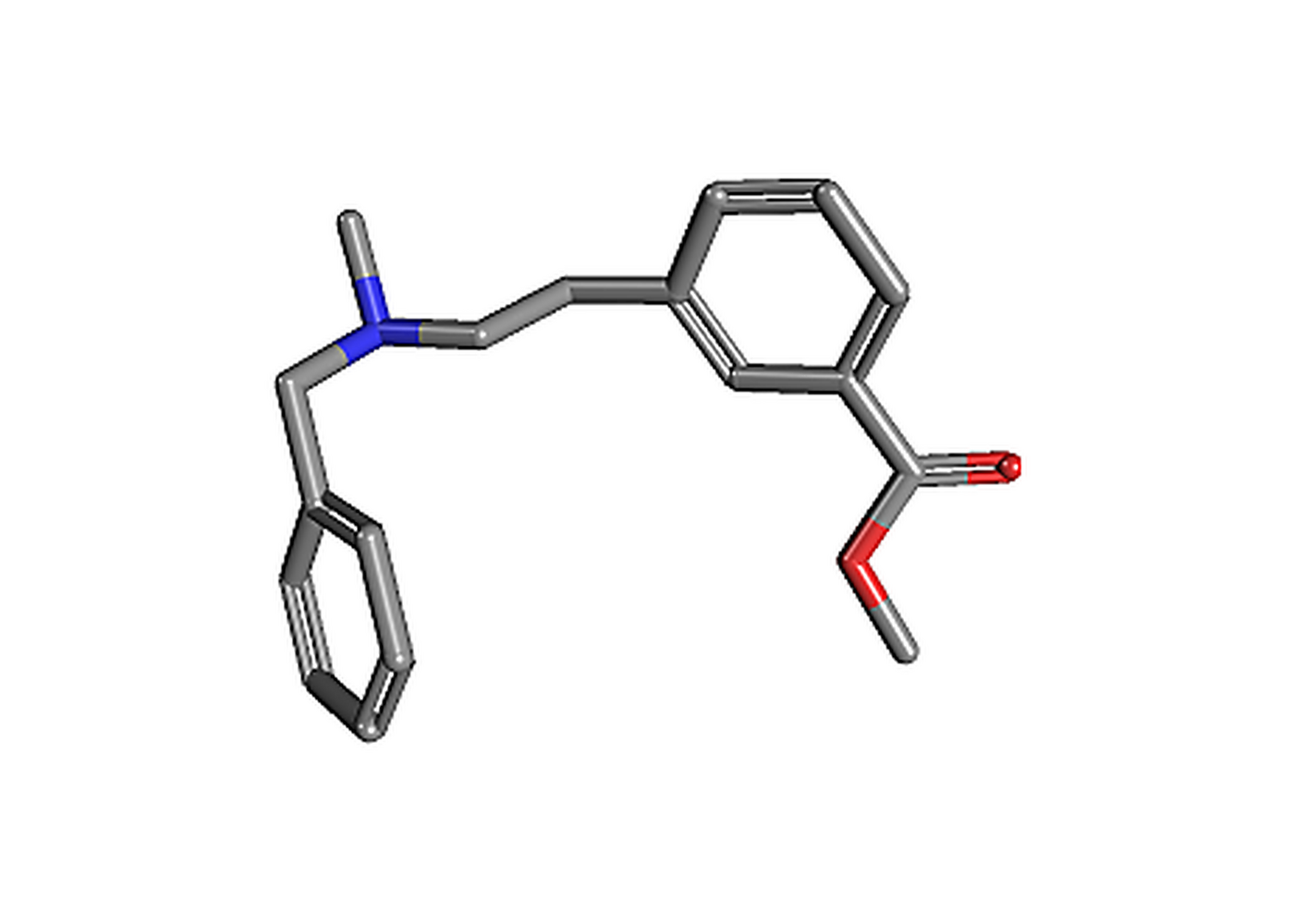
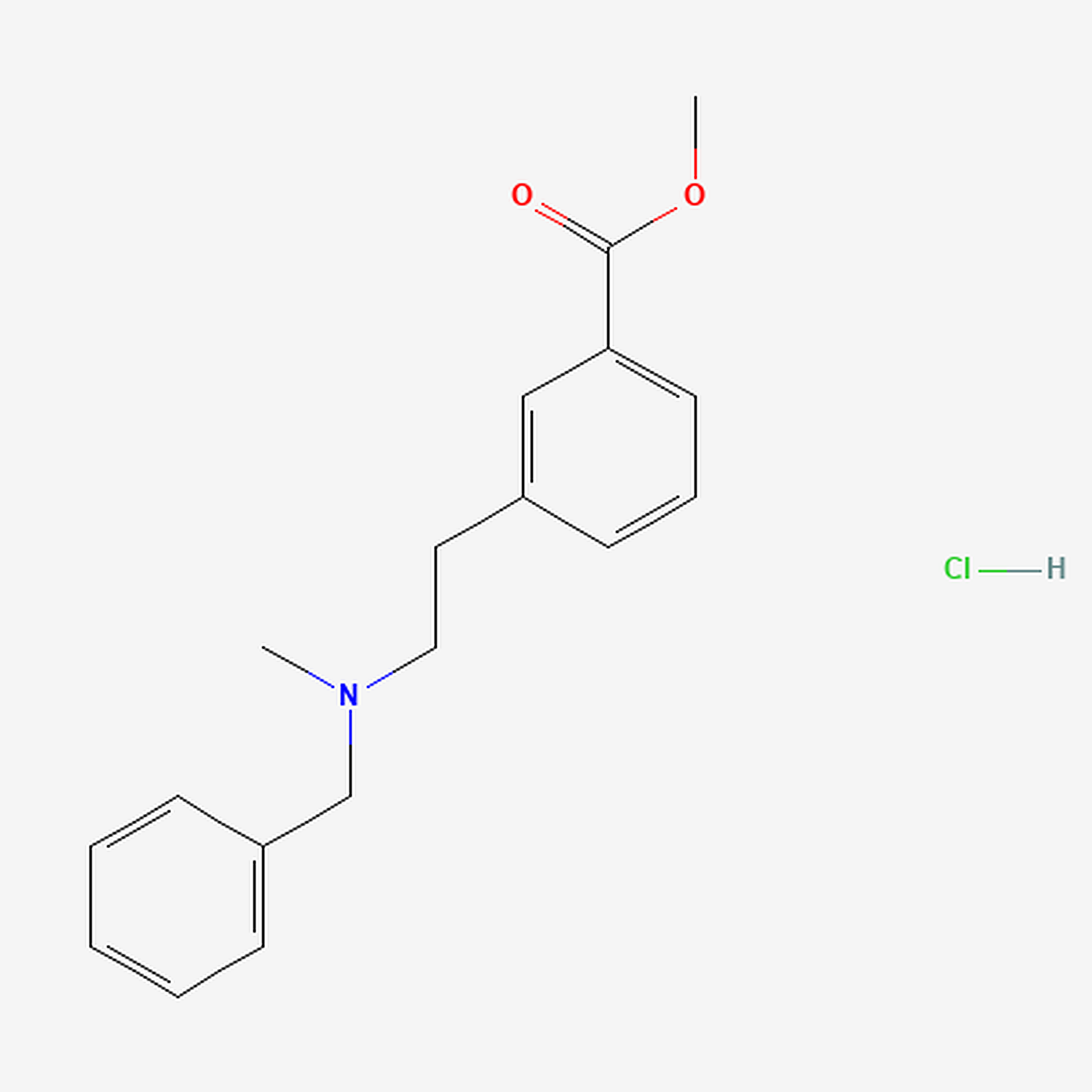
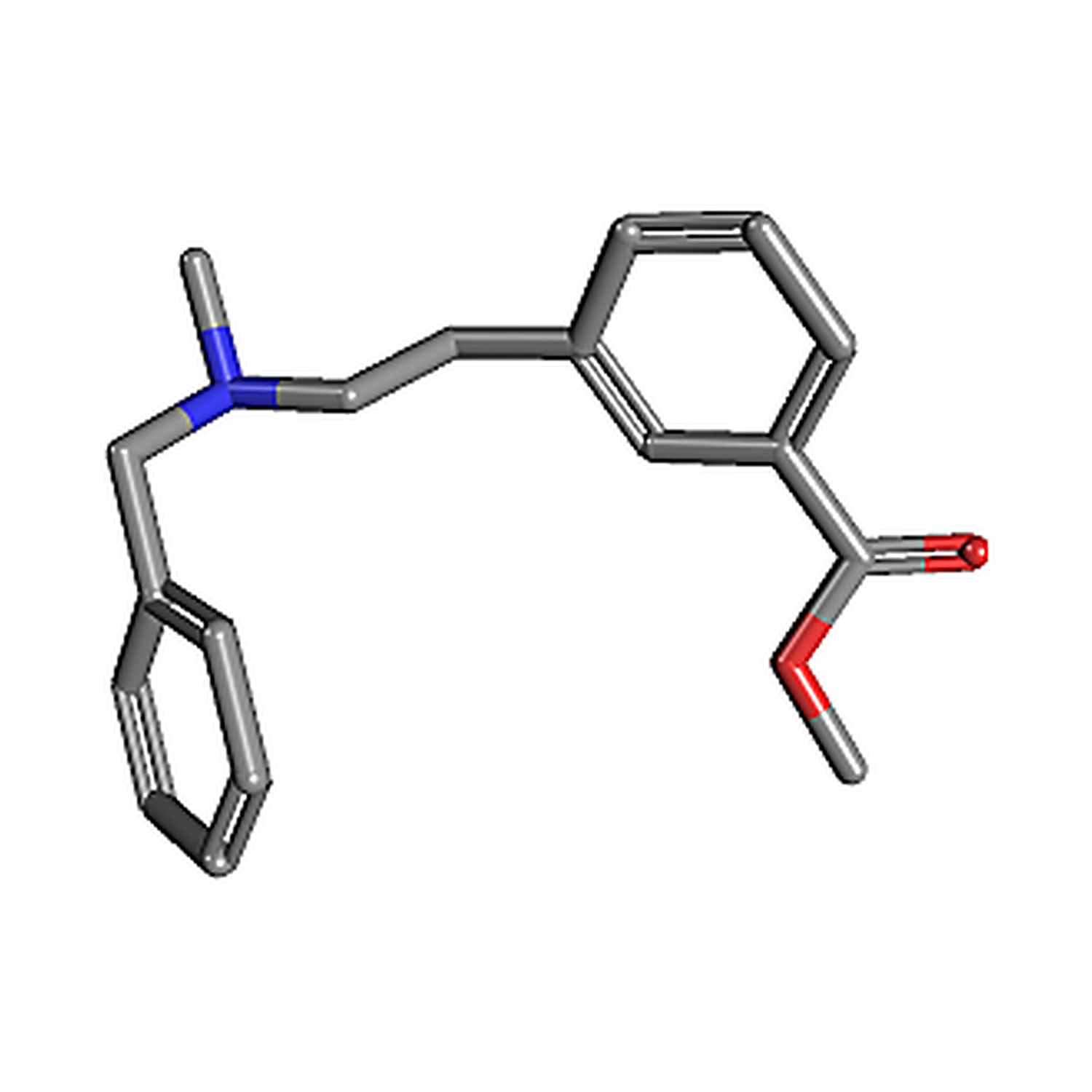
PRL-8-53 klassificeres strukturelt som en substitueret benzoatester med en tertiær amin-sidekæde. Molekylet består af en methylbenzoatkerne substitueret i meta-positionen med en 2-[benzyl(methyl)amino]ethyl-funktionel gruppe.
Denne konfiguration resulterer i en forbindelse, der kombinerer aromatiske, ester- og tertiære aminfunktionaliteter inden for samme molekylære struktur. Kombinationen af hydrofobe aromatiske ringe og polære amingrupper bidrager til en veldefineret balance af fysisk-kemiske egenskaber.
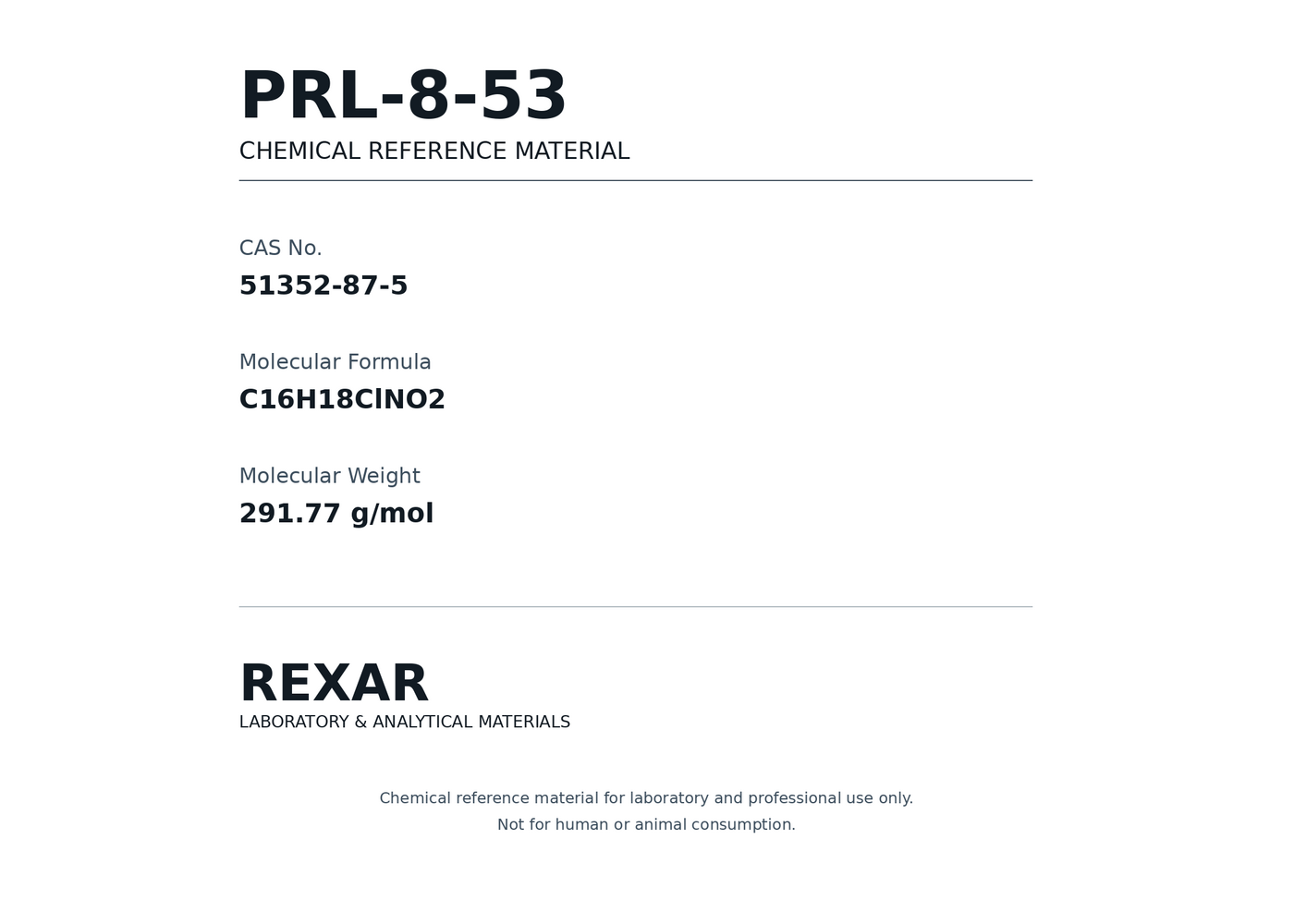
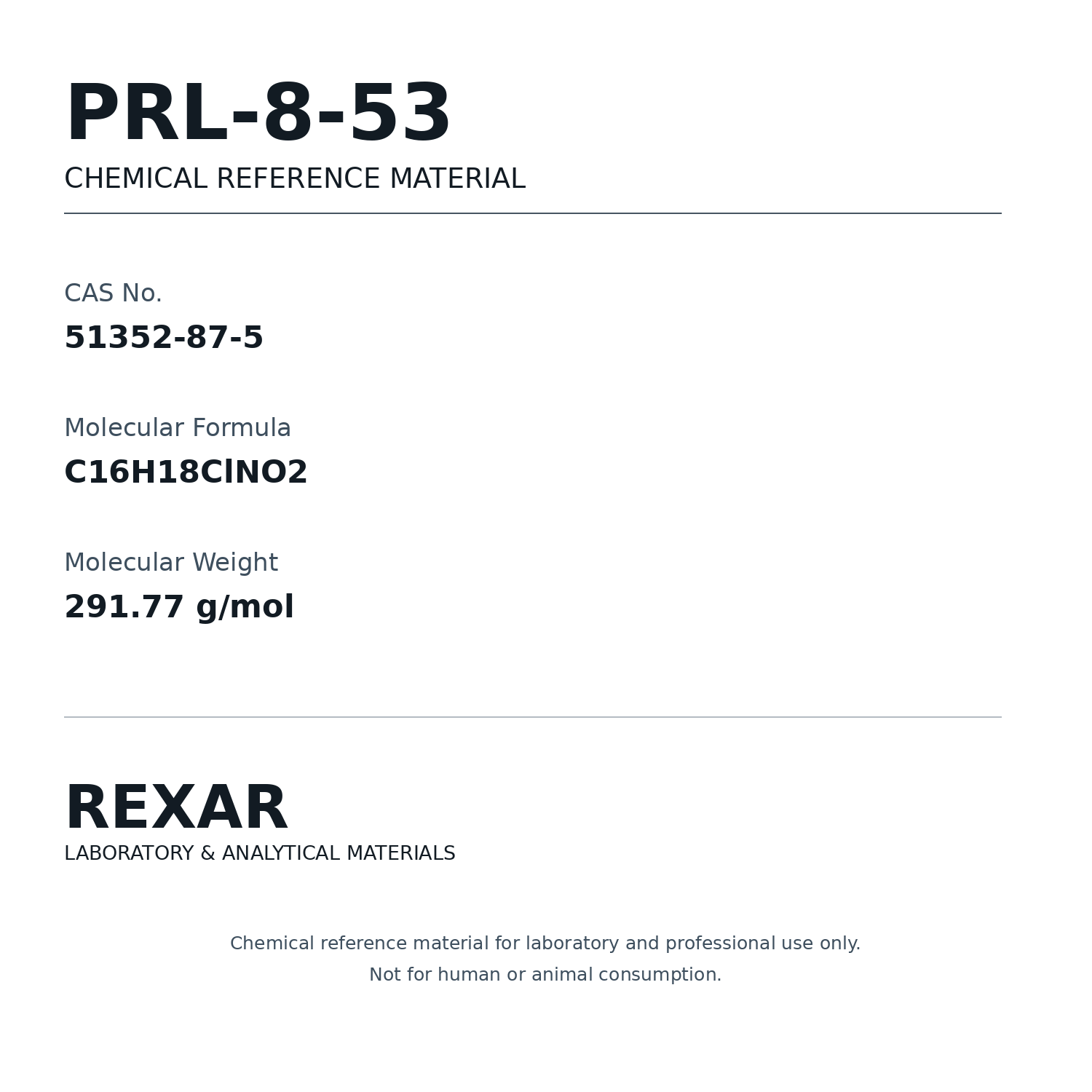
PRL-8-53 | CAS: 51352-87-5 | Molekylformel: C18H22ClNO2 | Molekylvægt: 319,83 g/mol.
Molekylstrukturen indeholder en aromatisk benzoatring, en esterbinding og en tertiær aminfunktion. Estergruppen kan identificeres gennem karakteristiske carbonylstrækningsbånd i infrarød spektroskopi.
Det tertiære amin-nitrogen bidrager til protoneringsadfærd under sure forhold, hvilket påvirker opløselighed og kromatografiske retentionsegenskaber.
Benzenringen i benzoatkernen giver elektrondelokalisering, som er typisk for aromatiske systemer. Dette bidrager til veldefinerede UV-absorptionsområder og muliggør spektrofotometrisk detektion under analytiske forhold.
Benzylsubstituenten introducerer en yderligere aromatisk ring, hvilket øger den hydrofobe karakter og bidrager til karakteristiske kemiske skift i NMR-spektre.
Den tertiære aminfunktion kan protoneres i sure miljøer. Selvom PRL-8-53 normalt refereres i neutral form, kan laboratorieforhold påvirke ioniseringstilstanden afhængigt af opløsningsmiddel og pH.
Sådanne protoneringsligevægte kan påvirke kromatografisk adfærd og topform i analytiske metoder.
PRL-8-53 kan udvise moderat til stærk retention i reversed-phase HPLC-systemer på grund af sine aromatiske og hydrofobe komponenter. Optimering af gradient og buffer kan forbedre opløsning og topsymmetri.
Retentionsegenskaber kan variere afhængigt af opløsningsmidlets polaritet, den stationære fases sammensætning og temperaturforholdene.
Disse fragmenteringsveje hjælper med bekræftelse af forbindelsen under LC-MS- eller højopløselige massespektrometriske analyser.
Proton-NMR-analyse viser tydelige signaler fra aromatiske protoner, alifatiske kæder og karakteristiske methylester-toppe. Carbon-NMR kan bekræfte tilstedeværelsen af carbonylkulstof samt aromatiske kulstofmiljøer.
Infrarød spektroskopi viser typisk absorptionsbånd svarende til ester-carbonylstrækninger og vibrationer fra aromatiske ringsystemer.
Som et krystallinsk pulver kan PRL-8-53 udvise veldefineret smelteadfærd og faststofpakning påvirket af intermolekylære interaktioner mellem aromatiske ringe.
Opbevaring under tørre og temperaturkontrollerede forhold understøtter strukturel stabilitet og minimerer eksponering for fugt.
De aromatiske ringe kan deltage i π-π-stablingsinteraktioner i det krystallinske gitter. Den tertiære amin kan indgå i svage hydrogenbindingsinteraktioner, når den er protoneret.
Sådanne interaktioner kan påvirke pulverets flydeegenskaber og krystallinske morfologi.
Inden for benzoat-afledte tertiære aminforbindelser indtager PRL-8-53 en strukturelt særskilt position på grund af sin meta-substituerede konfiguration og benzylholdige sidekæde.
Den veldefinerede placering af ester- og aminfunktionaliteter adskiller forbindelsen fra strukturelt beslægtede benzoatderivater ved analytisk profilering.
PRL-8-53 kan anvendes som et kvalitativt referencemateriale i laboratoriearbejdsgange, herunder sammenligning af retentionstid, spektroskopisk bekræftelse og udvikling af analytiske metoder.
Den meta-substituerede konfiguration af benzoatringen definerer den rumlige orientering af den tertiære amin-sidekæde. Denne placering kan påvirke steriske interaktioner under kromatografisk separation og intermolekylær pakning i fast tilstand.
Benzylgruppen introducerer yderligere rotationsfrihed omkring methylenbindingen, hvilket bidrager til konformationel tilpasningsevne under analyse i opløsning.
PRL-8-53 indeholder to aromatiske ringe, der bidrager til hydrofob karakter, mens ester- og tertiære aminfunktionaliteter giver polære interaktionssteder. Denne amfifile balance påvirker opløsningsmiddelkompatibilitet og retentionsegenskaber.
Under reversed-phase betingelser dominerer hydrofobe interaktioner typisk retentionen, mens ioniseringstilstanden kan påvirke topsymmetri.
Molekylformlen indeholder klor, som bidrager til identificerbare isotopmønstre i massespektrometrisk analyse. Tilstedeværelsen af klor muliggør bekræftelse via karakteristiske isotopfordelingsforhold.
Elementanalyse (C, H, N, Cl) understøtter verificering af teoretiske molekylære parametre under kvalitetsvurdering.
Aromatiske stablingsinteraktioner kan bidrage til veldefinerede krystallinske pakningsarrangementer. Sådanne interaktioner kan påvirke smelteadfærd og pulvermorfologi.
Termiske stabilitetsundersøgelser under kontrollerede laboratorieforhold kan anvendes til at vurdere nedbrydningstemperaturer og faseovergange.
De aromatiske kromoforer i PRL-8-53 muliggør detektion i UV-spektroskopiske systemer. Veldefinerede absorptionsmaksima understøtter analytisk kvantificering i kromatografiske arbejdsgange.
Metodevalidering kan omfatte optimering af bølgelængder for at forbedre detektionsfølsomhed og reducere baselineinterferens.
Inden for strukturelt beslægtede benzoat-afledte tertiære aminer kan PRL-8-53 skelnes ved sit specifikke substitutionsmønster og sin benzylholdige sidekæde.
Denne strukturelle differentiering understøtter anvendelsen som referenceforbindelse i sammenlignende profileringsmiljøer.
Når PRL-8-53 opbevares under anbefalede tørre og temperaturkontrollerede forhold (8–20 °C), opretholder forbindelsen fysisk stabilitet over længere perioder.
Beskyttelse mod overdreven fugt og langvarig UV-eksponering understøtter ensartet analytisk reproducerbarhed.
Hvad er CAS-nummeret for PRL-8-53?
CAS-nummeret er 51352-87-5.
I hvilken form leveres PRL-8-53?
Dette produkt leveres som et hvidt til råhvidt krystallinsk pulver i forseglet laboratorieemballage.
Er dette produkt beregnet til menneskelig eller animalsk brug?
Nej. Dette materiale leveres udelukkende som en laboratoriereferenceforbindelse.
Kan PRL-8-53 sendes inden for EU?
Ja. Ordrer leveres via Rexars webshop i forseglet laboratorieemballage.
Ansvarsfraskrivelse:
Dette produkt er udelukkende beregnet til laboratorieforskning. Det er ikke beregnet til menneskeligt eller animalsk forbrug eller til medicinske, diagnostiske eller terapeutiske anvendelser.
| Intended use: | Laboratory research and analytical reference purposes only |
| Application area: | Analytical chemistry, reference comparison and method development |
| End user: | Professional users in controlled research environments |
| Regulatory classification: | Chemical reference material |