it
Carrello
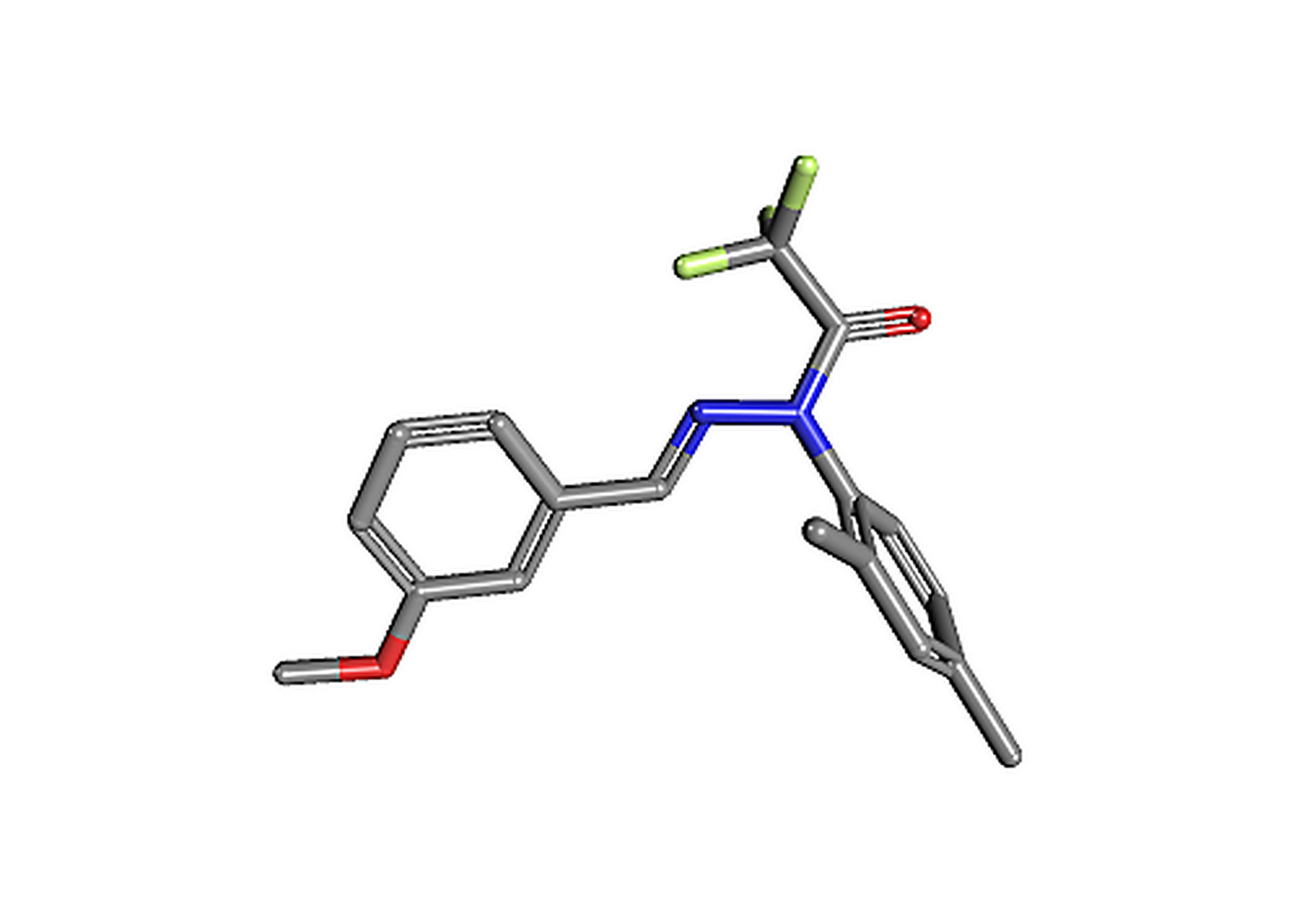
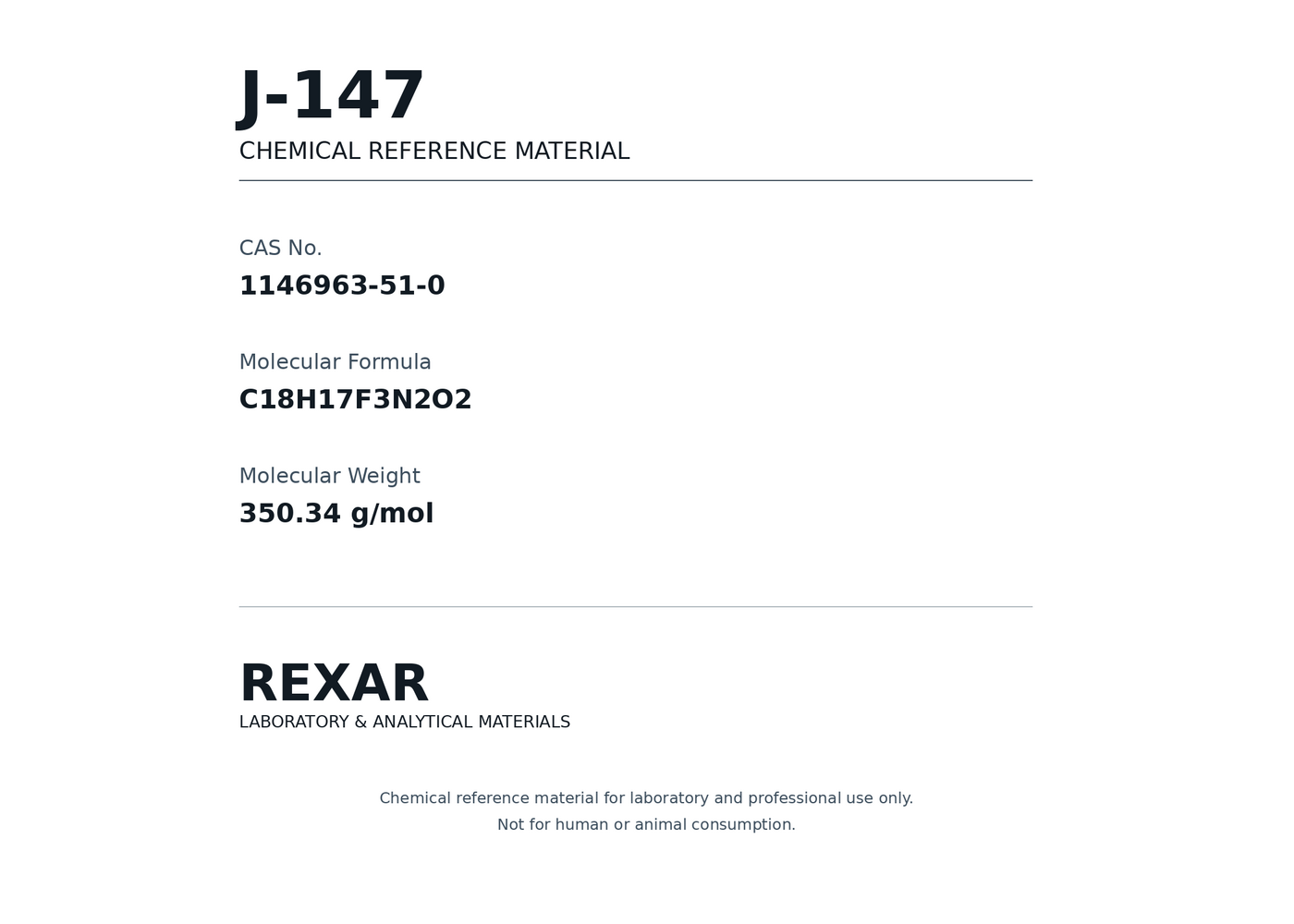
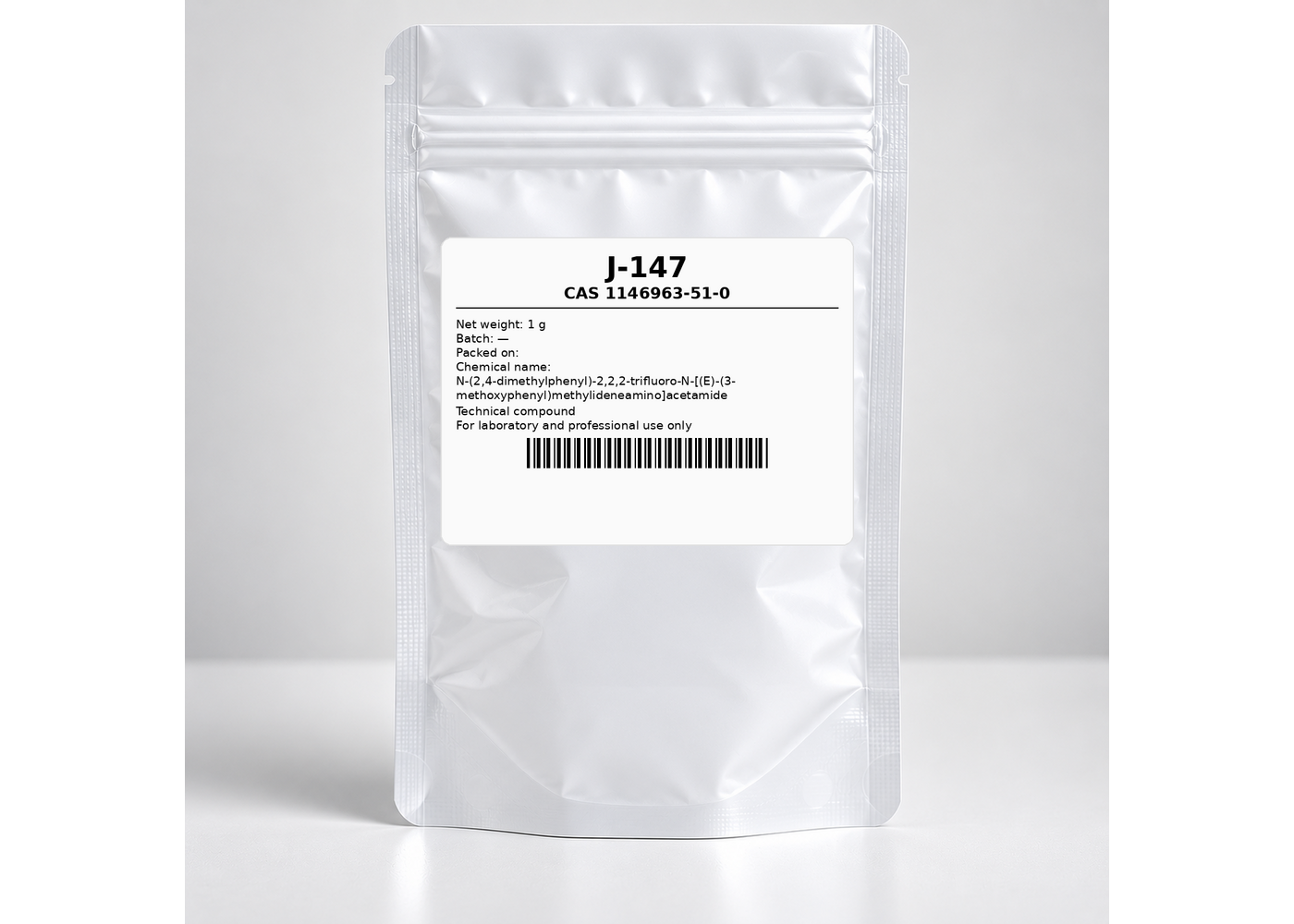
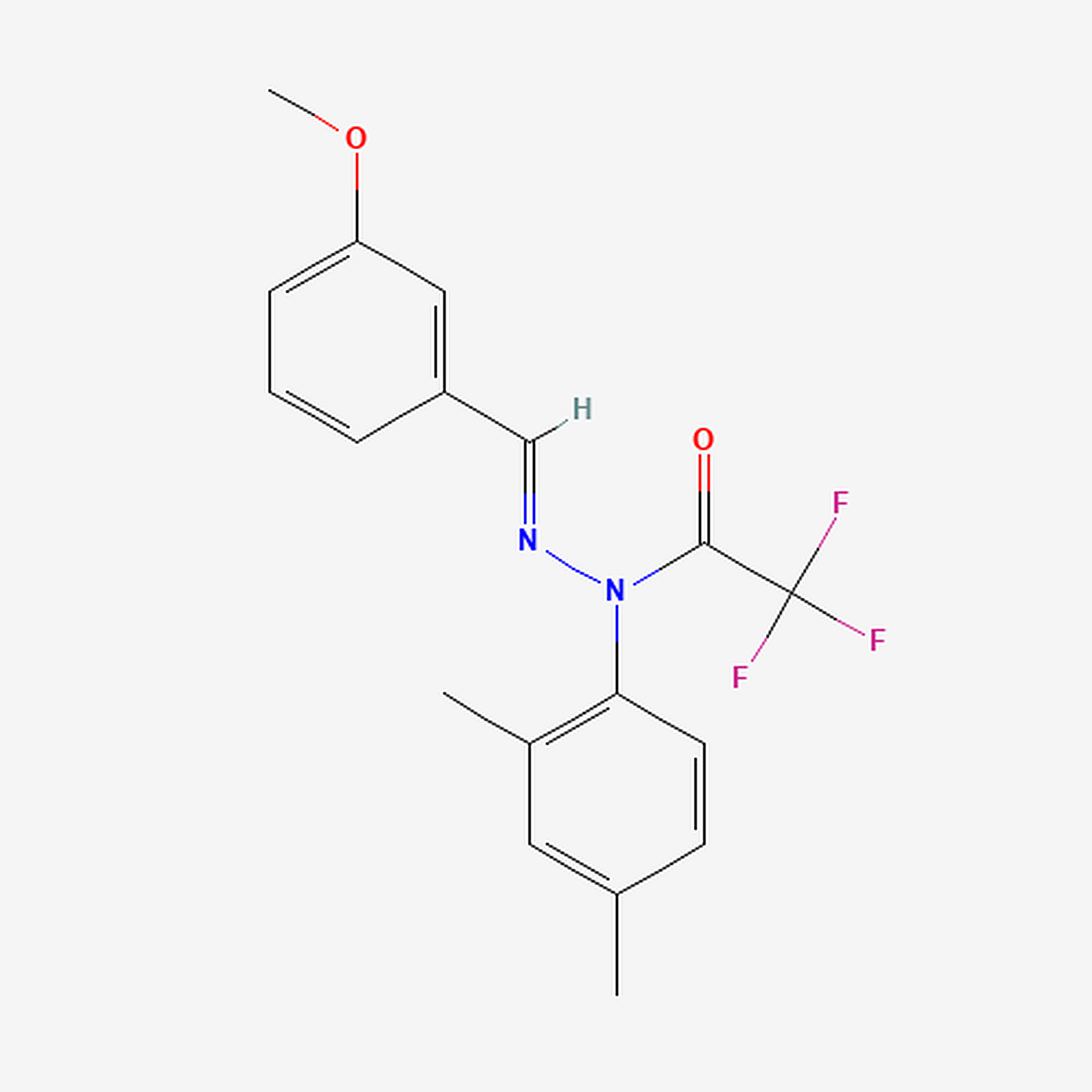

J-147 è fornito da Rexar come materiale di riferimento chimico di grado ricerca per chimica analitica, verifica strutturale e procedure comparative di laboratorio. Questo composto a basso peso molecolare viene fornito esclusivamente per ambienti di ricerca controllati che richiedono identità chimica confermata, caratteristiche analitiche riproducibili e standard documentali coerenti.
Materiale di grado ricerca distribuito da Rexar all'interno dell'Unione Europea.
J-147 (CAS 1146963-51-0) è disponibile direttamente tramite il webshop Rexar ed è fornito in confezioni da laboratorio sigillate per la distribuzione all'interno dell'Unione Europea.
Rexar Technical Compound Datasheet (PDF)
Documentazione: Consulta la SDS e la scheda tecnica di questo prodotto oppure esplora la nostra Documentazione tecnica.
I dati sulla struttura molecolare e alcune proprietà fisico-chimiche selezionate possono essere consultati tramite: J-147 su PubChem.
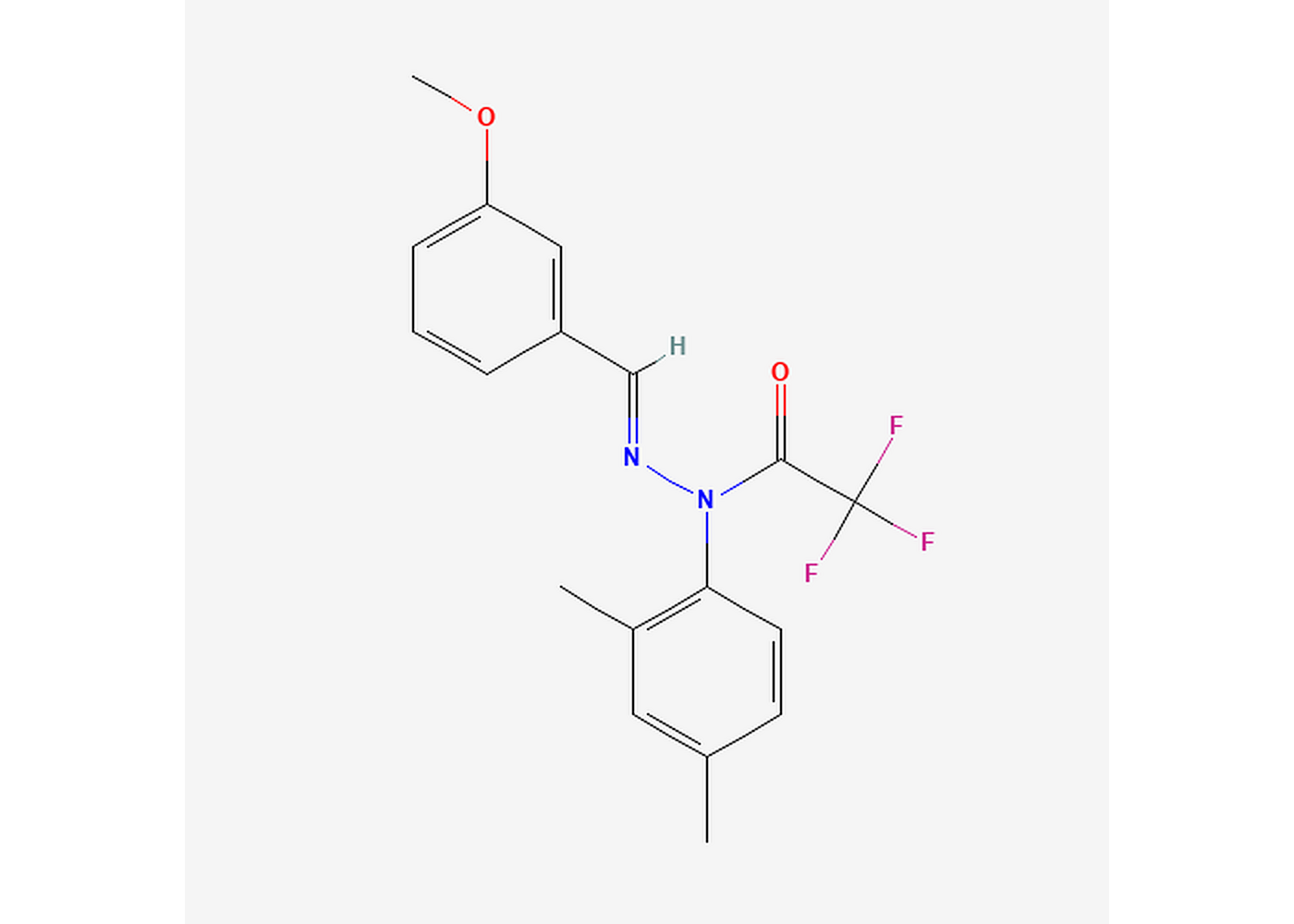
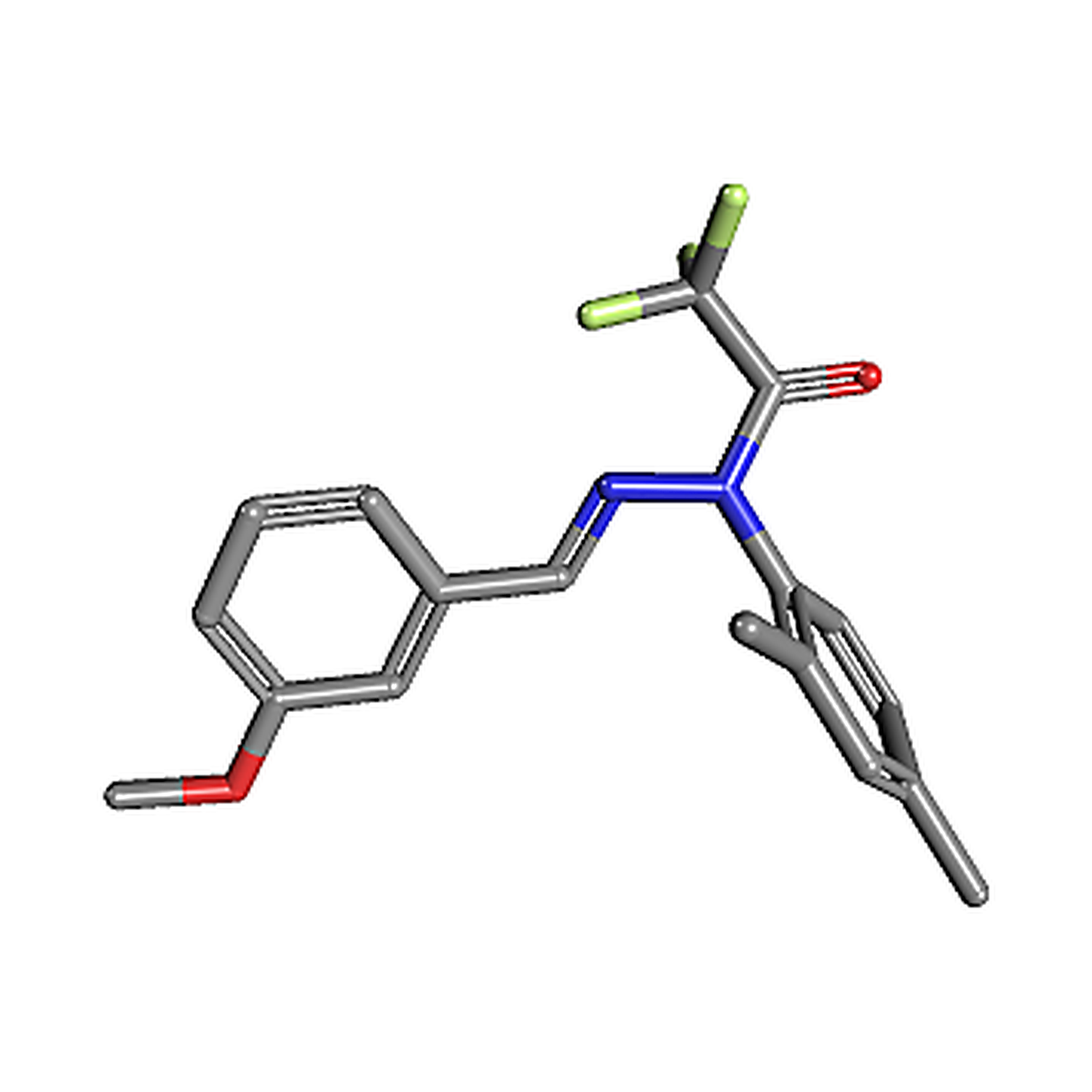
J-147 è un composto ammide aromatico fluorurato costituito da molteplici sistemi fenilici sostituiti collegati attraverso un legame imminico e una funzionalità ammidica. La molecola contiene sia sostituenti elettron-attrattori sia elettron-donatori disposti all'interno di una struttura coniugata, generando una distribuzione elettronica definita lungo l'intera molecola.
Lo scheletro principale incorpora una porzione 2,2,2-trifluoroacetamidica legata a un derivato anilinico sostituito. Questa configurazione produce un'architettura molecolare ibrida che combina anelli aromatici, eteroatomi e centri carboniosi fluorurati all'interno di una singola piccola molecola.
Dal punto di vista della classificazione strutturale, J-147 può essere descritto come un'ammide aromatica fluorurata contenente un collegamento imminico di tipo base di Schiff. La presenza di questa funzionalità imminica introduce ulteriore coniugazione tra i sistemi aromatici e contribuisce a caratteristiche spettroscopiche ben definite.
Il gruppo 2,2,2-trifluorometile (–CF3) è un sostituente fortemente elettron-attrattore. Gli atomi di fluoro possiedono elevata elettronegatività e influenzano la distribuzione della densità elettronica tramite effetti induttivi. Il frammento CF3 contribuisce alla polarità molecolare, alla modulazione della lipofilia e alle caratteristiche spettrometriche di massa.
Nella chimica analitica, i composti fluorurati sono spesso distinguibili grazie ai loro caratteristici comportamenti di frammentazione nella spettrometria di massa. La presenza di tre atomi di fluoro aumenta il peso molecolare e introduce percorsi di frammentazione prevedibili in condizioni di ionizzazione elettronica o elettrospray.
Sebbene il fluoro non produca segnali nell'NMR protonico, la sua presenza influenza gli ambienti protonici vicini tramite effetti induttivi e spaziali. Nell'NMR del carbonio-13, i carboni legati al fluoro possono mostrare caratteristici pattern di sdoppiamento dovuti alle costanti di accoppiamento carbonio-fluoro.
Il gruppo ammidico presente nel J-147 introduce una stabilizzazione per risonanza tra l'ossigeno carbonilico e l'atomo di azoto adiacente. Questa risonanza limita la libertà rotazionale attorno al legame ammidico, determinando spesso una parziale planarità della struttura locale.
I legami ammidici mostrano caratteristiche bande di assorbimento infrarosso associate alle vibrazioni di stiramento del gruppo C=O. Nei flussi di lavoro per l'identificazione analitica, tali bande di assorbimento forniscono conferma della presenza della funzionalità ammidica.
La combinazione di una funzionalità ammidica e di una imminica all'interno di un sistema aromatico fluorurato genera una piccola molecola strutturalmente complessa con firme analitiche ben definite.
J-147 contiene molteplici anelli aromatici con schemi di sostituzione definiti, inclusi sistemi fenilici dimetil-sostituiti e metossi-sostituiti. La sostituzione aromatica influenza la distribuzione elettronica tramite effetti sia induttivi sia di risonanza.
I sostituenti metossi sono elettron-donatori tramite risonanza e contribuiscono alla delocalizzazione degli elettroni π all'interno dell'anello aromatico. Al contrario, i gruppi trifluorometilici sottraggono densità elettronica. La coesistenza di queste influenze elettroniche opposte produce un profilo molecolare equilibrato e chimicamente distintivo.
Questa diversità di sostituzione contribuisce a caratteristiche cromatografiche distintive e a pattern prevedibili di assorbimento UV dovuti alle transizioni aromatiche π→π*.
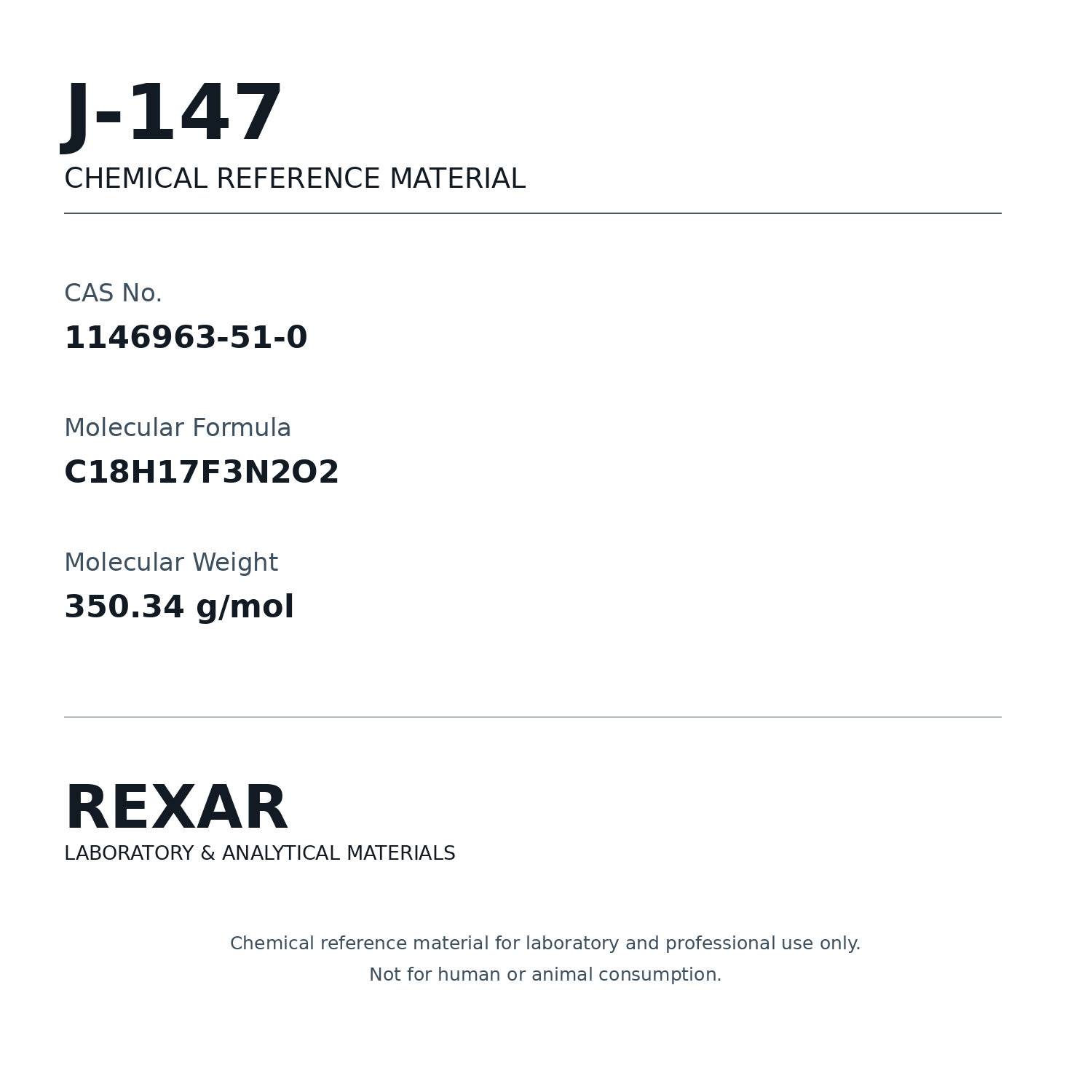
La formula molecolare C18H17F3N2O2 descrive una struttura covalente composta da carbonio, idrogeno, fluoro, azoto e ossigeno. Il peso molecolare di 350,34 g/mol colloca il J-147 nella tipica gamma delle piccole molecole adatte alla valutazione cromatografica in fase inversa.
L'integrazione di sistemi aromatici, eteroatomi e un frammento acilico fluorurato contribuisce a un comportamento fisico-chimico definito. La distribuzione di regioni polari e non polari influenza le caratteristiche di solubilità e l'interazione con le fasi stazionarie cromatografiche.
In condizioni HPLC in fase inversa, i composti aromatici moderatamente lipofili mostrano generalmente tempi di ritenzione influenzati da interazioni idrofobiche. Il gruppo trifluorometile può aumentare il carattere idrofobico rispetto agli analoghi non fluorurati.
Il comportamento di ritenzione può variare in funzione della composizione della fase mobile, delle condizioni di pH e della fase stazionaria utilizzata. La profilazione comparativa rispetto a standard noti supporta l'identificazione qualitativa nei flussi di lavoro di laboratorio.
L'analisi spettrometrica di massa può confermare il peso molecolare e la composizione elementare. I percorsi di frammentazione possono includere scissioni adiacenti al legame ammidico o al legame imminico. I frammenti fluorurati possono produrre cluster ionici distintivi.
L'analisi della composizione elementare conferma la presenza di tre atomi di fluoro, due atomi di azoto e due atomi di ossigeno coerenti con la formula molecolare registrata.
J-147 si presenta generalmente come una polvere da bianca a bianco sporco in normali condizioni di laboratorio. A seconda del lotto di produzione e della storia di conservazione, può manifestare comportamento cristallino o semicristallino.
Come molte piccole molecole organiche, può presentare transizioni di fusione ben definite. I materiali di riferimento vengono forniti per mantenere la coerenza strutturale tra i lotti.
| Intended use: | Laboratory research and analytical reference purposes only |
| Application area: | Analytical chemistry, reference comparison and method development |
| End user: | Professional users in controlled research environments |
| Regulatory classification: | Chemical reference material |