es
Cesta
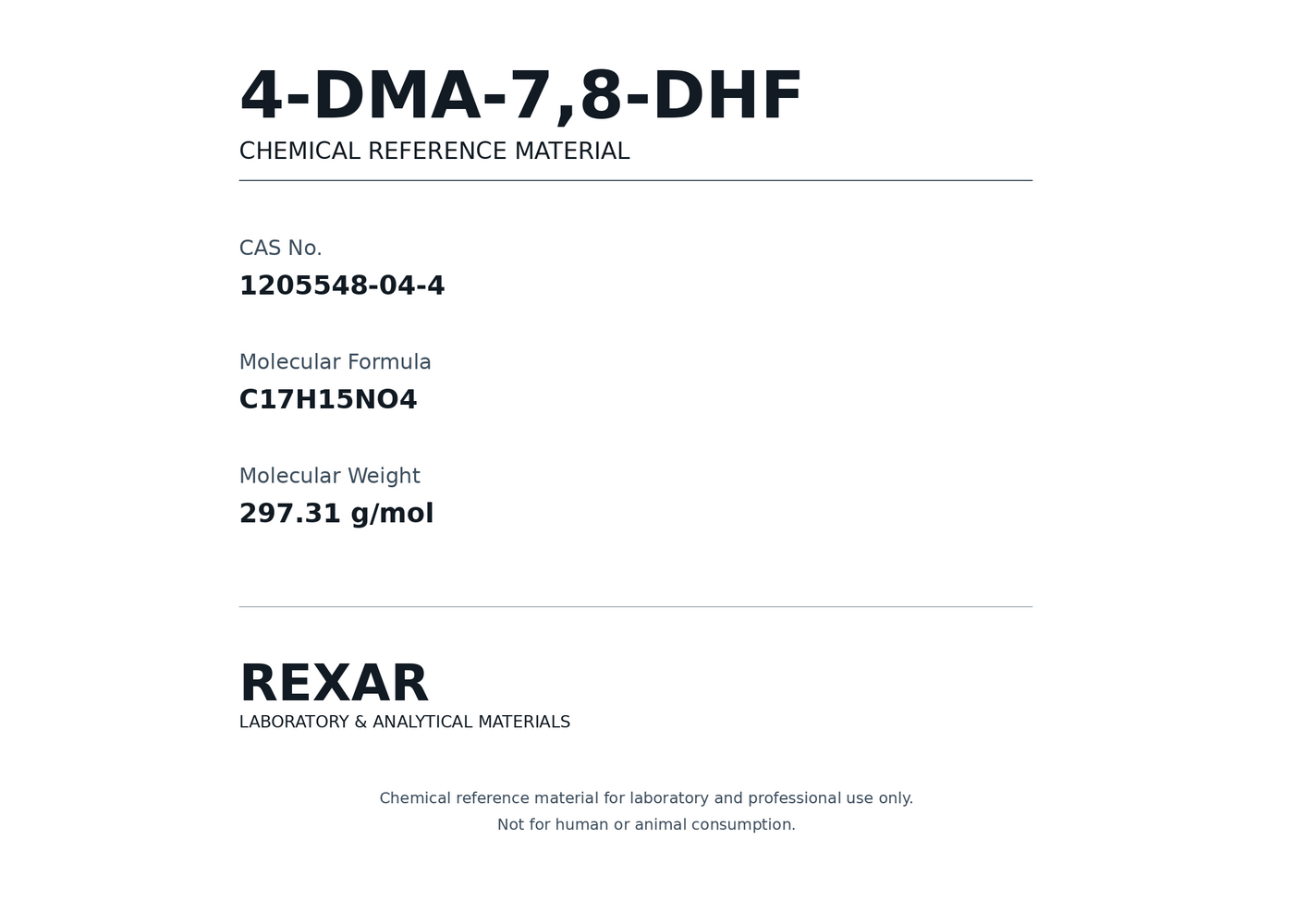
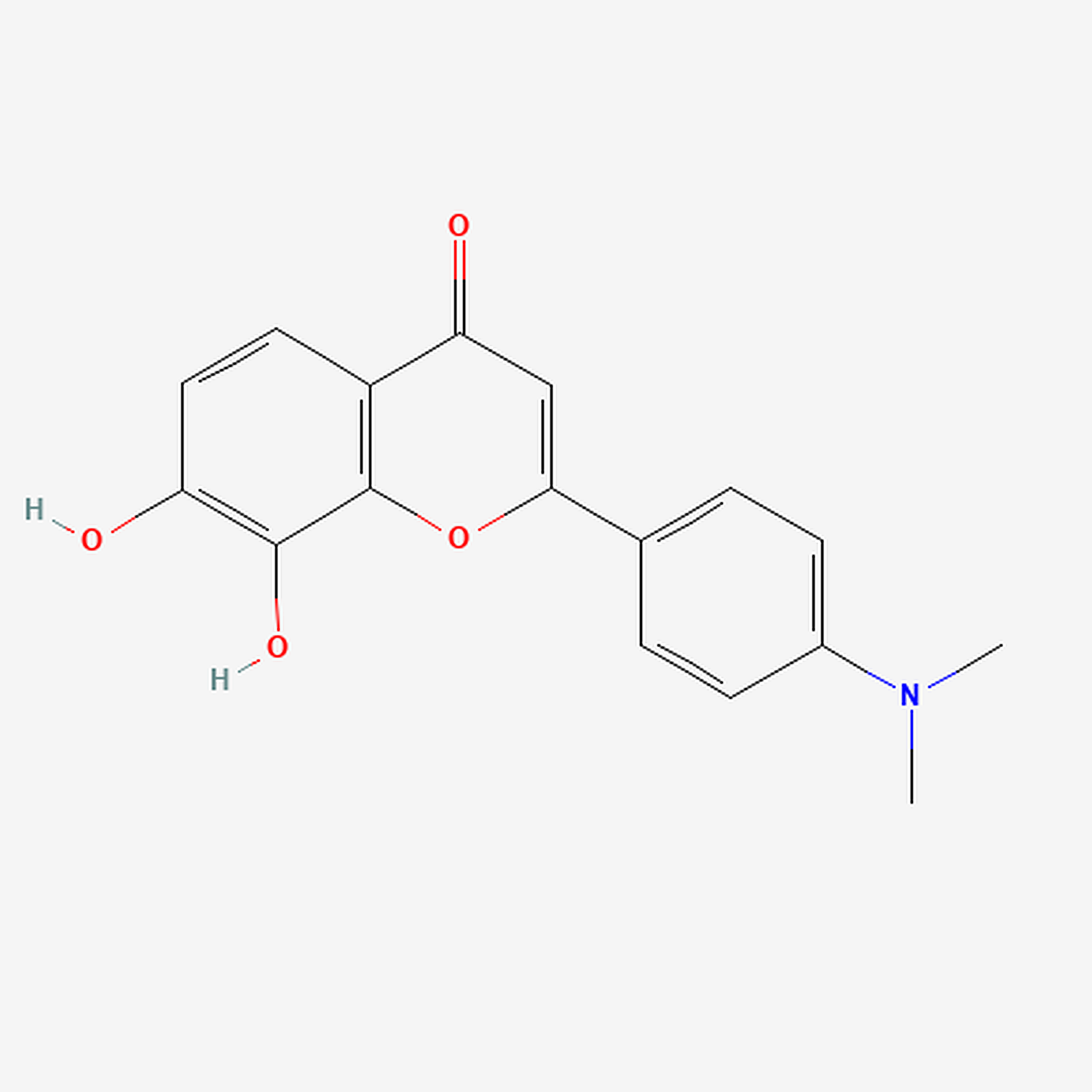
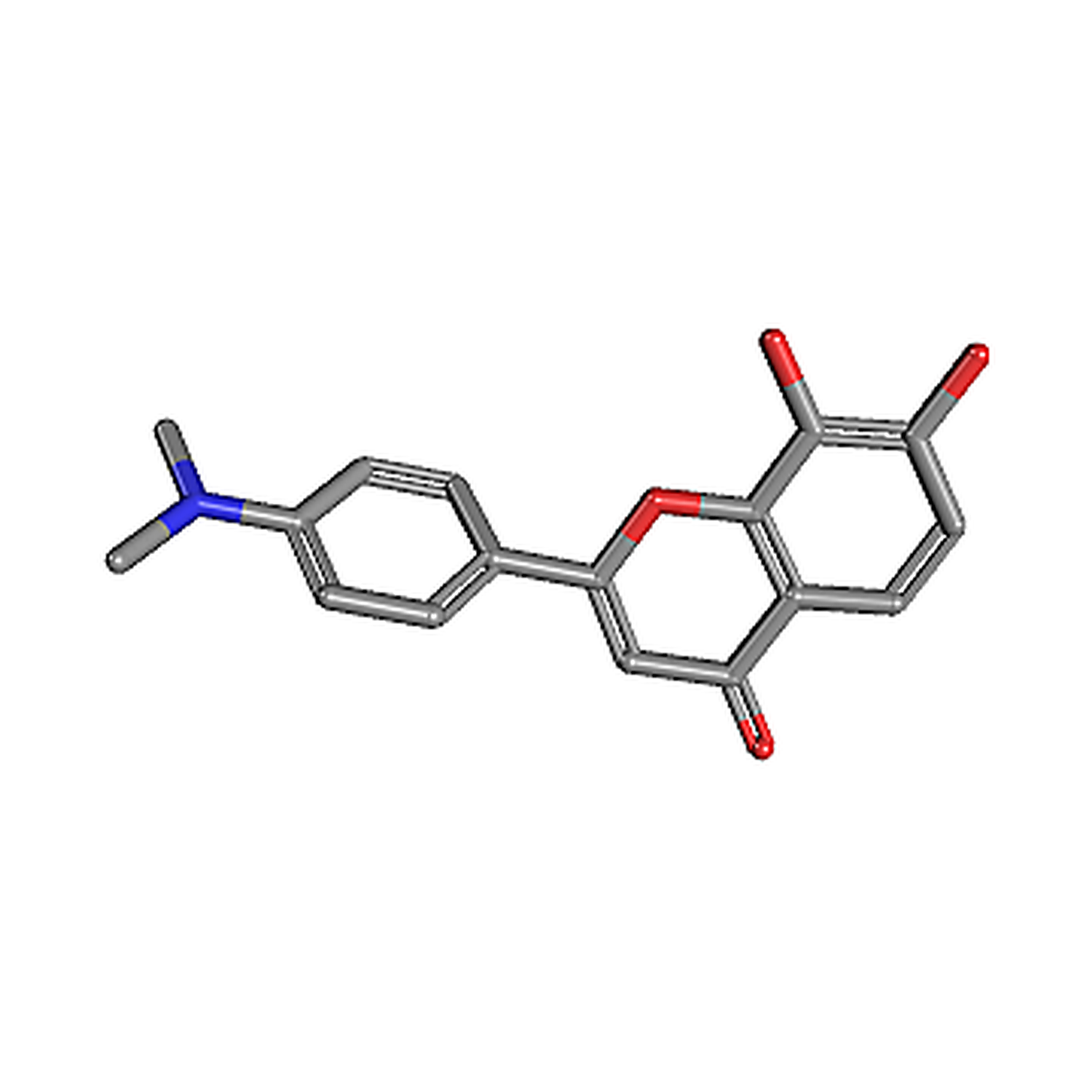
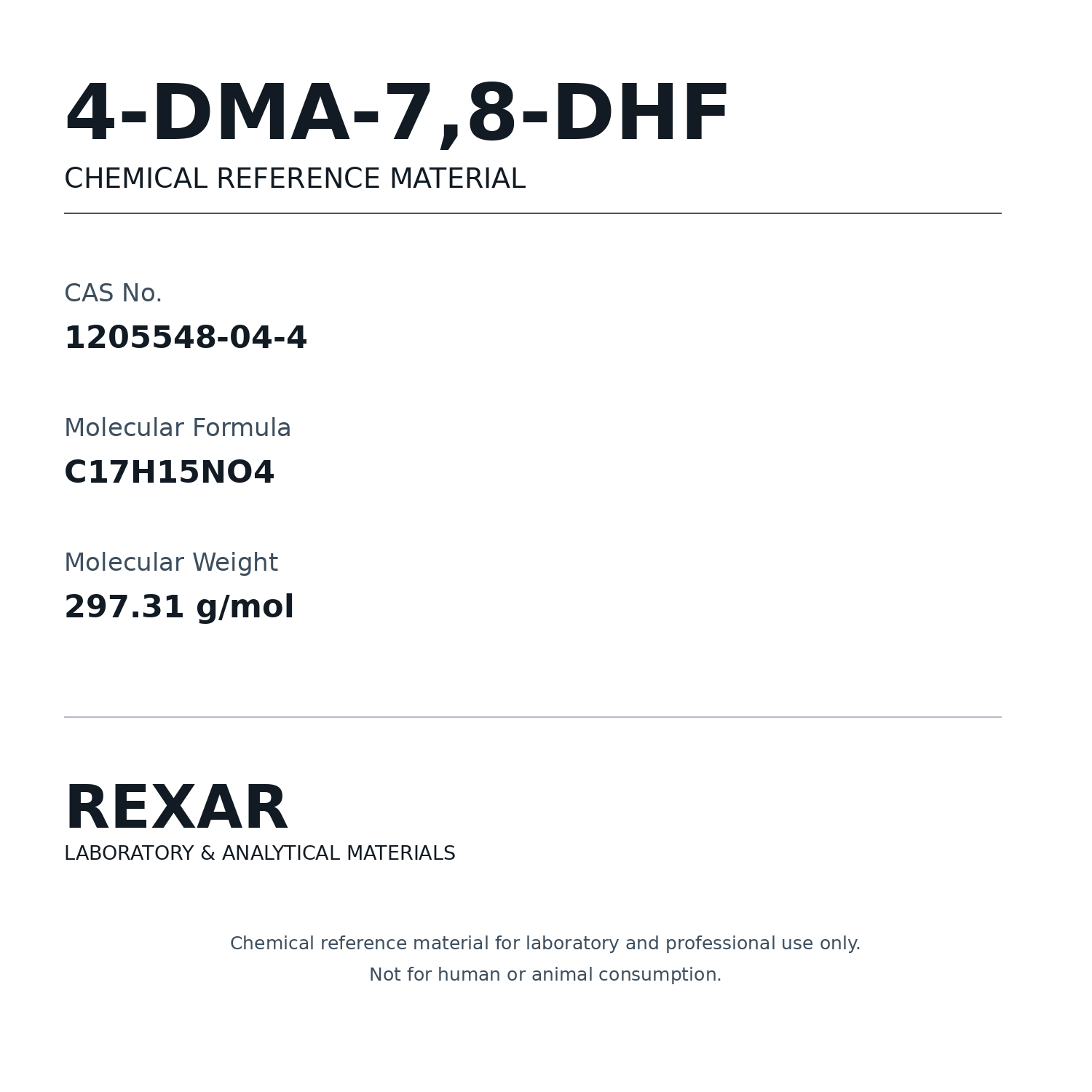

4-DMA-7,8-DHF (CAS 1205548-04-4), también conocido como Eutropoflavina, es suministrado por Rexar como material de referencia químico de calidad investigación para química analítica, verificación estructural y procedimientos comparativos de laboratorio. Este compuesto se proporciona exclusivamente para entornos de investigación controlados que requieren identidad química confirmada, comportamiento analítico reproducible y estándares documentales consistentes.
Material de calidad investigación distribuido por Rexar dentro de la Unión Europea.
4-DMA-7,8-DHF está disponible directamente a través de la tienda online de Rexar y se suministra en envases de laboratorio sellados para su distribución dentro de la Unión Europea.
Rexar Technical Compound Datasheet (PDF)
Ficha de Datos de Seguridad (SDS)
Documentación: Consulte la FDS y la ficha técnica de este producto o explore nuestra Documentación técnica.
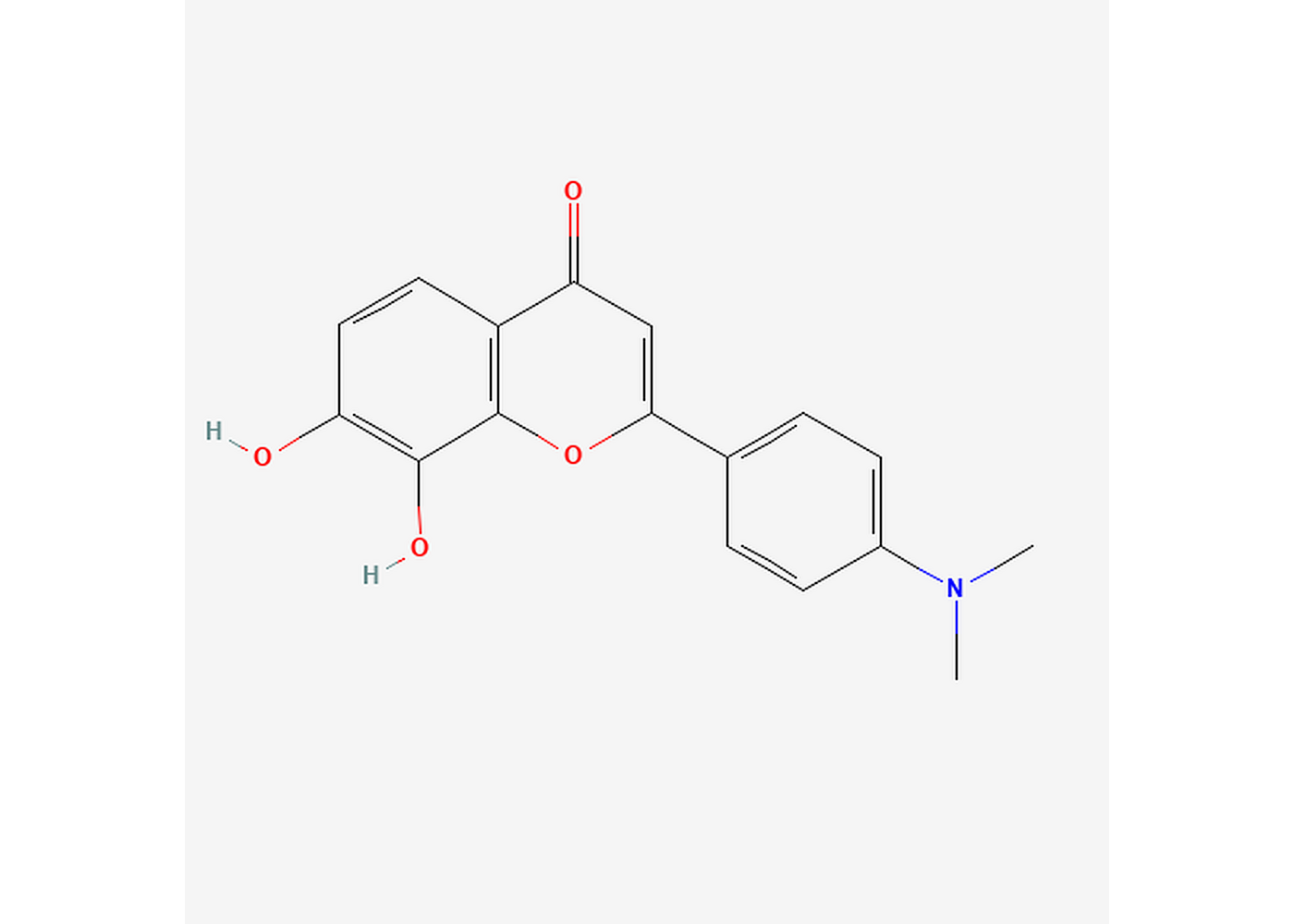
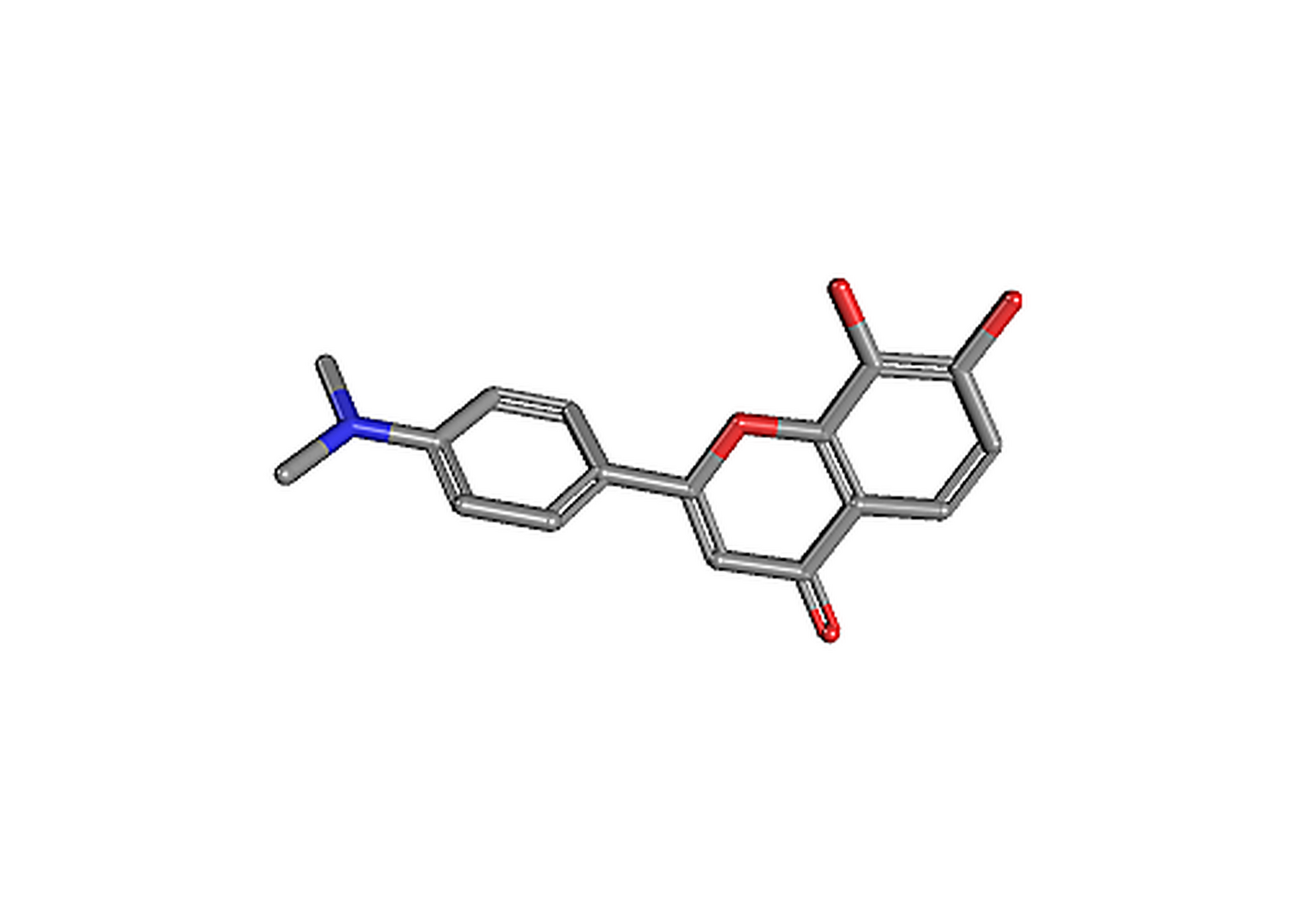
4-DMA-7,8-DHF es un derivado sintético de flavona perteneciente a la amplia clase de compuestos polifenólicos basados en cromenona. La estructura molecular contiene un esqueleto de flavona formado por un sistema benzopirano unido a un sustituyente fenilo.
El compuesto incorpora grupos hidroxilo en las posiciones 7 y 8 del anillo cromenona y un grupo dimetilamino en el anillo fenilo. Este patrón de sustitución contribuye a propiedades fisicoquímicas definidas, incluyendo polaridad, capacidad de formación de enlaces de hidrógeno y comportamiento espectroscópico característico.
Los derivados de flavona se caracterizan por una estructura central de 2-fenilcromen-4-ona. La diversidad estructural dentro de esta familia surge de la posición y naturaleza de los sustituyentes presentes en los anillos aromáticos y en el esqueleto cromenona.
Las flavonas hidroxiladas suelen presentar patrones definidos de absorción UV debido a los sistemas aromáticos conjugados y a la deslocalización electrónica a través de la estructura cromenona.
4-DMA-7,8-DHF contiene varios grupos funcionales relevantes para la química analítica:
Los grupos hidroxilo fenólicos participan en interacciones por enlaces de hidrógeno, mientras que el sistema aromático conjugado contribuye a bandas de absorción características observadas en análisis espectroscópicos.
La fórmula molecular C17H15NO4 corresponde a una estructura aromática polifenólica combinada con un sustituyente de amina terciaria. La conjugación a través del sistema cromenona favorece la deslocalización electrónica π, influyendo en las características de absorción UV-visible.
Esta distribución electrónica contribuye a un comportamiento cromatográfico definido y a una identificación espectroscópica reproducible en procedimientos analíticos de laboratorio.
Espectroscopía RMN: Los espectros de RMN de protones suelen mostrar señales aromáticas asociadas a los anillos fenilo y cromenona, junto con señales correspondientes al sustituyente dimetilamino.
Espectroscopía infrarroja: El carbonilo de la cromenona genera una banda intensa de absorción característica, mientras que los grupos hidroxilo fenólicos suelen producir bandas de estiramiento O–H en la región de números de onda más elevados.
Espectroscopía UV-Visible: El sistema aromático altamente conjugado produce transiciones π→π* características detectables mediante sistemas analíticos basados en absorción UV.
4-DMA-7,8-DHF presenta características definidas de retención en sistemas cromatográficos de fase inversa. Las estructuras aromáticas interactúan con fases estacionarias hidrofóbicas, mientras que los grupos hidroxilo aportan interacciones adicionales dependientes de la polaridad.
La espectrometría de masas confirma un peso molecular de 297.31 g/mol. Los patrones de fragmentación suelen incluir rupturas dentro del sustituyente aromático y del esqueleto cromenona, contribuyendo a la verificación estructural durante los procedimientos analíticos.
4-DMA-7,8-DHF suele presentarse como un polvo cristalino de color amarillo a naranja claro. Los derivados polifenólicos de flavona suelen mostrar una buena estabilidad en estado sólido cuando se almacenan bajo condiciones controladas de laboratorio.
Las bases de datos químicas internacionales codifican 4-DMA-7,8-DHF mediante cadenas SMILES canónicas e identificadores InChI. Estos formatos legibles por máquina permiten una representación digital precisa de la molécula dentro de sistemas de gestión de información de laboratorio (LIMS) y procedimientos de documentación científica.
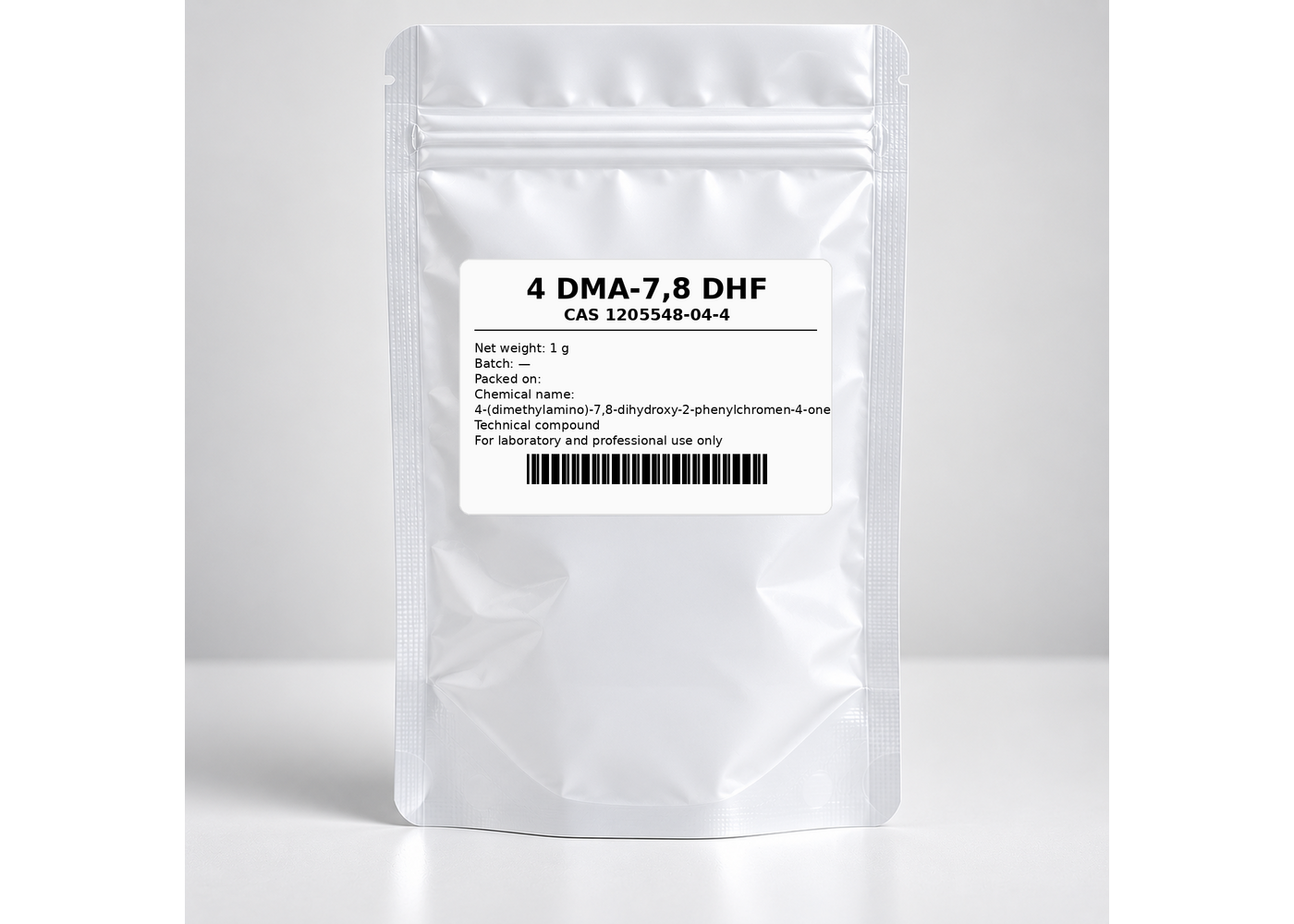
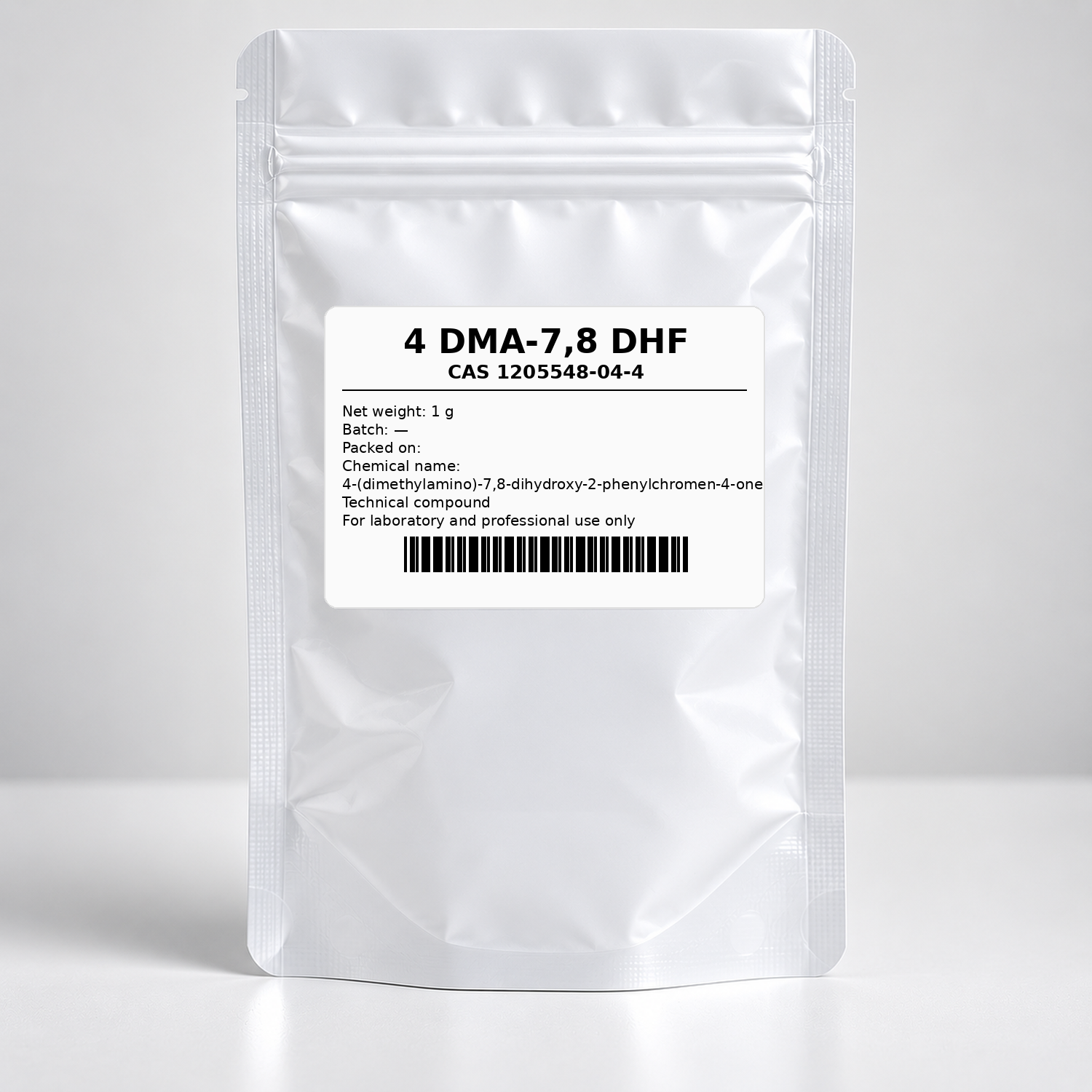
Como material de referencia químico de calidad investigación, 4-DMA-7,8-DHF se suministra en envases de laboratorio sellados para mantener su integridad durante el almacenamiento y transporte. La identificación de lotes favorece la trazabilidad y la documentación de laboratorio.
¿Cuál es el número CAS de 4-DMA-7,8-DHF?
El número CAS de 4-DMA-7,8-DHF es 1205548-04-4.
¿En qué forma se suministra 4-DMA-7,8-DHF?
Este producto se suministra como un polvo cristalino en envases de laboratorio sellados.
¿Está destinado este producto al uso humano o animal?
No. Este material se suministra exclusivamente como compuesto de referencia para laboratorio.
¿Está disponible 4-DMA-7,8-DHF para envío dentro de la UE?
Sí. Los pedidos se suministran a través de la tienda online de Rexar en envases de laboratorio sellados.
Este producto está destinado exclusivamente a la investigación de laboratorio. No está destinado al consumo humano o animal ni a aplicaciones médicas, diagnósticas o terapéuticas. Este compuesto no está destinado a diagnosticar, tratar, curar ni prevenir ninguna enfermedad.
| Intended use: | Laboratory research and analytical reference purposes only |
| Application area: | Analytical chemistry, reference comparison and method development |
| End user: | Professional users in controlled research environments |
| Regulatory classification: | Chemical reference material |