es
Cesta


Phenylpiracetam (CAS 77472-70-9) es suministrado por Rexar como material de referencia químico de calidad investigación para química analítica, verificación estructural y procedimientos comparativos de laboratorio. Este compuesto sintético de pequeña molécula se proporciona exclusivamente para entornos de investigación controlados que requieren identidad química confirmada, características analíticas reproducibles y estándares documentales consistentes.
Material de calidad investigación distribuido por Rexar dentro de la Unión Europea.
Phenylpiracetam está disponible directamente a través de la tienda online de Rexar y se suministra en envases de laboratorio sellados para su distribución dentro de la Unión Europea.
Ficha técnica Rexar Technical Compound Datasheet (PDF)
Ficha de datos de seguridad (SDS)
Documentación: Consulte la FDS y la ficha técnica de este producto o explore nuestra Documentación técnica.
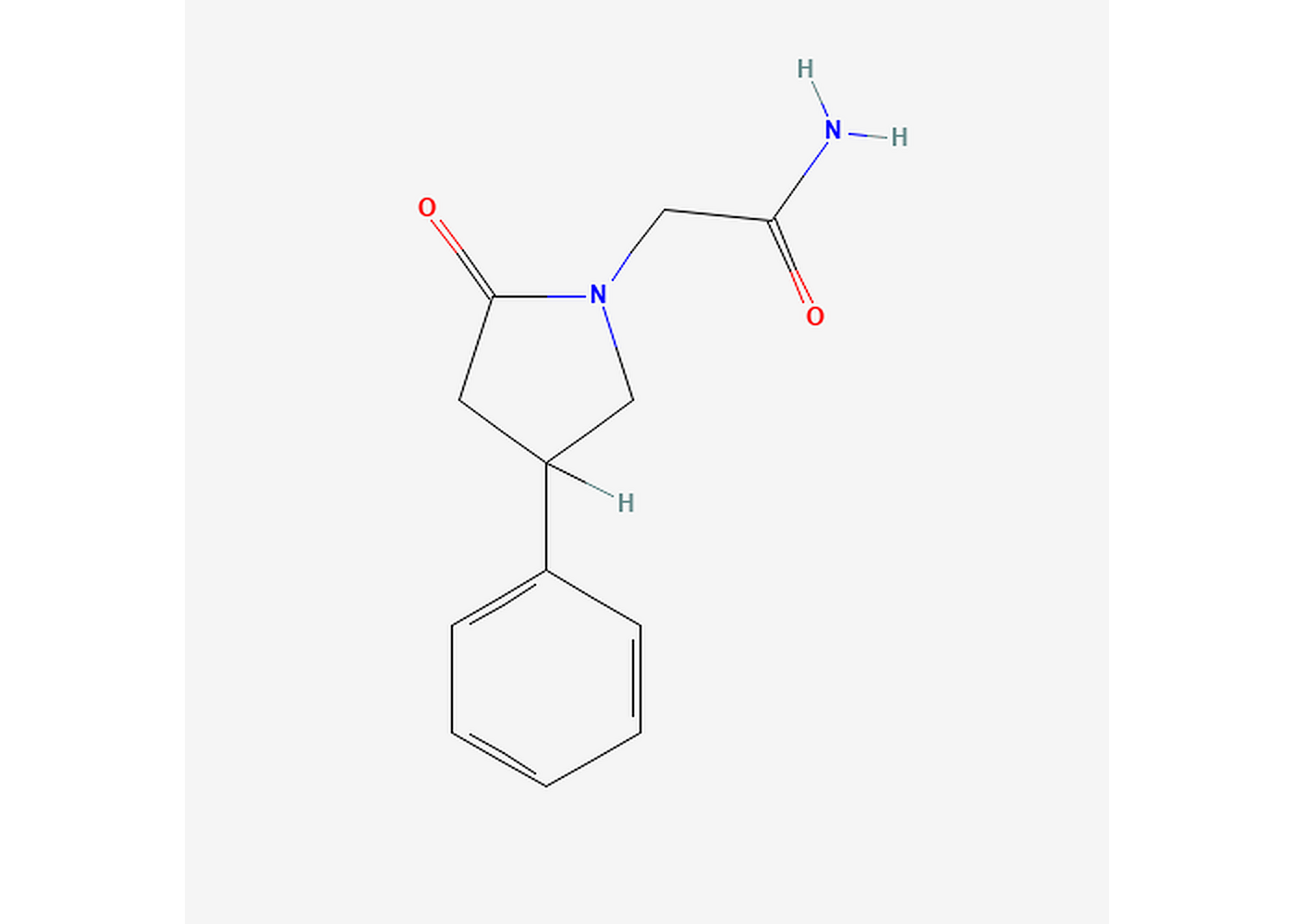
Phenylpiracetam es un derivado sustituido de pirrolidona perteneciente a la amplia clase de compuestos tipo racetam. Estructuralmente contiene un núcleo de 2-oxo-pirrolidina (anillo lactama) unido a una cadena lateral de acetamida y sustituido con un grupo fenilo. La presencia simultánea de funcionalidad amida cíclica y sustitución aromática da lugar a una arquitectura molecular híbrida que combina dominios estructurales alifáticos, heterocíclicos y aromáticos.
El anillo central de pirrolidona representa una estructura lactama de cinco miembros que contiene un grupo carbonilo y un átomo de nitrógeno terciario. Las lactamas se encuentran con frecuencia en la química de pequeñas moléculas debido a su geometría definida y a sus características espectroscópicas predecibles. La sustitución fenilo introduce deslocalización electrónica aromática y un mayor volumen estérico en comparación con análogos no sustituidos.
Phenylpiracetam puede situarse dentro de la familia estructural de los derivados de 2-oxo-pirrolidina. Los miembros de esta clase comparten una columna vertebral lactama con variaciones en la sustitución de cadenas laterales y la incorporación de grupos aromáticos. La diferenciación estructural dentro de este grupo viene determinada principalmente por la naturaleza y posición de los sustituyentes unidos al núcleo de pirrolidona.
La incorporación de un grupo fenilo aumenta la masa molecular y modifica las propiedades estéricas en comparación con derivados de pirrolidona no sustituidos. Desde un punto de vista puramente estructural, la sustitución aromática puede influir en las interacciones intermoleculares, el empaquetamiento cristalino y las características de retención cromatográfica.
La fórmula molecular C12H14N2O2 describe una estructura covalente compuesta por átomos de carbono, hidrógeno, nitrógeno y oxígeno organizados en una configuración lactama sustituida. La molécula contiene tanto grupos funcionales amida como lactama, cada uno de ellos aportando características espectroscópicas distintivas.
Los grupos carbonilo presentes en el anillo lactama y en la cadena lateral de acetamida generan bandas de absorción infrarroja características asociadas a vibraciones de estiramiento C=O. El anillo fenilo aromático contribuye con señales características en espectroscopía RMN de protón y carbono, mientras que las regiones alifáticas producen resonancias independientes e identificables.
En análisis RMN de protón, los protones aromáticos suelen aparecer en una región de desplazamiento químico claramente diferenciada de los grupos metileno del anillo de pirrolidona. La RMN de carbono-13 puede mostrar señales de carbonilos en la región de bajo campo esperada, junto con entornos aromáticos y alifáticos que respaldan la confirmación estructural.
Phenylpiracetam contiene un centro quiral dentro de su estructura molecular. Como resultado, son teóricamente posibles formas enantioméricas. En contextos analíticos, la estereoquímica puede influir en el comportamiento cromatográfico cuando se emplean fases estacionarias quirales.
La quiralidad no altera la fórmula molecular fundamental, pero puede influir en las mediciones de rotación óptica y en las características de separación bajo condiciones analíticas especializadas. Los procedimientos de verificación estructural pueden incluir análisis estereoquímicos cuando sean relevantes para la metodología de laboratorio.
Bajo condiciones estándar de laboratorio, Phenylpiracetam suele presentarse como un polvo cristalino blanco. Las moléculas cristalinas pequeñas con patrones de sustitución definidos suelen mostrar comportamientos de fusión reproducibles y una morfología sólida consistente.
Los parámetros analíticos que pueden evaluarse en entornos de laboratorio incluyen:
El grupo fenilo puede contribuir a propiedades de absorción ultravioleta debido a la conjugación aromática. Estas características de absorbancia pueden facilitar la detección cromatográfica mediante monitorización UV.
En cromatografía líquida de fase inversa, la sustitución aromática puede incrementar la interacción hidrofóbica con fases estacionarias no polares. El equilibrio entre las funcionalidades amida polares y los dominios aromáticos hidrofóbicos influye en el comportamiento de retención bajo condiciones definidas de fase móvil.
La presencia de múltiples grupos funcionales permite optimizar parámetros de separación durante el desarrollo de métodos. La composición del gradiente, el ajuste del pH y la polaridad del disolvente pueden influir significativamente en las características de retención.
Phenylpiracetam está registrado bajo el número CAS 77472-70-9 e indexado en bases de datos químicas públicas. Las entradas de registro suelen incluir diagramas estructurales, notación SMILES, identificadores InChI y metadatos de clasificación relevantes para derivados sustituidos de pirrolidona.
Dentro de la categoría más amplia de derivados sustituidos de pirrolidona, las variaciones estructurales suelen producirse en la posición 4 del anillo lactama. La sustitución aromática en esta posición, como ocurre en Phenylpiracetam, introduce un anillo fenilo plano que modifica la distribución electrónica y estérica respecto a análogos no sustituidos.
La combinación de amida cíclica y sustitución aromática crea una molécula que contiene dominios rígidos y semirrígidos. El anillo lactama proporciona restricción conformacional, mientras que la cadena lateral de acetamida introduce una flexibilidad rotacional limitada. Este equilibrio estructural contribuye a características analíticas definidas bajo condiciones controladas de laboratorio.
Desde una perspectiva de materiales, las lactamas sustituidas suelen cristalizar en formas bien definidas. La disposición de la red cristalina puede verse influida por el potencial de enlace por hidrógeno asociado a las funcionalidades amida. Estas interacciones intermoleculares pueden afectar el comportamiento de fusión y la estabilidad en estado sólido.
Como material de referencia químico de calidad investigación, Phenylpiracetam se suministra en envases de laboratorio sellados para preservar su integridad durante el almacenamiento y el transporte. El etiquetado de identificación de lotes favorece la trazabilidad dentro de los sistemas internos de documentación de laboratorio.
¿Cuál es el número CAS de Phenylpiracetam?
El número CAS de Phenylpiracetam es 77472-70-9.
¿En qué forma se suministra Phenylpiracetam?
Este producto se suministra como polvo cristalino blanco en envases de laboratorio sellados.
¿Este producto está destinado al uso humano o animal?
No. Este material se suministra exclusivamente como compuesto de referencia para laboratorio.
¿Phenylpiracetam está disponible para envío dentro de la UE?
Sí. Los pedidos se suministran a través de la tienda online de Rexar en envases de laboratorio sellados.
Este producto está destinado exclusivamente al uso en investigación de laboratorio. No está destinado al consumo humano o animal, ni a aplicaciones médicas, diagnósticas o terapéuticas.
| Intended use: | Laboratory research and analytical reference purposes only |
| Application area: | Analytical chemistry, reference comparison and method development |
| End user: | Professional users in controlled research environments |
| Regulatory classification: | Chemical reference material |