es
Cesta


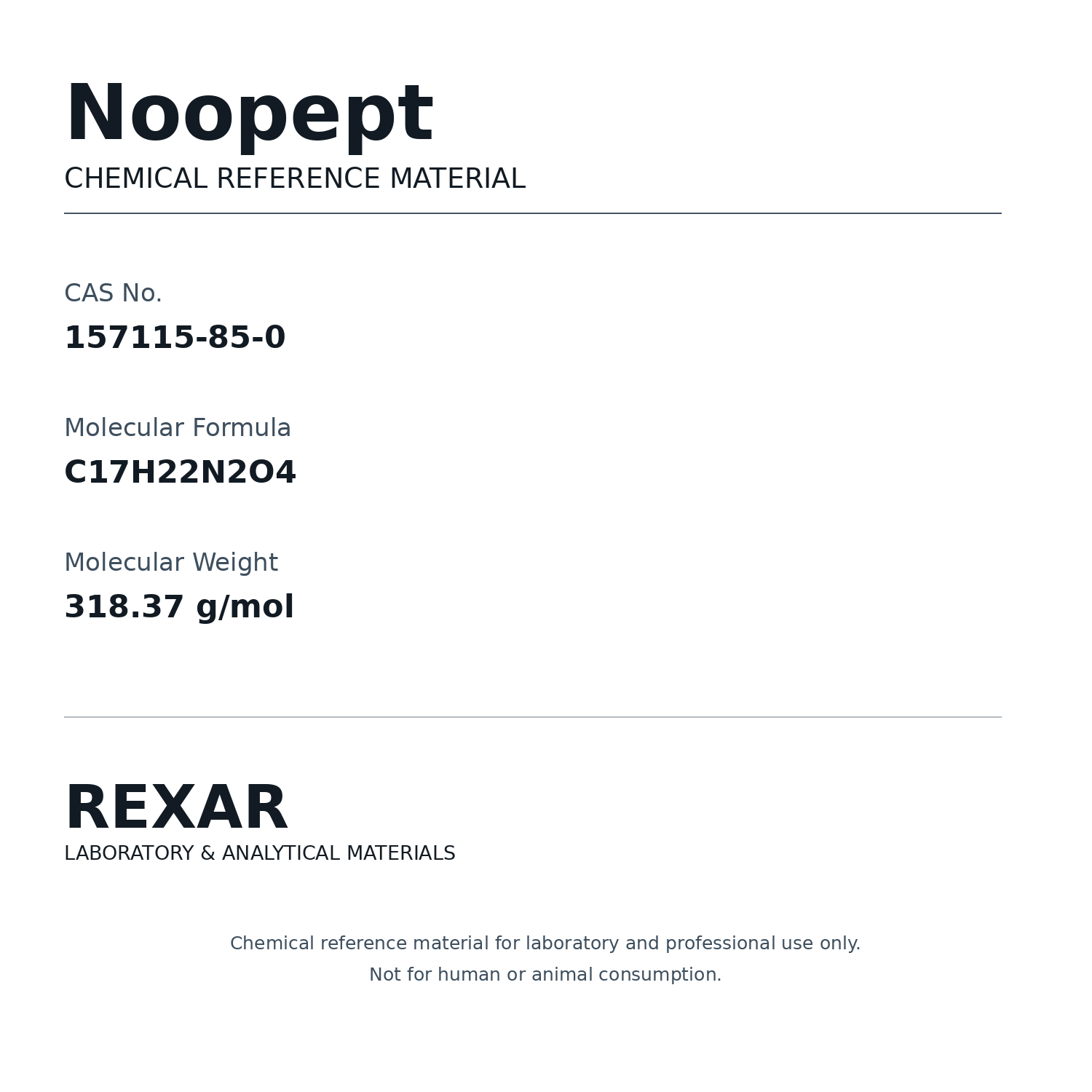


Noopept (CAS 157115-85-0) es suministrado por Rexar como material de referencia químico de calidad investigación para química analítica, verificación estructural y procedimientos comparativos de laboratorio. Este compuesto sintético derivado de dipéptidos se proporciona exclusivamente para entornos de investigación controlados que requieren identidad química confirmada, características analíticas reproducibles y estándares documentales consistentes.
Material de calidad investigación distribuido por Rexar dentro de la Unión Europea.
Noopept está disponible directamente a través de la tienda online de Rexar y se suministra en envases de laboratorio sellados para su distribución dentro de la Unión Europea.
Ficha técnica Rexar Technical Compound Datasheet (PDF)
Ficha de datos de seguridad (SDS)
Documentación: Consulte la FDS y la ficha técnica de este producto o explore nuestra Documentación técnica.
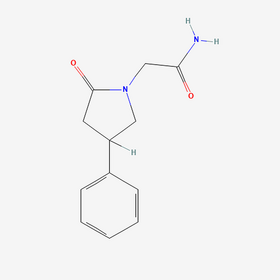
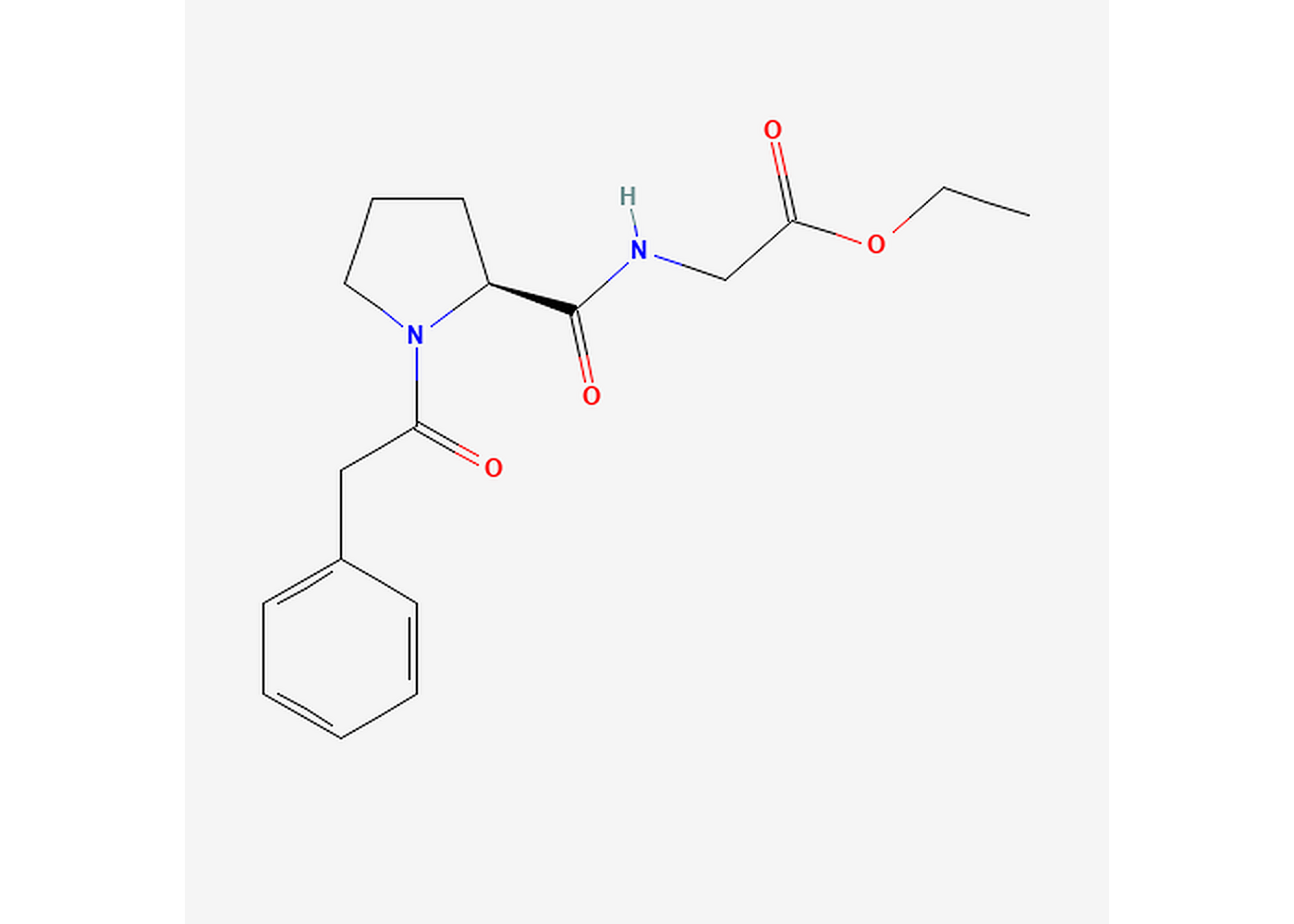
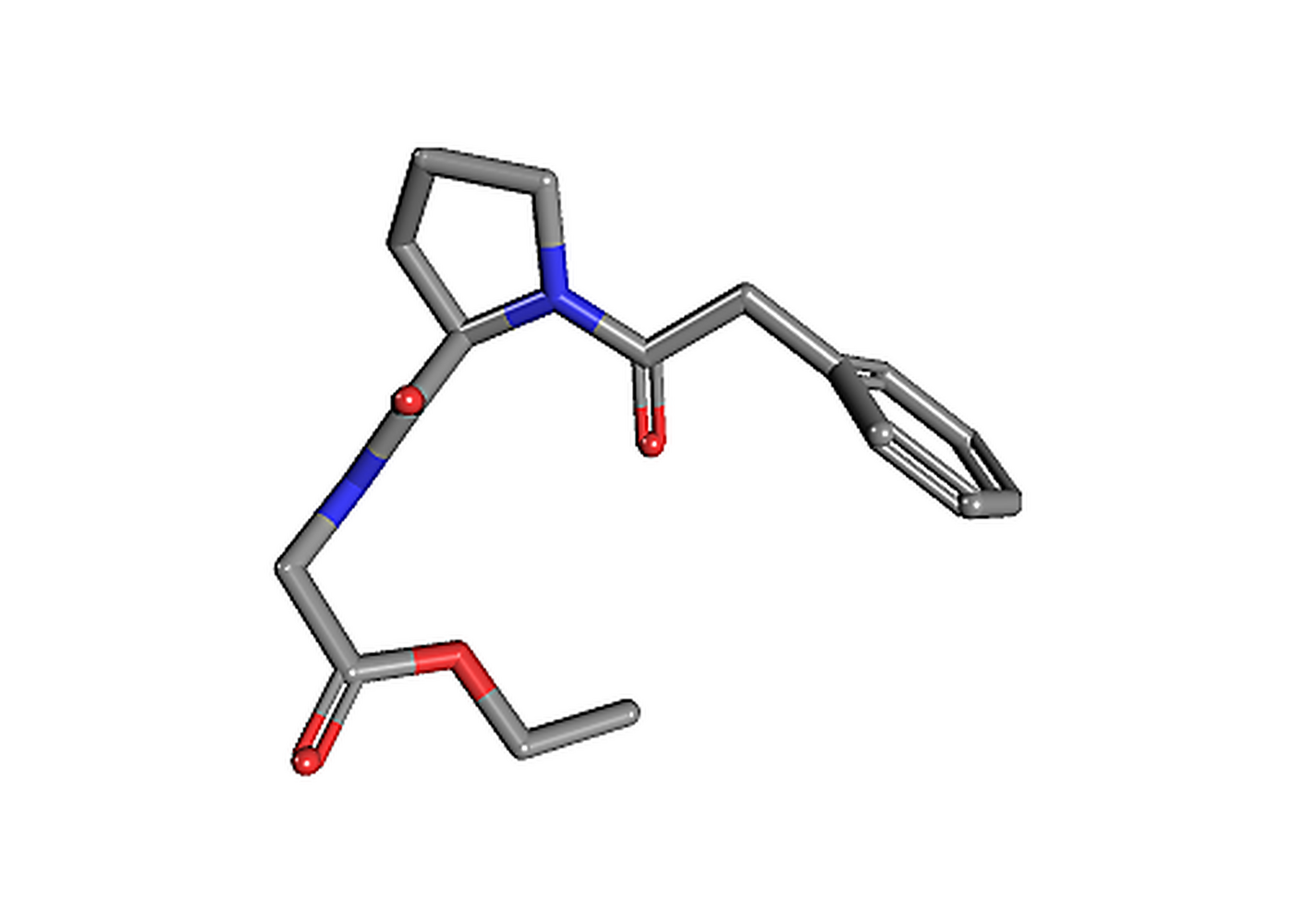
Noopept es un compuesto sintético derivado estructuralmente de un marco de dipéptido. La molécula consiste en un núcleo de pirrolidina sustituida unido mediante un enlace amida a una fracción éster derivada de glicina. La estructura incorpora características tanto de péptidos como de pequeñas moléculas, combinando funcionalidad amida, enlace éster y sustitución aromática dentro de una arquitectura molecular compacta.
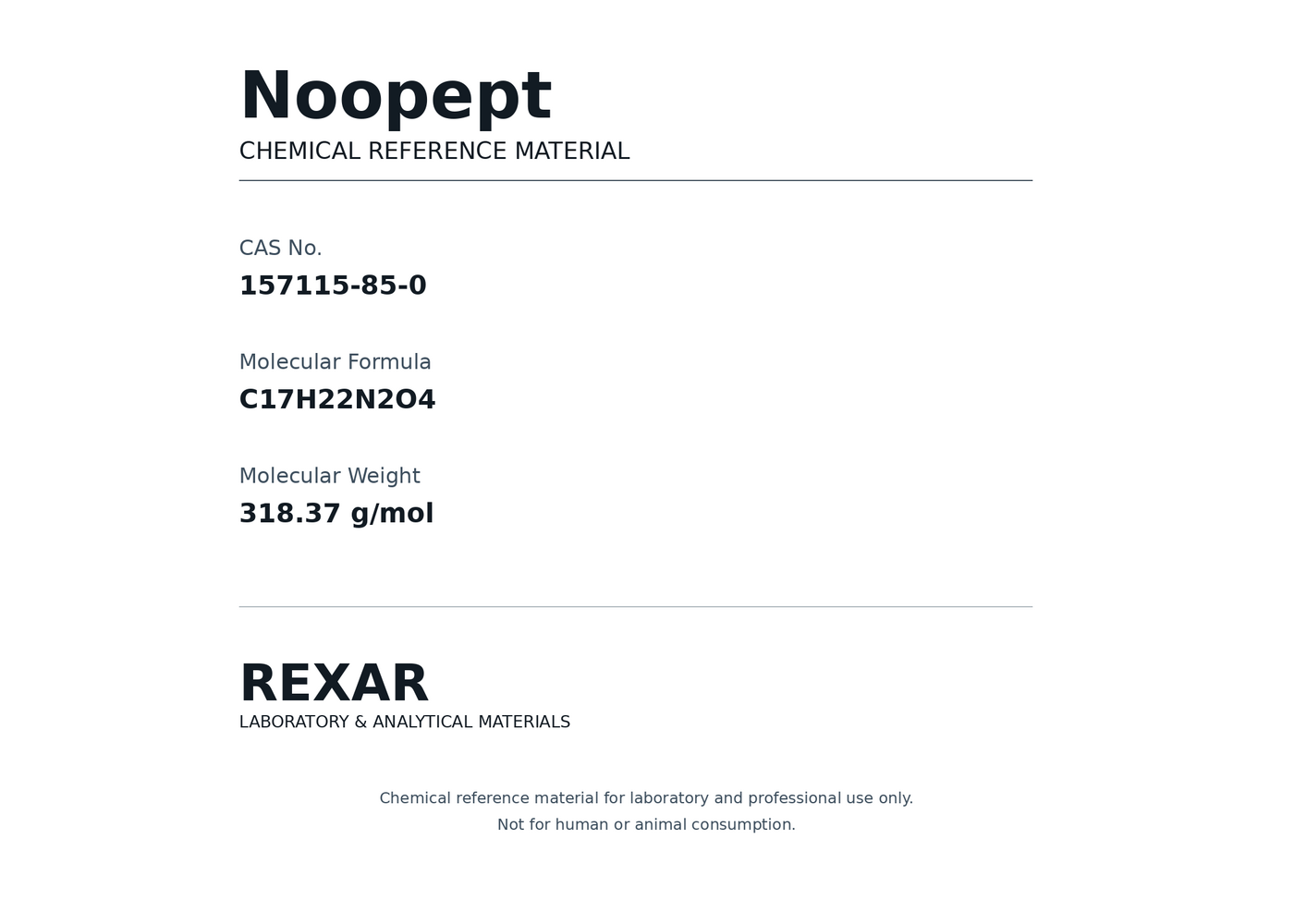
La fórmula molecular C17H22N2O4 y el peso molecular de 318,37 g/mol reflejan una distribución equilibrada de grupos funcionales que contienen nitrógeno y oxígeno. Estos heteroátomos influyen significativamente en la polaridad, la capacidad de formación de enlaces de hidrógeno y el comportamiento cromatográfico bajo condiciones de laboratorio definidas.
Noopept contiene un centro estereogénico dentro del sistema de anillo de pirrolidina, designado como configuración (2S) en su nomenclatura IUPAC. La definición estereoquímica es relevante para los procedimientos de confirmación estructural y la reproducibilidad analítica.
La integridad quiral puede evaluarse mediante cromatografía quiral o técnicas espectroscópicas avanzadas en entornos de investigación especializados. El mantenimiento de una estereoquímica consistente contribuye a un rendimiento fiable como material de referencia.
El enlace amida presenta la estabilización clásica por resonancia, lo que da lugar a una rotación restringida y una geometría definida. El enlace éster introduce polaridad adicional y posible sensibilidad a la hidrólisis bajo condiciones extremas de pH, aunque la estabilidad se mantiene bajo las condiciones de almacenamiento recomendadas.
El grupo fenilacetilo introduce un sistema aromático que contribuye a la absorbancia UV y a características espectroscópicas distintivas. Los protones aromáticos producen señales identificables en espectros de RMN de protón, mientras que los protones del anillo y de las cadenas laterales alifáticas proporcionan información estructural complementaria.
Esta composición dual aromática–alifática permite una diferenciación clara frente a derivados racetam no aromáticos durante análisis cromatográficos o espectroscópicos.
La densidad electrónica se concentra alrededor de los átomos de oxígeno carbonílico y del nitrógeno amida, formando los principales sitios aceptores y donadores de enlaces de hidrógeno. El carbonilo del éster contribuye además al momento dipolar de la molécula y a su perfil de interacciones intermoleculares.
En solución, las interacciones de enlace de hidrógeno con disolventes próticos pueden influir en la dinámica de solvatación y en el comportamiento de los picos cromatográficos.
La combinación de funcionalidades aromáticas, amida y éster da lugar a características anfifílicas. Entre las propiedades analíticas que pueden evaluarse se incluyen:
El análisis por espectrometría de masas confirma el ion molecular correspondiente a 318,37 g/mol. La fragmentación puede producirse en el enlace amida o en el enlace éster, generando fragmentos diagnósticos útiles para la confirmación estructural.
El anillo aromático puede contribuir a la estabilización de ciertos iones fragmento bajo condiciones de ionización por electrospray, facilitando la identificación del compuesto en procedimientos LC-MS.
En sistemas HPLC de fase inversa, el comportamiento de retención está influido por el grupo fenilo aromático y por la superficie hidrofóbica global de la molécula. Puede ser necesaria la optimización del gradiente para lograr una separación precisa de compuestos estructuralmente relacionados.
La composición de la fase móvil y el pH pueden afectar la estabilidad del éster y las características de ionización, por lo que los parámetros controlados son importantes para obtener resultados reproducibles.
El grupo funcional éster etílico puede ser susceptible a hidrólisis bajo condiciones fuertemente ácidas o básicas. Bajo condiciones neutras de almacenamiento en laboratorio, la integridad estructural se mantiene.
Para aplicaciones analíticas, el uso de soluciones recién preparadas y entornos de disolventes controlados favorece un rendimiento analítico consistente.
Noopept suele presentarse como un polvo cristalino blanco. La estabilidad de la red cristalina puede verse favorecida por interacciones de enlace de hidrógeno entre grupos amida y carbonilo.
El almacenamiento controlado en un entorno seco y oscuro ayuda a mantener una apariencia física consistente y una reproducibilidad analítica fiable.
Noopept | CAS: 157115-85-0 | Fórmula molecular: C17H22N2O4 | Peso molecular: 318,37 g/mol.
Noopept puede utilizarse como material de referencia cualitativo en laboratorios analíticos que realizan verificación de compuestos, comparación de tiempos de retención y confirmación espectroscópica. Puede incorporarse a procedimientos comparativos relacionados con compuestos derivados de péptidos o análogos de pequeñas moléculas.
¿Cuál es el número CAS de Noopept?
El número CAS de Noopept es 157115-85-0.
¿En qué forma se suministra Noopept?
Este producto se suministra como polvo cristalino blanco en envases de laboratorio sellados.
¿Este producto está destinado al uso humano o animal?
No. Este material se suministra exclusivamente como compuesto de referencia para laboratorio.
¿Noopept está disponible para envío dentro de la UE?
Sí. Los pedidos se suministran a través de la tienda online de Rexar en envases de laboratorio sellados.
Este producto está destinado exclusivamente a la investigación de laboratorio. No está destinado al consumo humano o animal, ni a aplicaciones médicas, diagnósticas o terapéuticas.
| Intended use: | Laboratory research and analytical reference purposes only |
| Application area: | Analytical chemistry, reference comparison and method development |
| End user: | Professional users in controlled research environments |
| Regulatory classification: | Chemical reference material |