it
Carrello
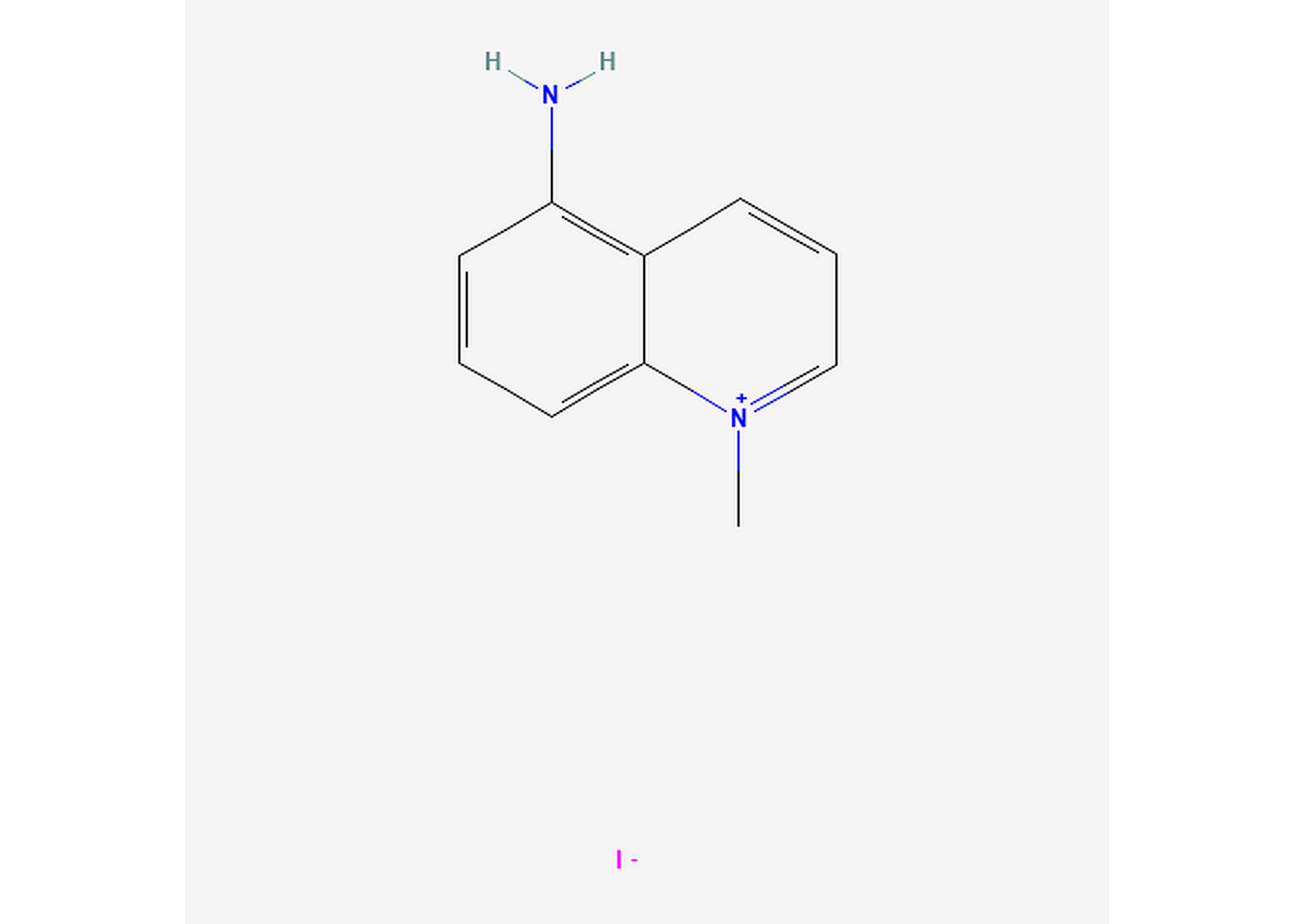
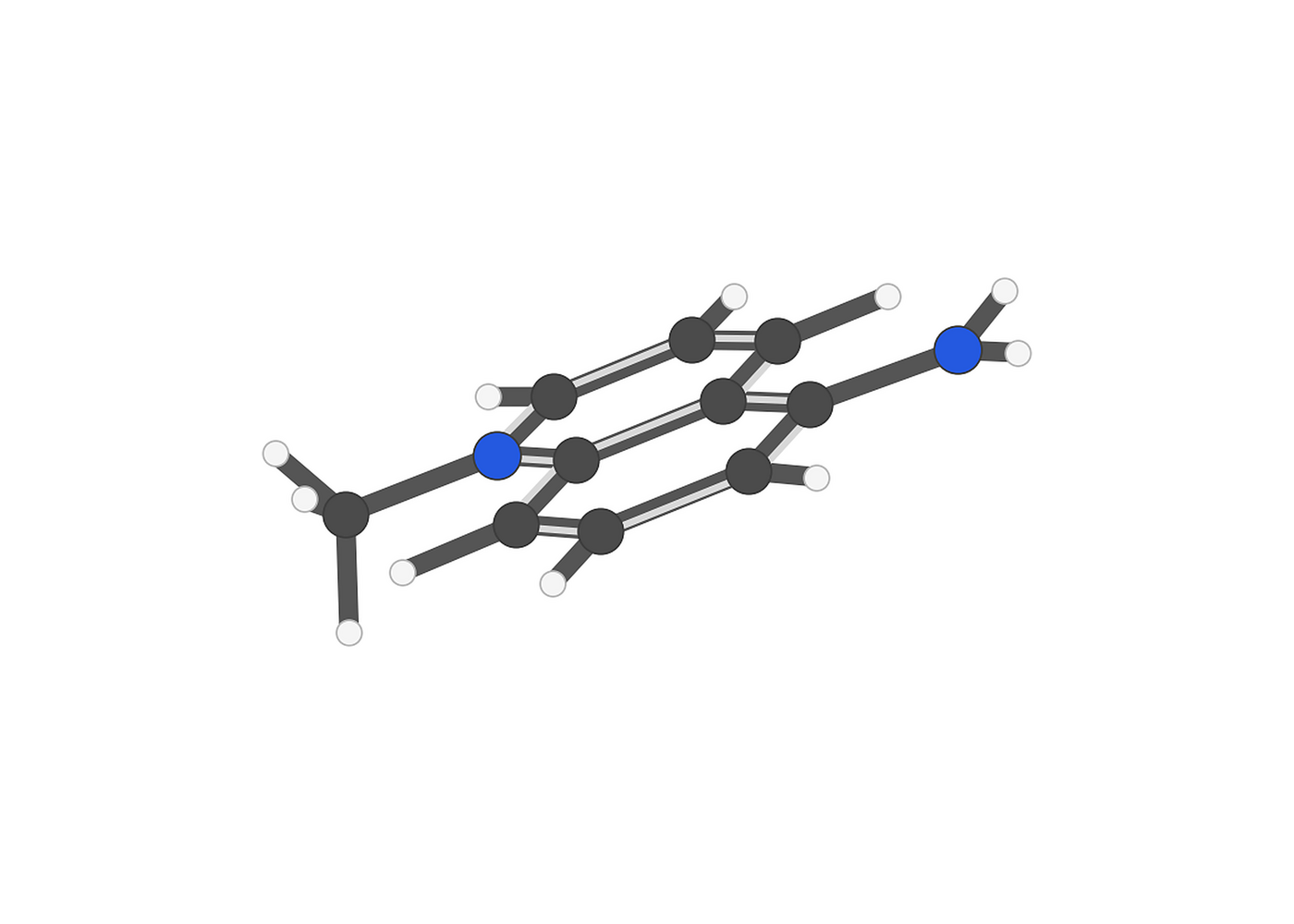
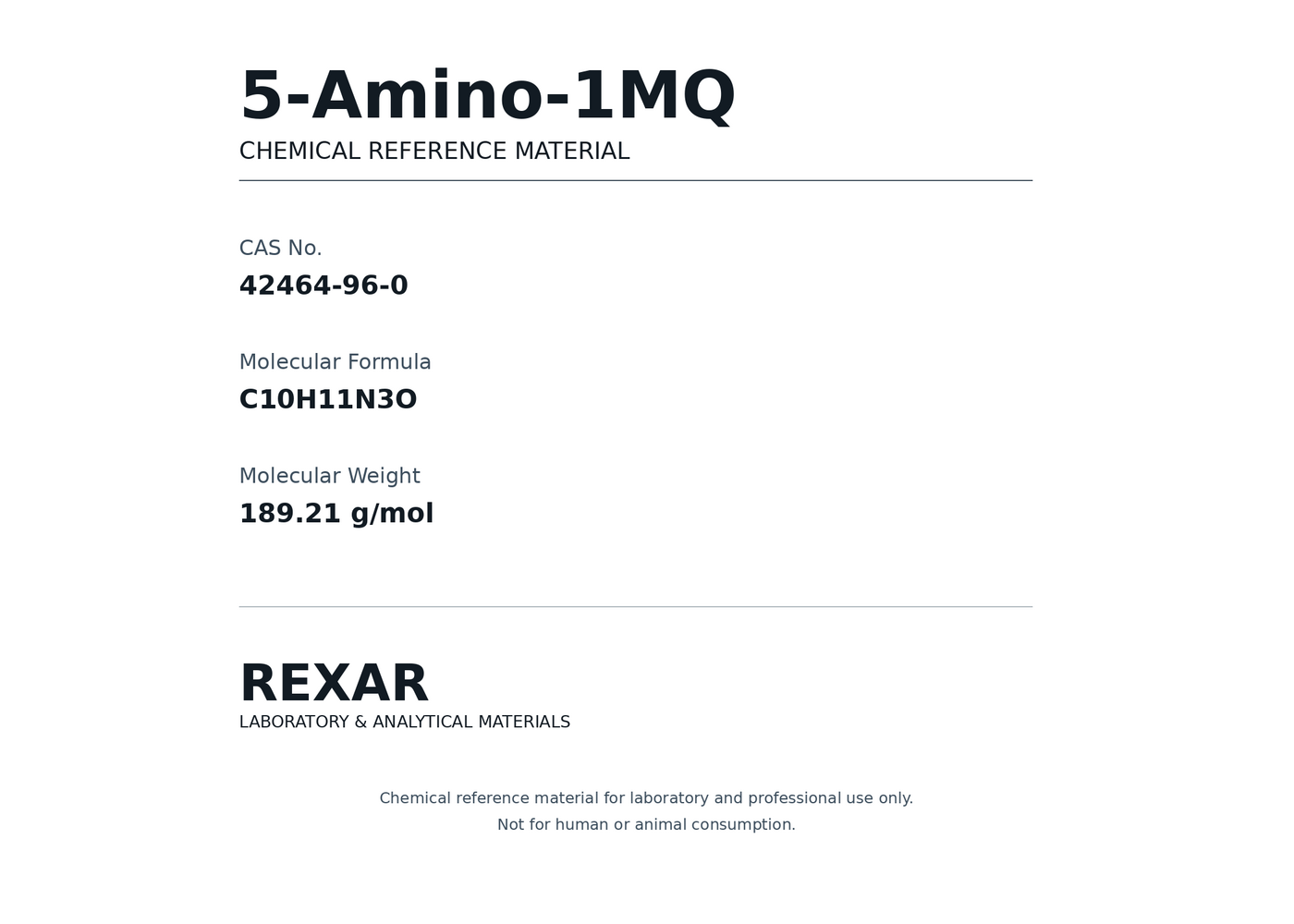
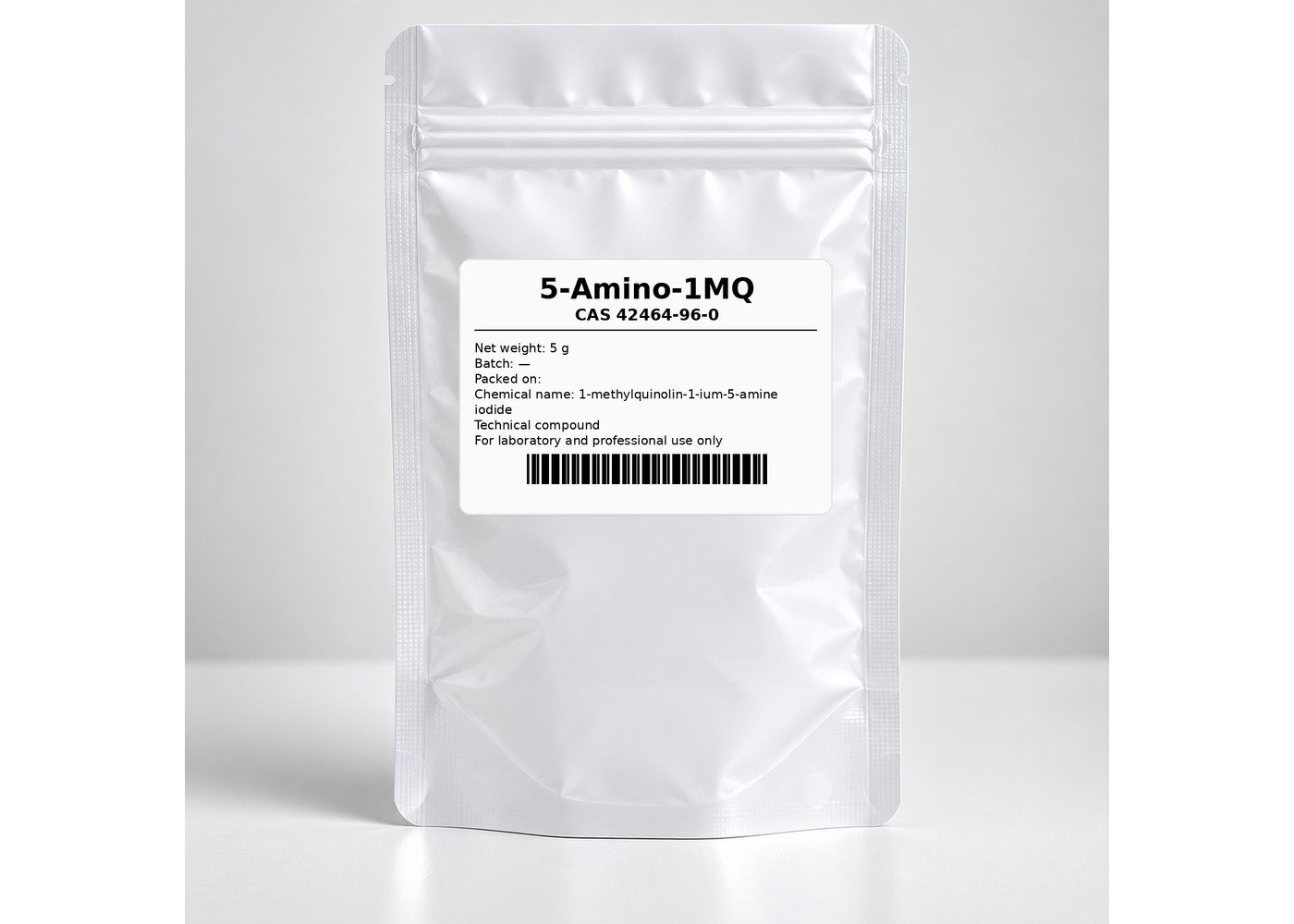
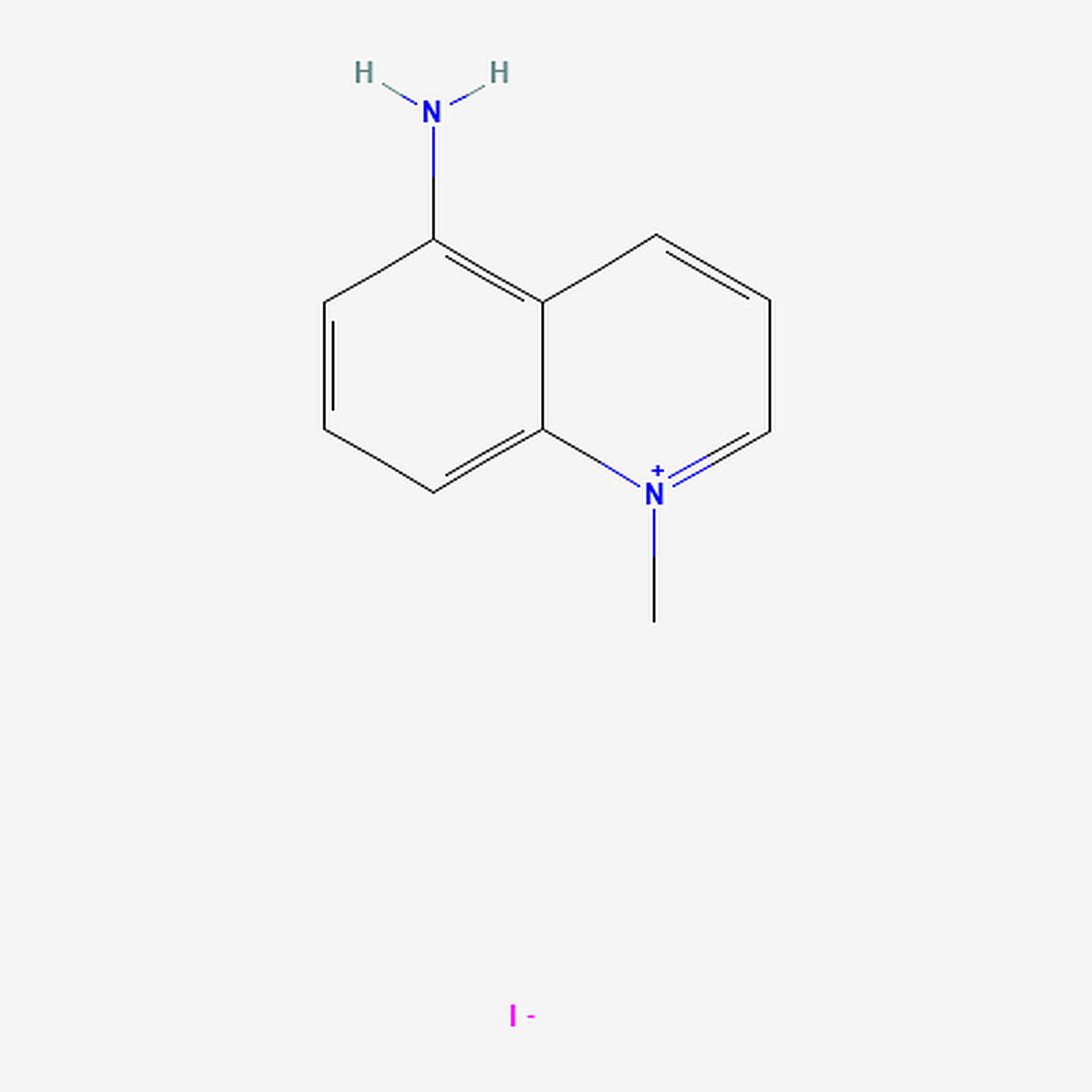
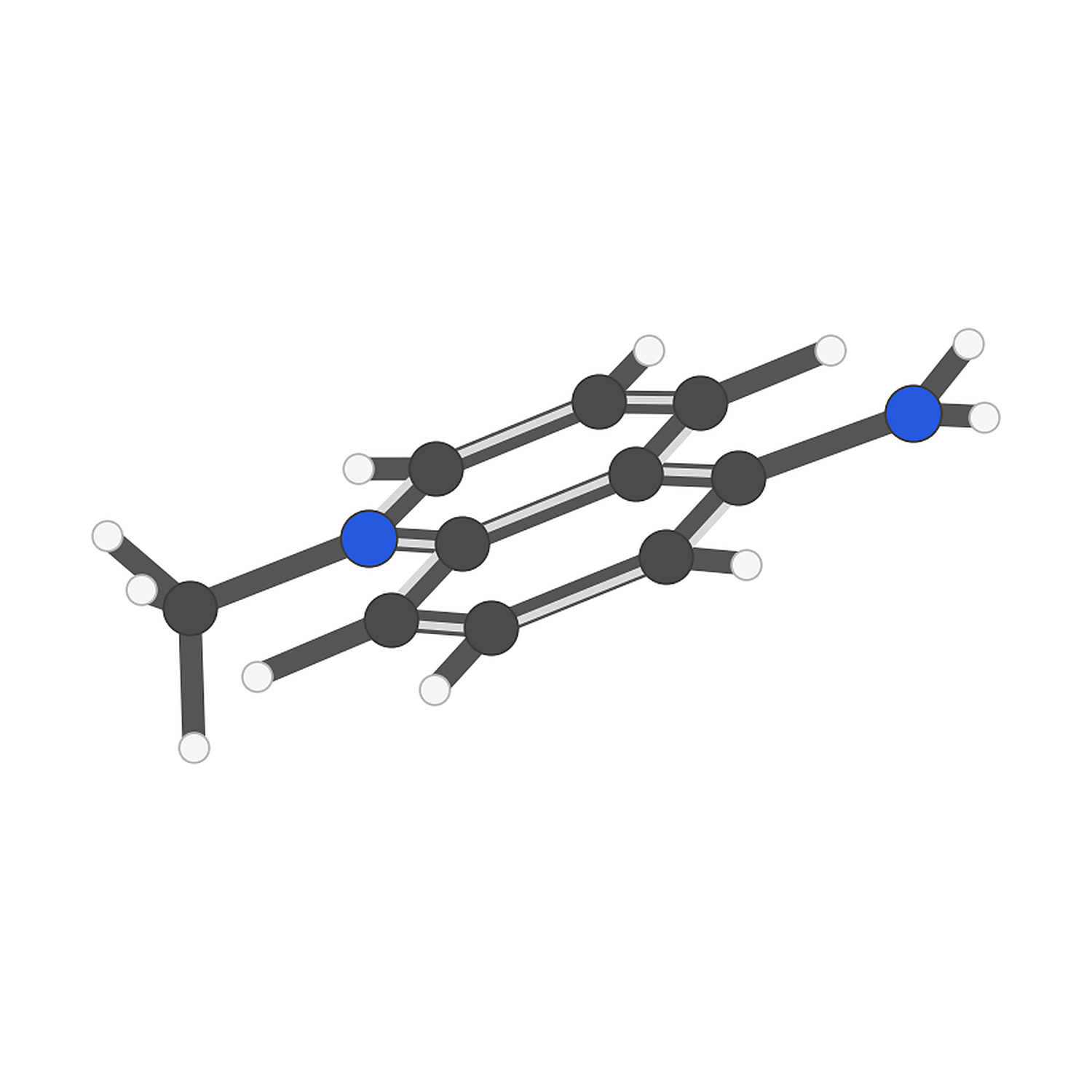
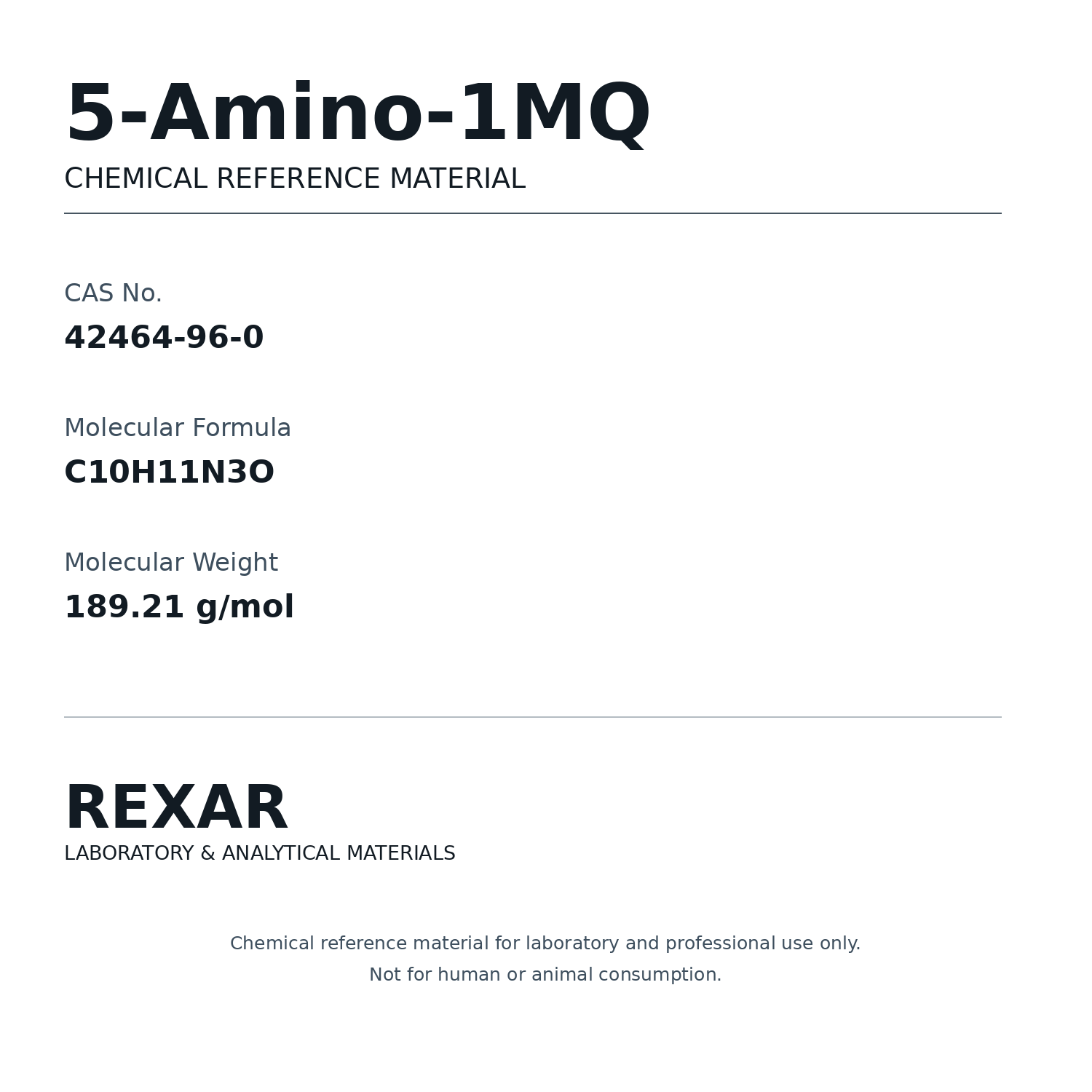
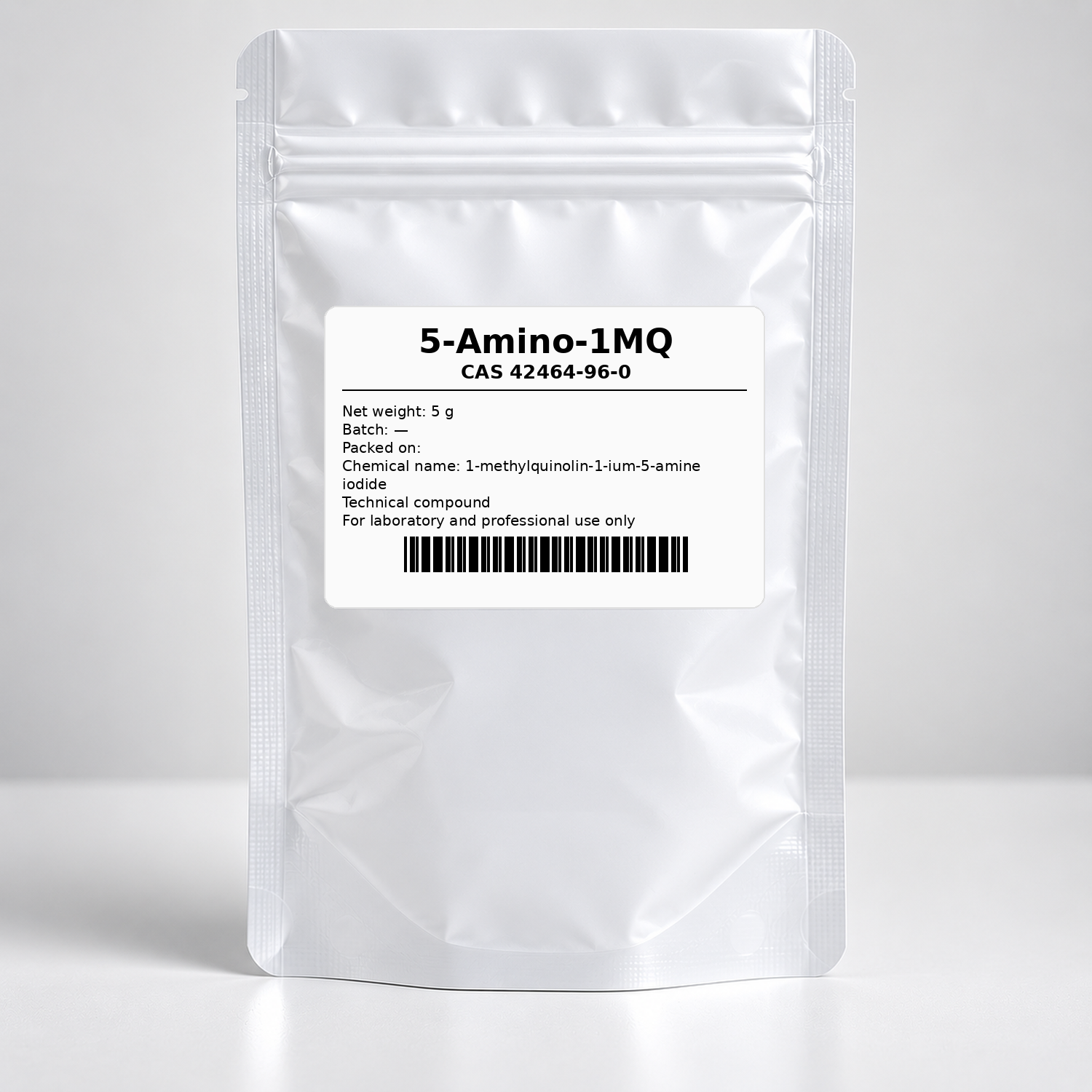

5-Amino-1MQ (CAS 42464-96-0) è fornito da Rexar come materiale di riferimento chimico di grado ricerca per chimica analitica, verifica strutturale e procedure comparative di laboratorio. Questo composto viene fornito esclusivamente per ambienti di ricerca controllati che richiedono identità chimica confermata, comportamento analitico riproducibile e standard documentali coerenti.
Materiale di grado ricerca distribuito da Rexar all'interno dell'Unione Europea.
5-Amino-1MQ è disponibile direttamente tramite il webshop Rexar ed è fornito in confezioni da laboratorio sigillate per la distribuzione all'interno dell'Unione Europea.
Rexar Technical Compound Datasheet (PDF)
Documentazione: Consulta la SDS e la scheda tecnica di questo prodotto oppure esplora la nostra Documentazione tecnica.
5-Amino-1MQ è un composto aromatico derivato dal chinolinio caratterizzato da un sistema ad anelli biciclici fusi (framework chinolina/chinolinio) con un azoto dell'anello metilato e un sostituente amminico. La struttura presenta un nucleo aromatico rigido e planare che supporta firme spettroscopiche prevedibili e un comportamento cromatografico coerente in condizioni di laboratorio controllate.
La presenza di un centro chinolinio cationico (azoto dell'anello N-metilato) influenza la polarità e il potenziale di interazione con le fasi mobili e le fasi stazionarie nei metodi cromatografici. Il gruppo amminico introduce un ulteriore sito funzionale che può influenzare le interazioni di legame a idrogeno e la distribuzione degli spostamenti chimici nelle analisi NMR.
Le strutture basate sulla chinolina sono caratterizzate da un sistema fuso benzene–piridina. I derivati del chinolinio si formano tipicamente quando l'azoto dell'anello viene quaternizzato, creando un eterociclo aromatico permanentemente carico. Questa quaternizzazione può aumentare il potenziale di interazione in sistemi a solvente misto e influenzare i profili di ritenzione dipendenti da buffer o agenti di ion-pairing.
5-Amino-1MQ contiene gruppi funzionali rilevanti per la chimica analitica:
Il sistema aromatico supporta un forte assorbimento UV, mentre il gruppo amminico può contribuire a segnali vibrazionali N–H caratteristici nella spettroscopia infrarossa. L'azoto quaternario può influenzare i pattern di frammentazione nella spettrometria di massa e modificare la selettività cromatografica in funzione delle condizioni del metodo.
La formula molecolare C10H11N3O corrisponde a uno scaffold aromatico compatto con sostituzione eteroatomica. Il sistema aromatico fuso supporta la delocalizzazione degli elettroni π, mentre l'azoto quaternizzato introduce un centro elettron-deficiente che modifica la distribuzione della densità elettronica lungo il sistema ad anello.
Il sostituente amminico può contribuire con effetti di donazione elettronica per risonanza all'interno del framework aromatico, influenzando l'intensità dell'assorbimento UV e gli spostamenti chimici NMR delle posizioni aromatiche adiacenti.
Spettroscopia NMR: L'NMR protonico mostra generalmente segnali aromatici nella regione attesa per eterocicli aromatici fusi, insieme a un segnale distinto del gruppo N-metile. Il gruppo amminico può presentare risonanze larghe a seconda del solvente e delle condizioni di scambio. L'NMR del carbonio-13 evidenzia i carboni aromatici e il carbonio metilico legato all'azoto quaternario.
Spettroscopia Infrarossa: Sono attese bande di stiramento aromatiche C–H e vibrazioni dell'anello, insieme a segnali N–H associati al gruppo amminico. Ulteriori bande possono essere osservate a seconda della forma salina o del controione.
Spettroscopia UV-Visibile: L'eterociclo aromatico coniugato supporta transizioni π→π*, consentendo il rilevamento UV nei sistemi cromatografici dotati di rivelatori UV o a matrice di fotodiodi.
5-Amino-1MQ può mostrare un comportamento di ritenzione definito nei sistemi in fase inversa, con una selettività dipendente dal metodo influenzata dal suo carattere cationico. Composizione della fase mobile, forza ionica e scelta del pH/buffer possono influenzare la forma del picco e il tempo di ritenzione. In condizioni controllate è possibile ottenere ritenzione riproducibile e buona simmetria del picco.
La spettrometria di massa supporta la conferma di un peso molecolare di 189,21 g/mol. I percorsi di frammentazione possono includere scissioni o riarrangiamenti all'interno dell'eterociclo aromatico e ioni frammento associati ai sostituenti, contribuendo alla verifica dell'identità durante i flussi di lavoro analitici.
5-Amino-1MQ viene generalmente fornito come polvere fine adatta alla manipolazione in laboratorio. I sali eterociclici aromatici o forme correlate mostrano comunemente un comportamento stabile allo stato solido quando conservati in confezioni sigillate, in condizioni asciutte e al riparo dalla luce.
I database chimici internazionali codificano 5-Amino-1MQ utilizzando stringhe SMILES canoniche e identificatori InChI, supportando una rappresentazione digitale accurata e la compatibilità con sistemi LIMS e flussi di documentazione.
Come materiale di riferimento chimico di grado ricerca, 5-Amino-1MQ viene fornito in confezioni da laboratorio sigillate per mantenere l'integrità durante il trasporto e la conservazione. Una chiara identificazione del lotto supporta la tracciabilità e la documentazione interna di laboratorio.
Qual è il numero CAS del 5-Amino-1MQ?
Il numero CAS del 5-Amino-1MQ è 42464-96-0.
In quale forma viene fornito il 5-Amino-1MQ?
Questo prodotto viene fornito come polvere di grado laboratorio in confezioni da laboratorio sigillate.
Questo prodotto è destinato all'uso umano o animale?
No. Questo materiale viene fornito esclusivamente come composto di riferimento per laboratorio.
Il 5-Amino-1MQ è disponibile per la spedizione all'interno dell'UE?
Sì. Gli ordini vengono forniti tramite il webshop Rexar in confezioni da laboratorio sigillate.
Il sistema aromatico ad anelli fusi supporta la delocalizzazione degli elettroni π lungo il framework chinolinico. La quaternizzazione dell'azoto dell'anello introduce una carica positiva permanente che influenza la distribuzione elettronica e può modificare gli spostamenti chimici osservati e le caratteristiche di assorbimento UV rispetto agli analoghi neutri della chinolina.
Il gruppo amminico può partecipare come donatore e accettore di legami a idrogeno in condizioni appropriate, influenzando il comportamento di solubilità e l'interazione con le fasi cromatografiche. Allo stato solido, le interazioni intermolecolari che coinvolgono il gruppo amminico possono contribuire alle caratteristiche di impaccamento cristallino.
A causa del suo carattere cationico, lo sviluppo dei metodi può richiedere la valutazione della composizione del tampone e della forza ionica per ottenere una forma del picco ottimale e una ritenzione riproducibile. Strategie di ion-pairing o fasi stazionarie alternative possono essere prese in considerazione nei flussi di lavoro avanzati in cui è richiesta selettività tra cationi eteroaromatici correlati.
La presenza di una carica positiva permanente distingue il 5-Amino-1MQ da molti eterocicli aromatici neutri. Questa caratteristica può influenzare significativamente i tempi di ritenzione e la selettività cromatografica in funzione del pH della fase mobile, della concentrazione di tampone e della chimica della colonna utilizzata.
In alcuni sistemi analitici, l'ottimizzazione delle condizioni di eluizione può migliorare la simmetria del picco e la riproducibilità tra analisi successive.
L'azoto quaternario crea un centro elettron-deficiente all'interno del sistema aromatico. Questa caratteristica influenza il comportamento spettroscopico e la distribuzione della densità elettronica sull'intero sistema ad anelli fusi.
Gli effetti di risonanza introdotti dal gruppo amminico possono parzialmente compensare tale carenza elettronica in specifiche regioni della molecola, contribuendo a un profilo elettronico distintivo.
Il carattere cationico della molecola può favorire una risposta efficiente nelle tecniche di ionizzazione utilizzate nella spettrometria di massa. Gli ioni molecolari e i frammenti caratteristici possono essere utilizzati per confermare l'identità strutturale durante le procedure analitiche.
I pattern di frammentazione possono includere processi associati al gruppo amminico, al sostituente N-metile e al sistema aromatico fuso.
Come molti composti aromatici eterociclici, il 5-Amino-1MQ può presentare una struttura cristallina stabile quando conservato in condizioni adeguate. Le interazioni intermolecolari possono coinvolgere sia il gruppo amminico sia il sistema aromatico planare.
La valutazione dello stato solido può essere effettuata mediante tecniche quali XRPD, DSC e analisi termica complementare.
5-Amino-1MQ può essere utilizzato come materiale di riferimento qualitativo nei flussi di lavoro che comprendono verifica strutturale, confronto cromatografico e conferma spettroscopica.
Questo prodotto è destinato esclusivamente all'uso per ricerca di laboratorio. Non è destinato al consumo umano o animale né ad applicazioni mediche, diagnostiche o terapeutiche. Questo composto non è destinato a diagnosticare, trattare, curare o prevenire alcuna malattia.
| Intended use: | Laboratory research and analytical reference purposes only |
| Application area: | Analytical chemistry, reference comparison and method development |
| End user: | Professional users in controlled research environments |
| Regulatory classification: | Chemical reference material |