da
Indkøbskurv


Phenylpiracetam (CAS 77472-70-9) leveres af Rexar som et kemisk referencemateriale i forskningskvalitet til analytisk kemi, strukturel verifikation og laboratoriebaserede sammenligningsprocedurer. Denne syntetiske småmolekylære forbindelse leveres udelukkende til kontrollerede forskningsmiljøer, der kræver bekræftet kemisk identitet, reproducerbare analytiske egenskaber og ensartede dokumentationsstandarder.
Forskningsmateriale distribueret af Rexar inden for Den Europæiske Union.
Phenylpiracetam er tilgængeligt direkte via Rexars webshop og leveres i forseglet laboratorieemballage til distribution inden for Den Europæiske Union.
Rexar Technical Compound Datasheet (PDF)
Dokumentation: Se SDS og det tekniske datablad for dette produkt, eller gennemse vores Tekniske dokumentation.
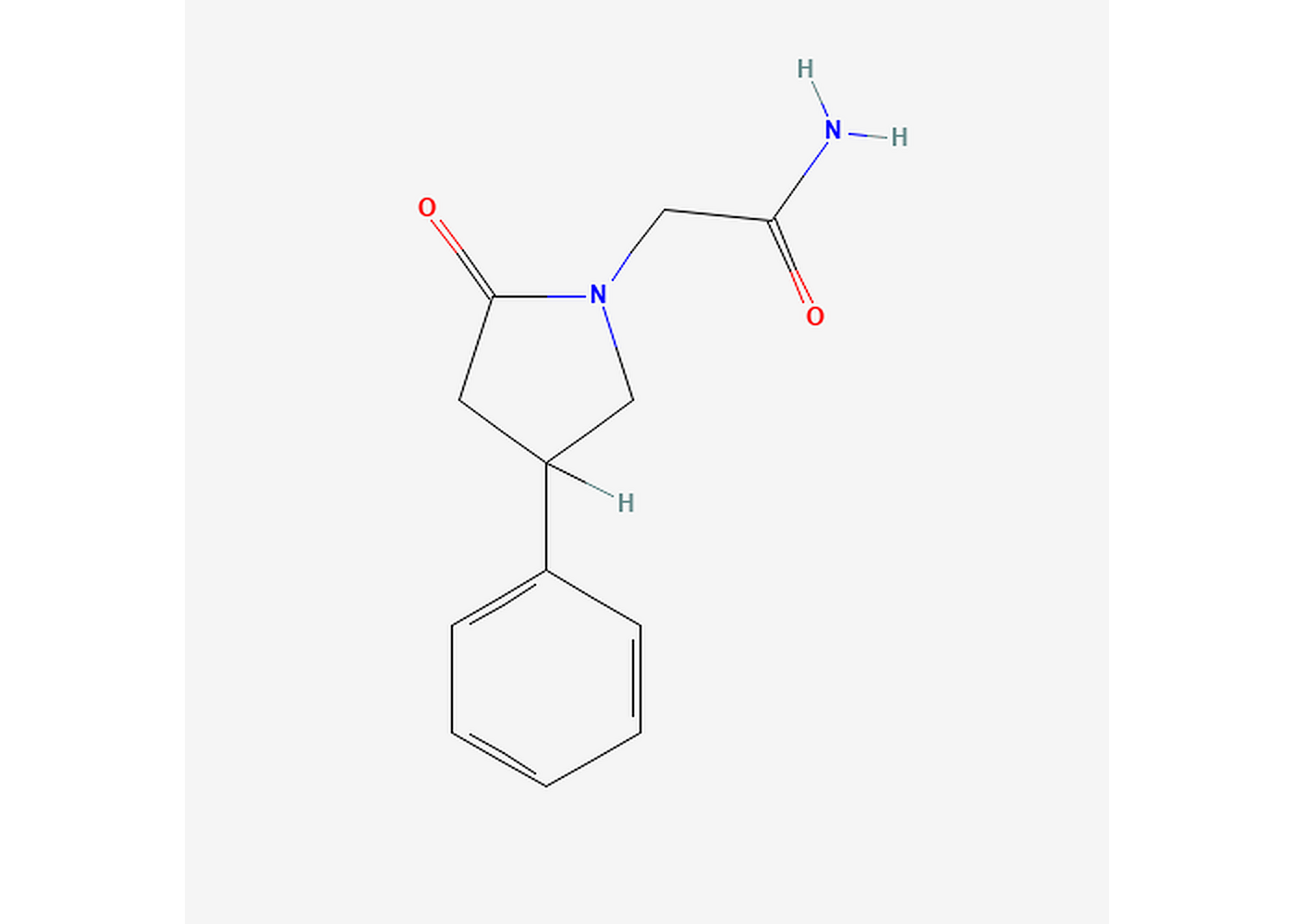
Phenylpiracetam er et substitueret pyrrolidonderivat, der tilhører den bredere klasse af racetamforbindelser. Strukturelt indeholder det en 2-oxo-pyrrolidinkerne (lactamring), der er forbundet med en acetamid-sidekæde og substitueret med en phenylgruppe. Tilstedeværelsen af både cyklisk amidfunktionalitet og aromatisk substitution resulterer i en hybrid molekylær arkitektur, der kombinerer alifatiske, heterocykliske og aromatiske strukturelle domæner.
Den centrale pyrrolidonring repræsenterer en femleddet lactamstruktur, der indeholder en carbonylgruppe og et tertiært nitrogenatom. Lactamringe forekommer ofte i småmolekylær kemi på grund af deres veldefinerede geometri og forudsigelige spektroskopiske egenskaber. Phenylsubstitutionen introducerer aromatisk elektrondelokalisering og yderligere sterisk volumen sammenlignet med ikke-substituerede analoger.
Phenylpiracetam kan placeres inden for den strukturelle familie af 2-oxo-pyrrolidinderivater. Medlemmer af denne klasse deler en lactamrygrad med variationer i sidekædesubstitution og aromatisk inkorporering. Strukturel differentiering inden for gruppen bestemmes primært af typen og placeringen af substituenter på pyrrolidonkernen.
Tilføjelsen af en phenylgruppe øger molekylmassen og ændrer de steriske egenskaber sammenlignet med ikke-substituerede pyrrolidonderivater. Fra et rent strukturelt perspektiv kan aromatisk substitution påvirke intermolekylære interaktioner, krystallinsk pakningsadfærd og kromatografiske retentionsegenskaber.
Molekylformlen C12H14N2O2 beskriver en kovalent bundet struktur bestående af kulstof-, hydrogen-, nitrogen- og oxygenatomer arrangeret i en substitueret lactamkonfiguration. Molekylet indeholder både amid- og lactamfunktionelle grupper, som hver bidrager med karakteristiske spektroskopiske egenskaber.
Carbonylgrupperne i lactamringen og acetamid-sidekæden giver tydelige infrarøde absorptionsbånd svarende til C=O-strækningsvibrationer. Den aromatiske phenylring bidrager med karakteristiske signaler i proton- og kulstof-NMR-spektroskopi, mens de alifatiske dele af molekylet giver separate, identificerbare resonanser.
I proton-NMR-analyse fremkommer aromatiske protoner typisk inden for et veldefineret kemisk skiftområde, adskilt fra methylengrupperne i pyrrolidonringen. Kulstof-13 NMR kan vise carbonylcarbonsignaler i det forventede nedfældede område sammen med aromatiske og alifatiske kulstofmiljøer, der understøtter strukturel bekræftelse.
Phenylpiracetam indeholder et chiralt center i sin molekylære struktur. Som følge heraf er enantiomere former teoretisk mulige. I analytiske sammenhænge kan stereokemi påvirke kromatografisk adfærd, når chirale stationære faser anvendes.
Kiralitet ændrer ikke den grundlæggende molekylformel, men kan påvirke optisk rotation og separationskarakteristika under specialiserede analytiske forhold. Strukturelle verifikationsprocedurer kan omfatte stereokemisk analyse, hvor dette er relevant for laboratoriemetodikken.
Under standard laboratorieforhold forekommer Phenylpiracetam typisk som et hvidt krystallinsk pulver. Krystallinske små molekyler med veldefinerede substitutionsmønstre udviser ofte reproducerbar smelteadfærd og ensartet faststofmorfologi.
Analytiske parametre, der kan vurderes i laboratoriemiljøer, omfatter:
Phenylgruppen kan bidrage til UV-absorptionsegenskaber på grund af aromatisk konjugation. Sådanne absorptionskarakteristika kan understøtte kromatografisk detektion under UV-overvågning.
I reversed-phase væskekromatografi kan aromatisk substitution øge hydrofobe interaktioner med ikke-polære stationære faser. Balancen mellem polære amidfunktionaliteter og hydrofobe aromatiske domæner påvirker retentionen under definerede mobilfaseforhold.
Tilstedeværelsen af flere funktionelle grupper giver mulighed for optimering af separationsparametre under metodeudvikling. Gradientsammensætning, pH-justering og opløsningsmiddelpolaritet kan alle påvirke retentionsegenskaberne.
Phenylpiracetam er registreret under CAS-nummer 77472-70-9 og indekseret i offentlige kemiske databaser. Registerposter indeholder typisk strukturdiagrammer, SMILES-notation, InChI-identifikatorer og klassifikationsmetadata relevante for substituerede pyrrolidonderivater.
Inden for den bredere kategori af substituerede pyrrolidonderivater forekommer strukturelle variationer ofte ved 4-positionen på lactamringen. Aromatisk substitution ved denne position, som i Phenylpiracetam, introducerer en plan phenylring, der ændrer steriske og elektroniske egenskaber sammenlignet med ikke-substituerede analoger.
Kombinationen af cyklisk amid og aromatisk substitution skaber et molekyle med både stive og semifleksible domæner. Lactamringen giver konformationel begrænsning, mens acetamid-sidekæden introducerer begrænset rotationsfleksibilitet. Denne strukturelle balance bidrager til veldefinerede analytiske egenskaber under kontrollerede laboratorieforhold.
Fra et materialekemisk perspektiv krystalliserer substituerede lactamer ofte i veldefinerede former. Krystalgitterets struktur kan påvirkes af hydrogenbindingspotentialet forbundet med amidfunktionaliteter. Disse intermolekylære interaktioner kan påvirke smelteadfærd og faststofstabilitet.
Som kemisk referencemateriale i forskningskvalitet leveres Phenylpiracetam i forseglet laboratorieemballage for at bevare integriteten under opbevaring og transport. Batchmærkning understøtter sporbarhed i interne laboratoriedokumentationssystemer.
Hvad er CAS-nummeret for Phenylpiracetam?
CAS-nummeret for Phenylpiracetam er 77472-70-9.
I hvilken form leveres Phenylpiracetam?
Dette produkt leveres som et hvidt krystallinsk pulver i forseglet laboratorieemballage.
Er dette produkt beregnet til menneskelig eller animalsk brug?
Nej. Dette materiale leveres udelukkende som en laboratoriereferenceforbindelse.
Kan Phenylpiracetam sendes inden for EU?
Ja. Ordrer leveres via Rexars webshop i forseglet laboratorieemballage.
Phenylpiracetam kan også analyseres inden for den bredere kontekst af substituerede heterocykliske amidforbindelser. Pyrrolidon- (lactam-) ringsystemet repræsenterer en cyklisk amidstruktur, hvor nitrogenatomet er integreret direkte i ringstrukturen. Cykliske amider udviser ofte forudsigelige bindingsvinkler og begrænsede konformationer sammenlignet med åbne amidkæder, hvilket bidrager til veldefineret spektroskopisk adfærd.
Tilstedeværelsen af to carbonylholdige funktionelle grupper i Phenylpiracetam – én i lactamringen og én i acetamid-sidekæden – introducerer flere hydrogenbindingsacceptorsteder. I fast tilstand kan intermolekylære hydrogenbindingsinteraktioner påvirke krystalpakning og gitterstabilitet. Sådanne interaktioner vurderes ofte i strukturkemi ved undersøgelser af polymorfi og krystallinsk konsistens.
Fra et molekylorbitalperspektiv introducerer den aromatiske phenylring et område med konjugeret π-elektrontæthed, som er elektronisk forskelligt fra de mættede dele af molekylet. Denne adskillelse af elektroniske domæner kan påvirke UV-absorptionskarakteristika og bidrage til målbare absorptionsmaksima under UV-spektrometriske analyser.
Phenylpiracetam indeholder et stereogent center i sin molekylære struktur, hvilket betyder, at forbindelsen kan eksistere som enantiomere former. Enantiomerer har identisk molekylformel og bindingsstruktur, men adskiller sig i deres tredimensionelle rumlige arrangement. I ikke-kirale analytiske systemer udviser enantiomerer normalt identiske retentionstider og spektroskopiske mønstre. Ved anvendelse af chirale stationære faser eller målinger af optisk rotation kan stereokemiske forskelle dog observeres.
Konformationel fleksibilitet i molekylet er primært begrænset til rotation omkring enkeltbindinger, der forbinder acetamid-sidekæden og den aromatiske substitution. Selve pyrrolidonringen giver strukturel stivhed på grund af sin cykliske natur. Denne balance mellem stivhed og begrænset rotationsfrihed bidrager til en veldefineret molekylær geometri under standard laboratorieforhold.
Balancen mellem aromatiske og polære funktionelle grupper bidrager til Phenylpiracetams fordelingsadfærd mellem vandige og organiske faser. Lactam- og amidfunktionaliteterne tilfører polaritet, mens phenylringen bidrager med hydrofobe egenskaber. Denne kombination påvirker opløselighedsprofiler og kromatografisk retention under analytiske forhold.
I reversed-phase væskekromatografi kan hydrofobe interaktioner mellem den aromatiske ring og den stationære fase bidrage til retentionen, mens polære funktionaliteter påvirker interaktionen med mobilfasen. Den samlede retention bestemmes af samspillet mellem disse modstående egenskaber.
Massespektrometrisk analyse kan anvendes til at bekræfte molekylvægten på 218,25 g/mol. Fragmenteringsmønstre omfatter ofte spaltning ved amidbindinger eller tab af mindre strukturelle enheder fra sidekæden. Disse fragmentioner kan anvendes som diagnostiske markører ved strukturel verifikation.
Ved højopløselig massespektrometri kan den nøjagtige masse sammenlignes med teoretiske værdier for at understøtte identitetsbekræftelse og kvalitativ analyse.
Proton-NMR-spektre viser typisk aromatiske signaler fra phenylringen samt karakteristiske resonanser fra methylenprotonerne i pyrrolidonringen og acetamid-sidekæden. Integrationsforhold og koblingsmønstre understøtter strukturel identifikation.
13C-NMR-spektre viser særskilte signaler for carbonylcarbonatomerne, aromatiske carbonatomer og alifatiske carbonatomer. Kombinationen af proton- og kulstofdata giver et reproducerbart spektroskopisk fingeraftryk til laboratoriemæssig sammenligning.
IR-spektre af Phenylpiracetam viser typisk stærke absorptionsbånd svarende til lactam- og amid-carbonylgrupper. Yderligere bånd kan observeres fra aromatiske C–H-vibrationer samt alifatiske strækninger.
Disse vibrationsmønstre kan anvendes som supplerende identitetsmarkører sammen med kromatografiske og massespektrometriske data.
Teknikker såsom differential scanning calorimetry (DSC) og termogravimetrisk analyse (TGA) kan anvendes til at undersøge smelteovergange og termisk stabilitet. Veldefinerede termiske egenskaber understøtter vurderingen af materialekonsistens og reproducerbarhed mellem batcher.
Fraværet af stærkt reaktive funktionelle grupper bidrager generelt til forudsigelig opførsel under anbefalede laboratorieopbevaringsforhold.
Internationale kemiske databaser registrerer Phenylpiracetam ved hjælp af digitale identifikatorer såsom SMILES-strenge og InChI-koder. Disse maskinlæsbare formater muliggør præcis strukturel registrering og integration i laboratorieinformationssystemer.
Digitale identifikatorer understøtter reproducerbar dokumentation og sammenligning på tværs af forskningsmiljøer og analytiske databaser.
Ved opbevaring i et køligt, tørt og mørkt miljø kan Phenylpiracetam opretholde stabile analytiske egenskaber over længere perioder. Beskyttelse mod fugt og unødig miljøpåvirkning understøtter materialets integritet.
Forseglet laboratorieemballage hjælper med at minimere eksponering for eksterne faktorer og understøtter ensartede analytiske resultater gennem hele produktets anbefalede opbevaringsperiode.
Dette produkt er udelukkende beregnet til laboratorieforskning. Det er ikke beregnet til menneskeligt eller animalsk forbrug eller til medicinske, diagnostiske eller terapeutiske anvendelser. Denne forbindelse er ikke beregnet til at diagnosticere, behandle, helbrede eller forebygge nogen sygdom.
| Intended use: | Laboratory research and analytical reference purposes only |
| Application area: | Analytical chemistry, reference comparison and method development |
| End user: | Professional users in controlled research environments |
| Regulatory classification: | Chemical reference material |